
🚀 宇宙の記憶・カレンダー検索
🚀 象徴的な写真:
APOD第1回
🚀 創造の柱
🚀 スピリット火星着陸
🚀 ハッブル超深宇宙
🚀 地球へようこそ|ブルー・マーブル
🚀 エンケラドス
🚀 ベテルギウス
🚀 火星着陸
🚀 青い夕焼け
🚀 冥王星のハート
🚀 皆既日食
🚀 アースライズ再構築
🚀 ブラックホール
🚀 ウェッブ初画像
🚀 アポロ11着陸
APOD30周年(2025年6月16日)
ケプラーの縞模様
Kepler's Streak
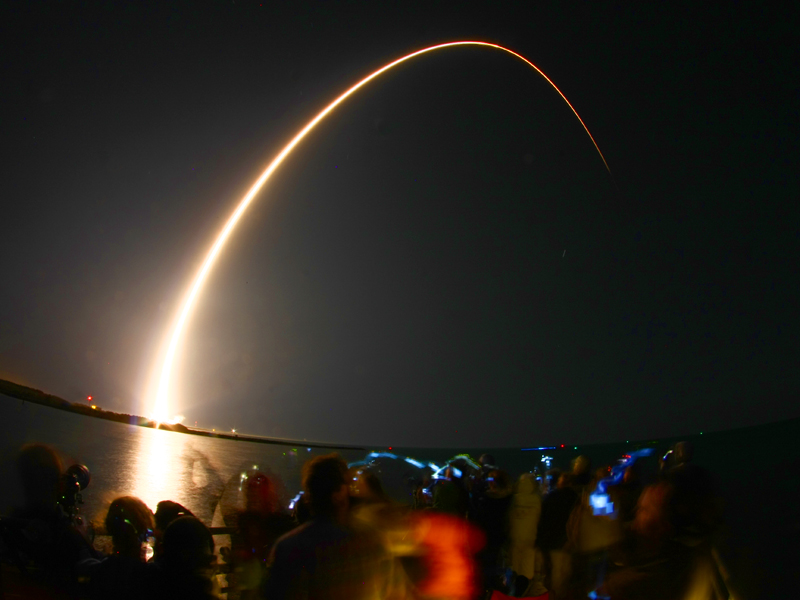
デルタIIロケットが空高く舞い上がり、NASAのケプラー宇宙望遠鏡を乗せて3月6日の澄み切った夜空へと飛び立った。この劇的な光景は、フロリダ州ココアビーチ北端のジェッティパークにある混雑した桟橋から長時間露光で撮影された。ここはケープカナベラルの発射場から約3マイル(約4.8キロ)の距離にある。ケプラーのミッションは、他の恒星のハビタブルゾーンを周回する地球型惑星を探すことである。恒星のハビタブルゾーンを周回する惑星は、私たちが知る生命に不可欠な液体の水を維持できる表面温度を持つ。地球型惑星を見つけるために、ケプラーの望遠鏡と大型で高感度のカメラは、天の川銀河の平面付近にある豊富な星野を観測する。白鳥座に位置するケプラーの視野は、太陽近傍の多くの恒星の明るさを監視し、地球型惑星候補が恒星の前を横切る際にわずかな減光を検出することを可能にする。
原文(English)
Streaking skyward, a Delta II rocket carries NASA's Kepler spacecraft aloft into the clear night of March 6. The dramatic scene was recorded in a time exposure from the crowded pier in Jetty Park at the northern end of Cocoa Beach, Florida, about 3 miles from the Cape Canaveral launch site. Kepler's mission is to search for Earth-like planets orbiting in the habitable zone of other stars. A planet orbiting within a star's habitable zone would have a surface temperature capable of supporting liquid water, an essential ingredient for life as we know it. To find Earth-like planets, Kepler's telescope and large, sensitive camera will examine a rich star field near the plane of our Milky Way Galaxy. Located in the constellation Cygnus, Kepler's field of view will allow it to monitor the brightness of many stars in the solar neighborhood and detect a slight dimming as a potential Earth-like planet crosses in front of the star.
\ この感動を宇宙仲間にシェア /
宇宙をXでシェア
© Ben Cooper / APOD