
🚀 宇宙の記憶・カレンダー検索
🚀 象徴的な写真:
APOD第1回
🚀 創造の柱
🚀 スピリット火星着陸
🚀 ハッブル超深宇宙
🚀 地球へようこそ|ブルー・マーブル
🚀 エンケラドス
🚀 ベテルギウス
🚀 火星着陸
🚀 青い夕焼け
🚀 冥王星のハート
🚀 皆既日食
🚀 アースライズ再構築
🚀 ブラックホール
🚀 ウェッブ初画像
🚀 アポロ11着陸
APOD30周年(2025年6月16日)
土星:衛星の通過
Saturn: Moons in Transit
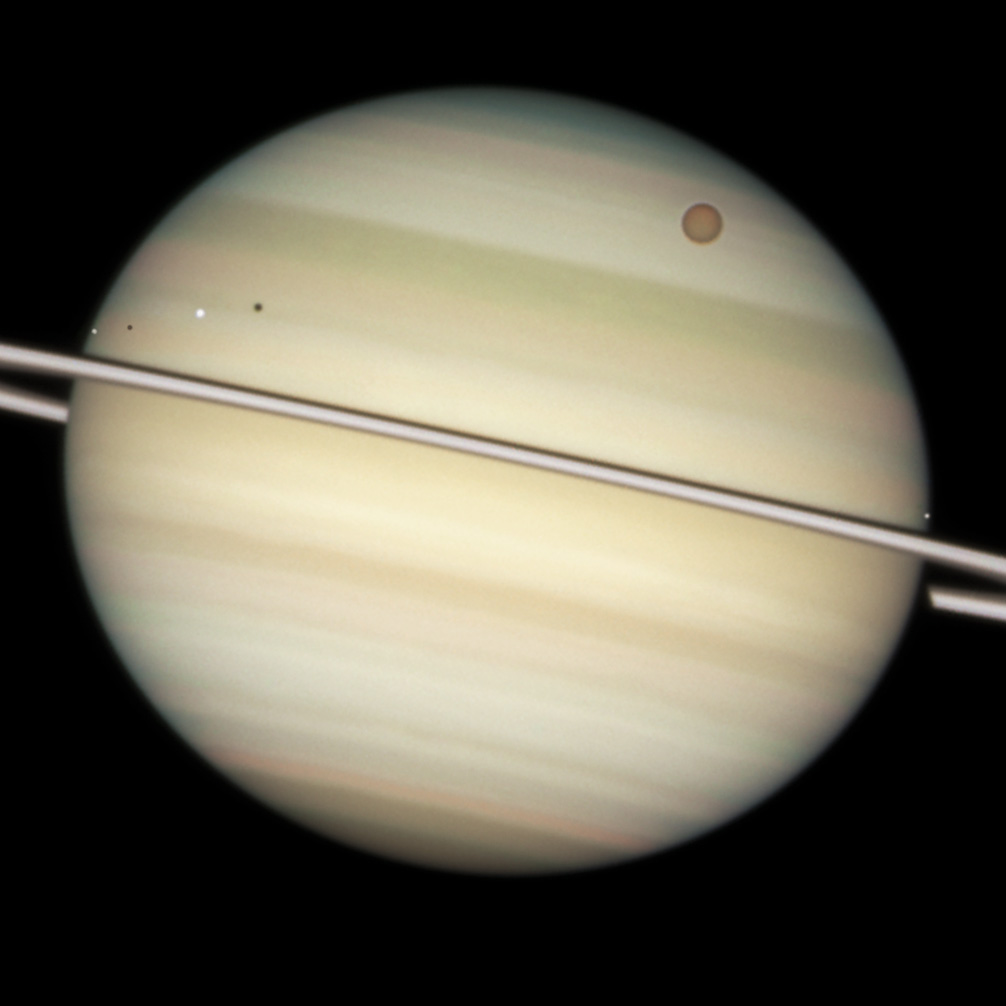
14~15年ごとに、土星の環は私たちの視線に対して横向きに傾きます。明るく美しい環は次第に狭くなっていくため、大型望遠鏡を使っても見るのが難しくなります。しかし、土星の衛星の複数回の通過を観測する機会が得られます。通過中は、太陽光が当たった衛星とその影が、巨大ガス惑星の雲に覆われた表面を横切ります。2月24日に撮影されたこのハッブル宇宙望遠鏡の画像は、土星の4つの衛星の通過を示す一連の画像の一部です。左から右へ、エンケラドゥスとその影、ディオネとその影、そして土星最大の衛星タイタンです。小さな衛星ミマスは、右端の環面付近で土星の円盤にちょうど接しています。タイタンとミマスの影はどちらも円盤の右側から移動しています。土星自体の赤道直径は約12万キロメートルです。
原文(English)
very 14 to 15 years, Saturn's rings are tilted edge-on to our line of sight. As the bright, beautiful rings seem to grow narrower it becomes increasingly difficult to see them, even with large telescopes. But it does provide the opportunity to watch multiple transits of Saturn's moons. During a transit, a sunlit moon and its shadow glide across the cloudy face of the gas giant. Recorded on February 24, this Hubble image is part of a sequence showing the transit of four of Saturn's moons. From left to right are Enceladus and shadow, Dione and shadow, and Saturn's largest moon Titan. Small moon Mimas is just touching Saturn's disk near the ring plane at the far right. The shadows of Titan and Mimas have both moved off the right side of the disk. Saturn itself has an equatorial diameter of about 120,000 kilometers.
\ この感動を宇宙仲間にシェア /
宇宙をXでシェア
© NASA / APOD