
🚀 宇宙の記憶・カレンダー検索
🚀 象徴的な写真:
APOD第1回
🚀 創造の柱
🚀 スピリット火星着陸
🚀 ハッブル超深宇宙
🚀 地球へようこそ|ブルー・マーブル
🚀 エンケラドス
🚀 ベテルギウス
🚀 火星着陸
🚀 青い夕焼け
🚀 冥王星のハート
🚀 皆既日食
🚀 アースライズ再構築
🚀 ブラックホール
🚀 ウェッブ初画像
🚀 アポロ11着陸
APOD30周年(2025年6月16日)
外太陽系のオルクス
Orcus of the Outer Solar System
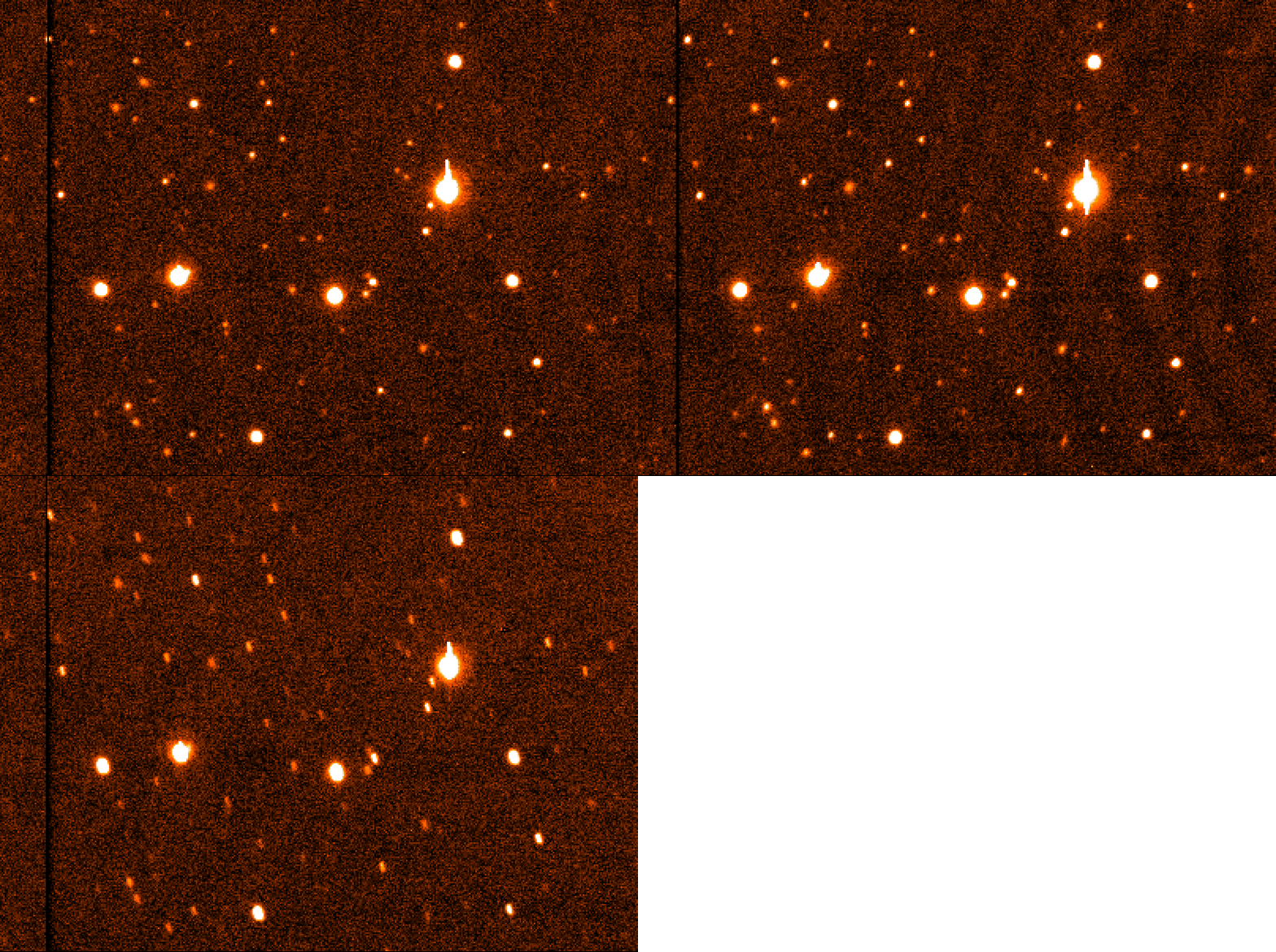
太陽系外縁部で新たに発見された天体は、反冥王星のように動きます。90482オルクスは2004年に初めて発見され、冥王星よりわずかに小さいものの、既知のカイパーベルト天体の中では最大級のものです。オルクスはいつか冥王星と同じIAUの分類、つまり準惑星になるかもしれません。オルクスと冥王星は似たような軌道を持ち、太陽からの最大距離と最小距離はほぼ同じで、どちらも似たような楕円軌道を描き、それぞれの軌道楕円は他の惑星の軌道楕円に対してほぼ同じ角度で傾いています。海王星の巨大な質量により、オルクスは海王星の3回の公転に対して2回太陽を周回します。しかし、オルクスは反冥王星のようで、2つの天体は常に太陽系の反対側に位置しています。オルクスは、これらの発見フレームの中心付近で、上からわずかに下に移動している点として見つけることができます。来週末まで、オルクスの発見者たちは、新たに発見されたその衛星の名前を決めるのに皆さんの協力を求めています。
原文(English)
A newly discovered object in the outer Solar System moves like an anti-Pluto. 90482 Orcus was first discovered in 2004 and is slightly smaller than Pluto, although still one of the largest Kuiper belt objects known. Orcus may one day have the same IAU designation as Pluto: a dwarf planet. Orcus and Pluto have similar orbits: each achieves nearly the same maximum and minimum distances from the Sun, each orbits on a similarly shaped ellipse, and each orbital ellipse is tilted toward the other planets' orbital ellipse by roughly the same angle. The great mass of Neptune causes each to circle the Sun twice for every three Neptune orbits. Orcus is like an anti-Pluto, however, because the two objects always remain across the Solar System from each other. Orcus can be found as the spot near the center of these discovery frames moving slightly down from the top. Until the end of next week, the discoverers of Orcus ask for your help in naming its newly discovered moon.
\ この感動を宇宙仲間にシェア /
宇宙をXでシェア
© NASA / APOD