
🚀 宇宙の記憶・カレンダー検索
🚀 象徴的な写真:
APOD第1回
🚀 創造の柱
🚀 スピリット火星着陸
🚀 ハッブル超深宇宙
🚀 地球へようこそ|ブルー・マーブル
🚀 エンケラドス
🚀 ベテルギウス
🚀 火星着陸
🚀 青い夕焼け
🚀 冥王星のハート
🚀 皆既日食
🚀 アースライズ再構築
🚀 ブラックホール
🚀 ウェッブ初画像
🚀 アポロ11着陸
APOD30周年(2025年6月16日)
ハッブル宇宙望遠鏡で撮影したNGC 2392星雲
NGC 2392 Nebula from Hubble
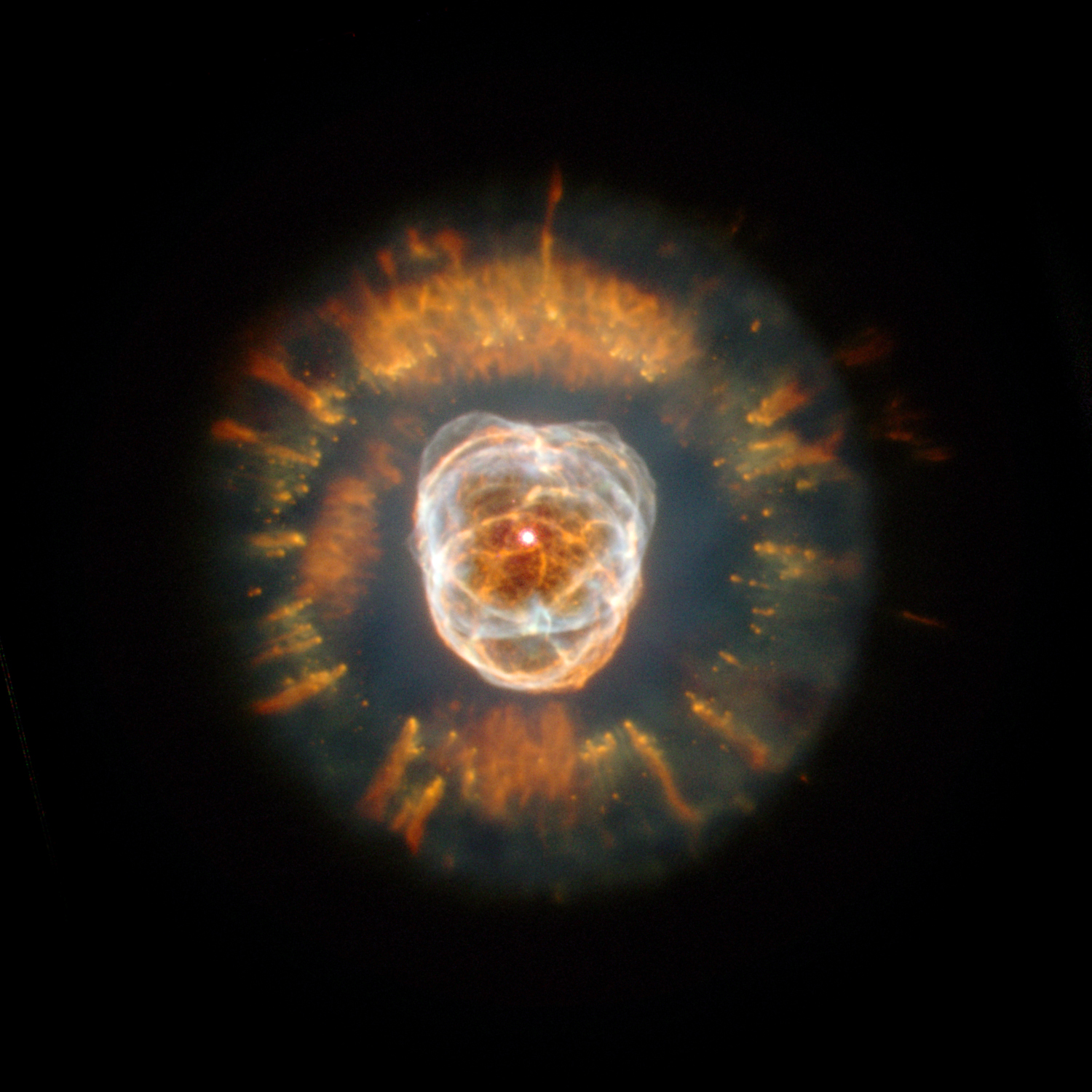
1787年、天文学者のウィリアム・ハーシェルがNGC 2392を発見しました。地上から見ると、NGC 2392はパーカーのフードで覆われた人の頭のように見えます。2000年、ハッブル宇宙望遠鏡がNGC 2392を撮影しました。宇宙から見ると、この星雲は非常に複雑なガス雲を示しており、その構造は完全には解明されていません。NGC 2392は明らかに惑星状星雲であり、上空に見えるガスはわずか1万年前に太陽のような恒星の外層を構成していました。上空に見える内側のフィラメントは、中心星からの強い粒子風によって放出されています。外側の円盤には、珍しい光年にも及ぶオレンジ色のフィラメントが含まれています。NGC 2392星雲は、約1/3光年の広がりを持ち、天の川銀河に位置し、ふたご座の方向に約3,000光年離れています。
原文(English)
In 1787, astronomer William Herschel discovered NGC 2392. From the ground, NGC 2392 resembles a person's head surrounded by a parka hood. In 2000, the Hubble Space Telescope imaged NGC 2392. From space, the nebula displays gas clouds so complex they are not fully understood. NGC 2392 is clearly a planetary nebula, and the gas seen above composed the outer layers of a Sun-like star only 10,000 years ago. The inner filaments visible above are being ejected by strong wind of particles from the central star. The outer disk contains unusual light-year long orange filaments. The NGC 2392 Nebula spans about 1/3 of a light year and lies in our Milky Way Galaxy, about 3,000 light years distant, toward the constellation of the Twins (Gemini).
\ この感動を宇宙仲間にシェア /
宇宙をXでシェア
© NASA / APOD