
🚀 宇宙の記憶・カレンダー検索
🚀 象徴的な写真:
APOD第1回
🚀 創造の柱
🚀 スピリット火星着陸
🚀 ハッブル超深宇宙
🚀 地球へようこそ|ブルー・マーブル
🚀 エンケラドス
🚀 ベテルギウス
🚀 火星着陸
🚀 青い夕焼け
🚀 冥王星のハート
🚀 皆既日食
🚀 アースライズ再構築
🚀 ブラックホール
🚀 ウェッブ初画像
🚀 アポロ11着陸
APOD30周年(2025年6月16日)
水星のレンブラント衝突盆地
Rembrandt Impact Basin on Mercury
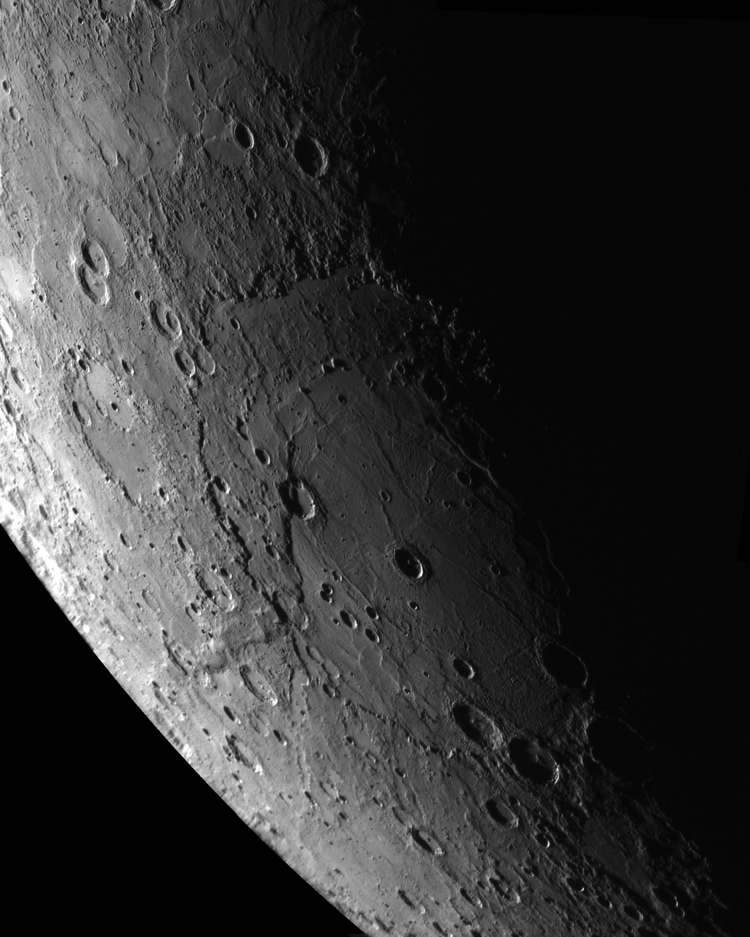
水星のこの巨大なクレーターの一部に鉄がこんなに多いのはなぜでしょうか?珍しいレンブラント衝突盆地は、2008年10月にロボット探査機MESSENGERが太陽系最内惑星をフライバイした際に撮影された画像から最近発見されました。珍しいレンブラントは700キロメートル以上に渡り、40億年前のもので、おそらく惑星上で最も新しい大型衝突盆地です。しかし、クレーター底の多色画像は、鉄とチタンが異常に多い領域からの反射を示しています。これらの元素は、露出した物質の一部がより最近の溶岩流で覆われていないことを示しており、水星の形成期に由来する可能性があります。レンブラントと水星全体のデータは現在、表面テクトニクスを含む水星の比較的活発な火山活動の過去を示していると解釈されています。上の画像をよく見ると、画像の中心を囲む水星のレンブラント衝突盆地のリングが見えます。水星の縁は左上に見え、レンブラントの内部には高い崖や小さなクレーターが見られ、昼夜の境界線は画像全体を斜めに横切っています。MESSENGERは今年9月に再び水星を通過し、2011年には水星の周回軌道に入る予定です。
原文(English)
Why do portions of this huge crater on Mercury have so much iron? The unusual Rembrandt impact basin was discovered recently in images taken during the robotic MESSENGER spacecraft's 2008 October flyby of the Solar System's innermost planet. The unusual Rembrandt spans over 700 kilometers and at 4 billion years old is possibly the youngest large impact basin on the planet. Multicolored images of the crater floor, however, indicate reflections from areas containing unusually high amounts of iron and titanium. These elements indicate that some exposed materials have not been covered by more recent lava floes, and so might originate from an epoch of Mercury's formation. Data from Rembrandt and across Mercury are now being interpreted as indicating a relatively active and volcanic past for Mercury that includes surface tectonics. Close inspection of the above image will reveal rings of Mercury's Rembrandt impact basin circling around the image center. Mercury's limb is visible on the upper left, high cliffs and small craters are visible inside Rembrandt, and the terminator between night and day runs diagonally through the image. MESSENGER is on track to fly past Mercury again this September and enter orbit around Mercury in 2011.
\ この感動を宇宙仲間にシェア /
宇宙をXでシェア
© NASA / APOD