
🚀 宇宙の記憶・カレンダー検索
🚀 象徴的な写真:
APOD第1回
🚀 創造の柱
🚀 スピリット火星着陸
🚀 ハッブル超深宇宙
🚀 地球へようこそ|ブルー・マーブル
🚀 エンケラドス
🚀 ベテルギウス
🚀 火星着陸
🚀 青い夕焼け
🚀 冥王星のハート
🚀 皆既日食
🚀 アースライズ再構築
🚀 ブラックホール
🚀 ウェッブ初画像
🚀 アポロ11着陸
APOD30周年(2025年6月16日)
M97:フクロウ星雲
M97: The Owl Nebula
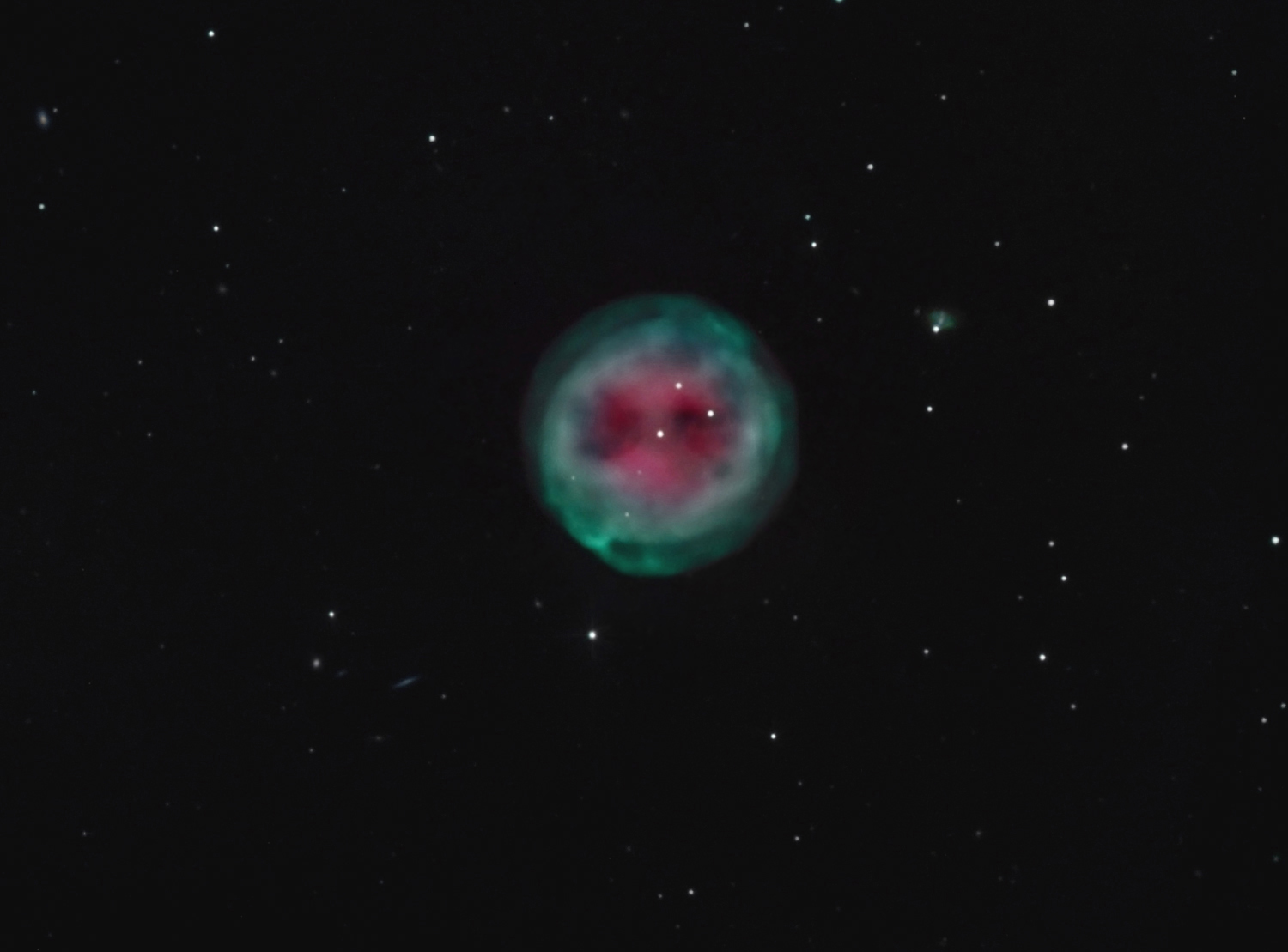
フクロウ星雲は、北斗七星の柄杓の底の方、地球から約2,600光年離れた空に浮かんでいます。メシエの有名なリストではM97として97番目にカタログ化されており、丸い形と2つの大きな暗い「目」の位置から、じっと見つめるフクロウの顔を連想させます。メシエカタログの中でも暗い天体の一つであるフクロウ星雲は、核燃料を使い果たした太陽のような恒星が放出する、輝くガス状の外層である惑星状星雲です。実際、フクロウ星雲は、あと50億年で燃料を使い果たす太陽の運命の一例を示しています。私たちが見るこの星雲は、2光年以上にわたって広がり、海王星の軌道の直径の約2,000倍です。このカラー画像は、宇宙のフクロウの内部の印象的なディテールを捉えており、見る者を魅了します。この合成画像は、狭帯域フィルターを通して撮影された画像で構成されており、合計24時間の露光時間で撮影されています。
原文(English)
The Owl Nebula is perched in the sky about 2,600 light-years away toward the bottom of the Big Dipper's bowl. Also cataloged as M97, the 97th object in Messier's well-known list, its round shape along with the placement of two large, dark "eyes" do suggest the face of a staring owl. One of the fainter objects in Messier's catalog, the Owl Nebula is a planetary nebula, the glowing gaseous envelope shed by a dying sun-like star as it runs out of nuclear fuel. In fact, the Owl Nebula offers an example of the fate of our Sun as it runs out of fuel in another 5 billion years. As we see it, the nebula spans over 2 light-years making it roughly 2,000 times the diameter of Neptune's orbit. Beautiful to look at, this color image shows impressive details within the cosmic owl. The composite includes images made through narrow-band filters for a total of 24 hours of exposure time.
\ この感動を宇宙仲間にシェア /
宇宙をXでシェア
© Keith Quattrocchi / APOD