
🚀 宇宙の記憶・カレンダー検索
🚀 象徴的な写真:
APOD第1回
🚀 創造の柱
🚀 スピリット火星着陸
🚀 ハッブル超深宇宙
🚀 地球へようこそ|ブルー・マーブル
🚀 エンケラドス
🚀 ベテルギウス
🚀 火星着陸
🚀 青い夕焼け
🚀 冥王星のハート
🚀 皆既日食
🚀 アースライズ再構築
🚀 ブラックホール
🚀 ウェッブ初画像
🚀 アポロ11着陸
APOD30周年(2025年6月16日)
アトランティスとハッブル宇宙望遠鏡を並べて比較
Atlantis and Hubble Side by Side
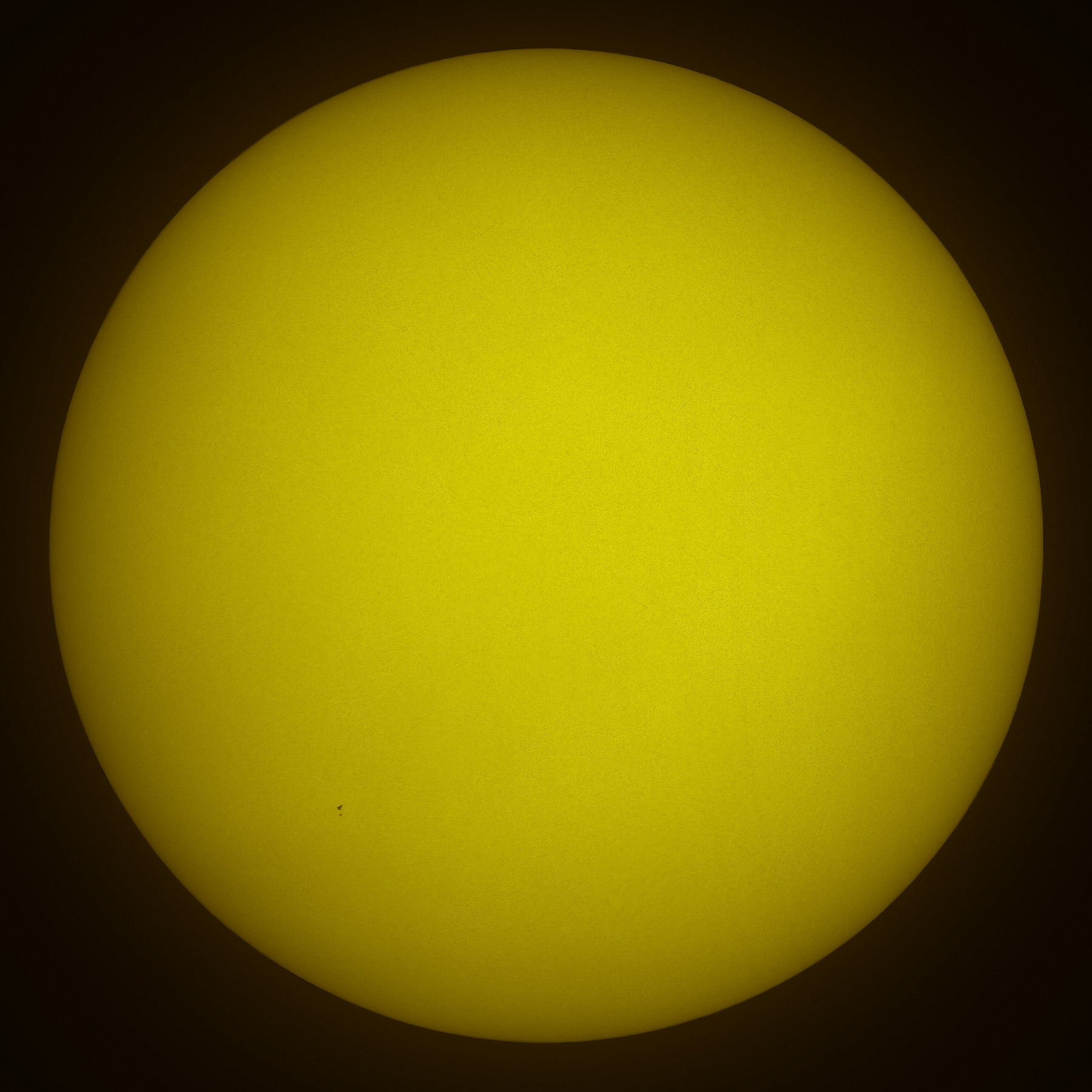
5月13日水曜日、2つの小さな高速で移動する斑点が、それ以外は特徴のない太陽面を横切りました。しかし、それらは太陽黒点ではなく、並んだシャトルオービターのアトランティスとハッブル宇宙望遠鏡のシルエットでした。太陽面を周回するこの2機の鮮明な画像を記録するため、天文学者のティエリー・ルゴーは、フロリダ州ケネディ宇宙センターの南約100キロメートルにある、幅5キロメートルの視界範囲の中心付近にカメラと望遠鏡を慎重に設置しました。彼は東部夏時間12時17分に1/8,000秒のシャッターを開け、秒速7キロメートルで移動していたアトランティスとハッブルを600キロメートルの距離で捉えました。通過(太陽面を横切る)の合計時間は0.8秒でした。挿入図で拡大されているのは、宇宙望遠鏡を捉える前にハッブルに接近しているアトランティス(上)です。木曜日、宇宙飛行士たちはハッブル宇宙望遠鏡への最後のミッションの一環として、メンテナンス作業を行うための船外活動を開始した。
原文(English)
On Wednesday, May 13, two, tiny, fast moving spots crossed an otherwise featureless solar disk. Not sunspots though, the dark blemishes were silhouettes of the shuttle orbiter Atlantis and the Hubble Space Telescope side by side. To record this sharp picture of the orbiting pair against the face of the Sun, astronomer Thierry Legault carefully set up his camera and telescope near the center of a 5 kilometer wide path of visibility about 100 kilometers south of Kennedy Space Center in Florida. He opened the shutter for 1/8,000 second at 12:17 EDT, catching Atlantis and Hubble at a range of 600 kilometers while they were moving at 7 kilometers/second. The total duration of the transit (Sun crossing) was 0.8 seconds. Enlarged in the inset view, Atlantis (top) is approaching Hubble prior to capturing the space telescope. Thursday, astronauts began a series of spacewalks to perform the maintenance as part of the final mission to Hubble.
\ この感動を宇宙仲間にシェア /
宇宙をXでシェア
© Thierry Legault / APOD