
🚀 宇宙の記憶・カレンダー検索
🚀 象徴的な写真:
APOD第1回
🚀 創造の柱
🚀 スピリット火星着陸
🚀 ハッブル超深宇宙
🚀 地球へようこそ|ブルー・マーブル
🚀 エンケラドス
🚀 ベテルギウス
🚀 火星着陸
🚀 青い夕焼け
🚀 冥王星のハート
🚀 皆既日食
🚀 アースライズ再構築
🚀 ブラックホール
🚀 ウェッブ初画像
🚀 アポロ11着陸
APOD30周年(2025年6月16日)
ハッブル宇宙望遠鏡は自由の身
Hubble Floats Free
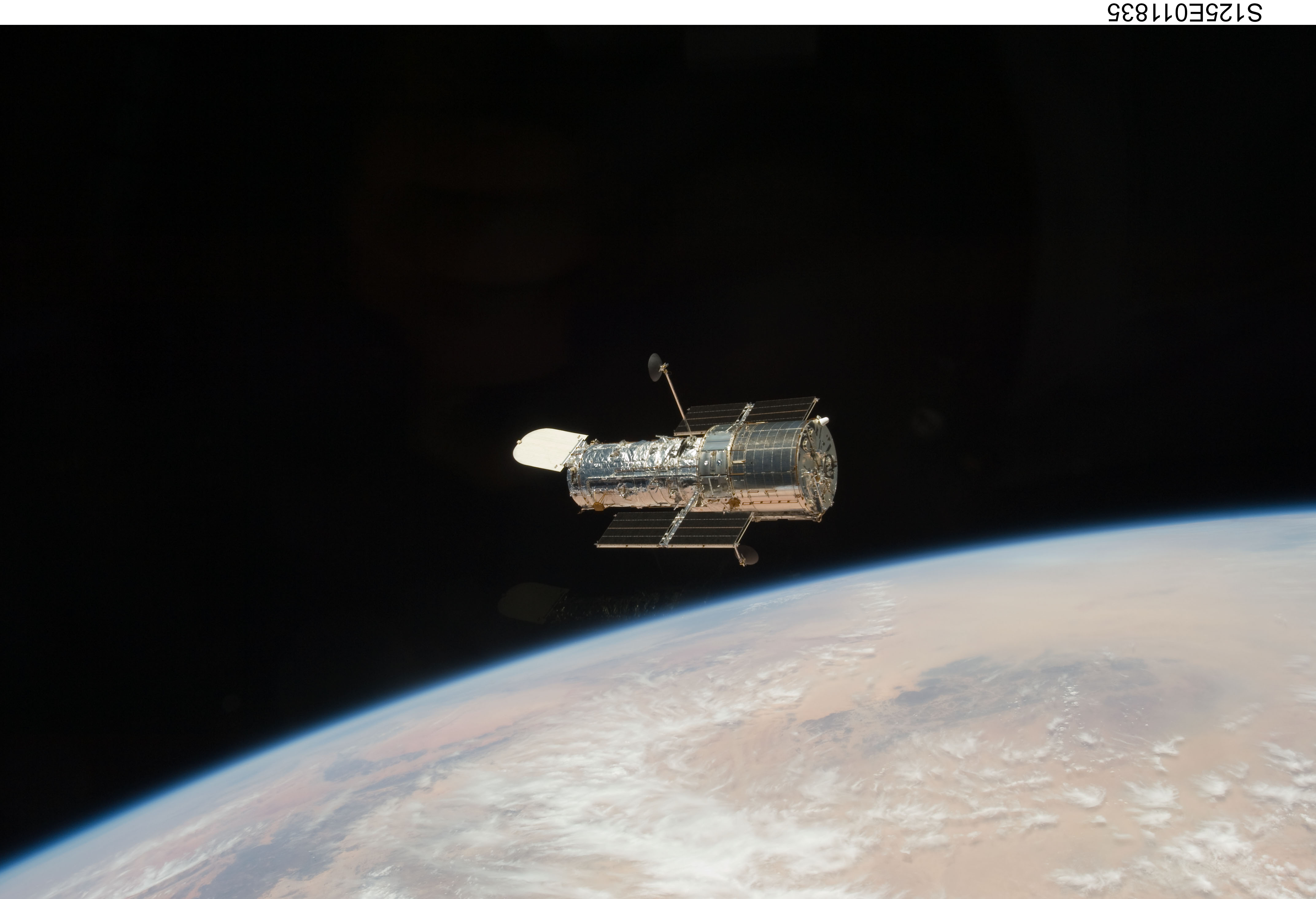
なぜ宇宙に天文台を設置するのか?ほとんどの望遠鏡は地上にある。地上であれば、より重い望遠鏡でも簡単に設置・固定できる。問題は、地上の望遠鏡は地球の大気を通して観測しなければならないことだ。まず、地球の大気は電磁スペクトルの広い範囲を遮断し、可視光の狭い帯域だけが地表に到達する。チャンドラX線観測衛星やフェルミガンマ線宇宙望遠鏡のように、可視光以外の光を使って宇宙を探査する望遠鏡は、吸収する大気の上空に運ばなければならない。次に、地球の大気は透過する光をぼかす。このぼやけは、空気の密度の変化と絶え間ない動きによって引き起こされる。先週、捕獲、修理、そして放出されたハッブル宇宙望遠鏡(上の写真)は、地球の大気の上空を周回することで、より鮮明な画像を得ることができる。実際、ハッブル宇宙望遠鏡の鏡は地上の大型望遠鏡の15分の1の大きさしかないにもかかわらず、より細かい部分を解像することができるのだ。将来的に打ち上げられる大型宇宙望遠鏡であるジェームズ・ウェッブ宇宙望遠鏡は、現在2014年の打ち上げが計画されている。
原文(English)
Why put observatories in space? Most telescopes are on the ground. On the ground, you can deploy a heavier telescope and fix it more easily. The trouble is that Earth-bound telescopes must look through the Earth's atmosphere. First, the Earth's atmosphere blocks out a broad range of the electromagnetic spectrum, allowing a narrow band of visible light to reach the surface. Telescopes which explore the Universe using light beyond the visible spectrum, such as those onboard the Chandra X-ray Observatory, and the Fermi Gamma Ray Space Telescope need to be carried above the absorbing atmosphere. Second, the Earth's atmosphere blurs the light it lets through. The blurring is caused by varying density and continual motion of air. By orbiting above the Earth's atmosphere, the Hubble Space Telescope, pictured above last week after being captured, refurbished, and released, can get clearer images. In fact, even though HST has a mirror 15 times smaller than large Earth-bound telescopes, it can still resolve finer details. A future large telescope for space, the James Webb Space Telescope is currently planned for launch in 2014.
\ この感動を宇宙仲間にシェア /
宇宙をXでシェア
© NASA / APOD