
🚀 宇宙の記憶・カレンダー検索
🚀 象徴的な写真:
APOD第1回
🚀 創造の柱
🚀 スピリット火星着陸
🚀 ハッブル超深宇宙
🚀 地球へようこそ|ブルー・マーブル
🚀 エンケラドス
🚀 ベテルギウス
🚀 火星着陸
🚀 青い夕焼け
🚀 冥王星のハート
🚀 皆既日食
🚀 アースライズ再構築
🚀 ブラックホール
🚀 ウェッブ初画像
🚀 アポロ11着陸
APOD30周年(2025年6月16日)
近日点と遠日点
Perihelion and Aphelion
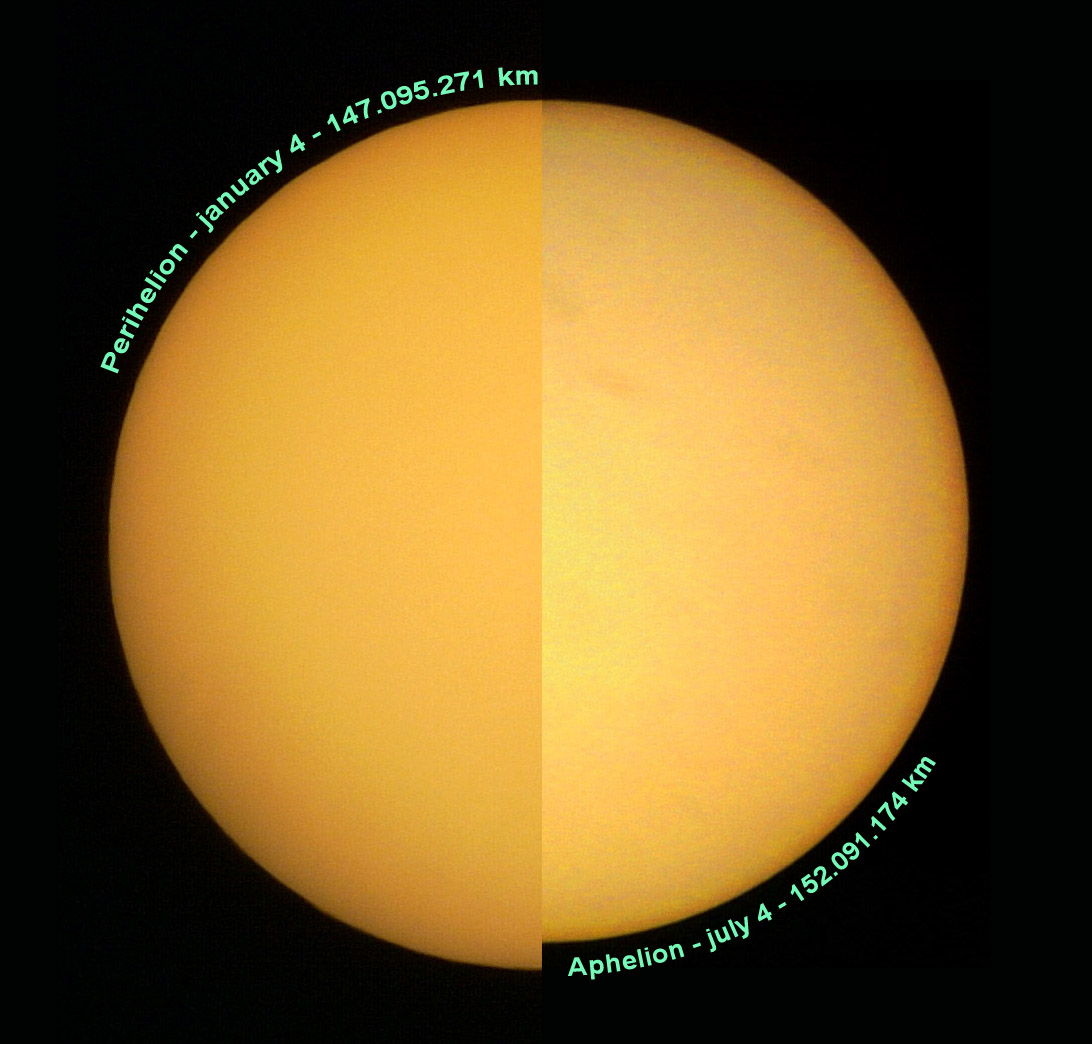
今年の遠日点、つまり地球の楕円軌道上で太陽から最も遠ざかる点は、明日、7月4日に訪れます。もちろん、これは地球の季節には影響しません。季節は地球の自転軸の傾きによって決まり、太陽からの距離によって決まるわけではないので、7月は南半球では冬、北半球では夏です。しかし、7月4日には太陽の見かけの大きさが最小になることを意味します。この合成画像は、2008年の近日点(太陽に最も近づく点)と遠日点の日に同じ望遠鏡とカメラで撮影された2枚の太陽の写真をきれいに比較したものです。画像ラベルには、2つの日付における地球から太陽までの距離(キロメートル)が含まれています。そうでなければ気づきにくいですが、近日点と遠日点の間の太陽の見かけの直径の変化は明らかです。その差は3パーセント強です。
原文(English)
This year Aphelion, the point in Earth's elliptical orbit when it is farthest from the Sun, occurs tomorrow, July 4th. Of course, that doesn't affect the seasons on our fair planet. Those are determined by the tilt of Earth's axis of rotation and not Earth's distance from the Sun, so July is still winter in the south and summer in northern hemisphere. But it does mean that on July 4th the Sun will be at its smallest apparent size. This composite neatly compares two pictures of the Sun taken with the same telescope and camera on the dates of Perihelion (closest approach) and Aphelion in 2008. The image labels include Earth's distance in kilometers from the Sun on the two dates. Otherwise difficult to notice, the change in the Sun's apparent diameter between Perihelion and Aphelion is clear. The difference amounts to a little over 3 percent.
\ この感動を宇宙仲間にシェア /
宇宙をXでシェア
© Enrique Luque Cervigón / APOD