
🚀 宇宙の記憶・カレンダー検索
🚀 象徴的な写真:
APOD第1回
🚀 創造の柱
🚀 スピリット火星着陸
🚀 ハッブル超深宇宙
🚀 地球へようこそ|ブルー・マーブル
🚀 エンケラドス
🚀 ベテルギウス
🚀 火星着陸
🚀 青い夕焼け
🚀 冥王星のハート
🚀 皆既日食
🚀 アースライズ再構築
🚀 ブラックホール
🚀 ウェッブ初画像
🚀 アポロ11着陸
APOD30周年(2025年6月16日)
オーロラ・シマー、メテオ・フラッシュ
Aurora Shimmer, Meteor Flash
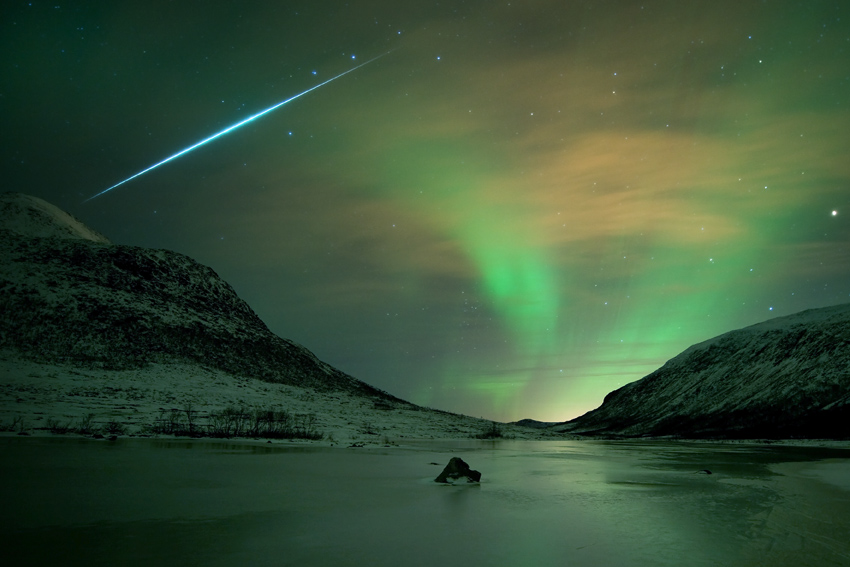
12月13日、ノルウェーのトロムソ近郊のクヴァル島上空にオーロラ(北極光)が浮かび上がりました。この30秒間の長時間露光写真は、冬の海岸風景を優しく照らすオーロラのきらめく光を捉えています。対照的なこの写真には、12月の素晴らしいふたご座流星群から突然現れた火球流星も写っています。北斗七星の柄の部分でおなじみの星々を通り過ぎ、その軌跡は画面上部のふたご座の方角へと続いています。オーロラと流星はどちらも地球の高度100キロメートルほどの上層大気で発生しますが、オーロラは磁気圏からの高エネルギー荷電粒子によって引き起こされるのに対し、流星は宇宙塵の軌跡です。
原文(English)
Northern Lights, or aurora borealis, haunted skies over the island of Kvaløya, near Tromsø Norway on December 13. This 30 second long exposure records their shimmering glow gently lighting the wintery coastal scene. A study in contrasts, it also captures the sudden flash of a fireball meteor from December's excellent Geminid meteor shower. Streaking past familiar stars in the handle of the Big Dipper, the trail points back toward the constellation Gemini, off the top of the view. Both aurora and meteors occur in Earth's upper atmosphere at altitudes of 100 kilometers or so, but aurora are caused by energetic charged particles from the magnetosphere, while meteors are trails of cosmic dust.
\ この感動を宇宙仲間にシェア /
宇宙をXでシェア
© Bjørnar
G. Hansen, / APOD