
🚀 宇宙の記憶・カレンダー検索
🚀 象徴的な写真:
APOD第1回
🚀 創造の柱
🚀 スピリット火星着陸
🚀 ハッブル超深宇宙
🚀 地球へようこそ|ブルー・マーブル
🚀 エンケラドス
🚀 ベテルギウス
🚀 火星着陸
🚀 青い夕焼け
🚀 冥王星のハート
🚀 皆既日食
🚀 アースライズ再構築
🚀 ブラックホール
🚀 ウェッブ初画像
🚀 アポロ11着陸
APOD30周年(2025年6月16日)
塵とらせん星雲
Dust and the Helix Nebula
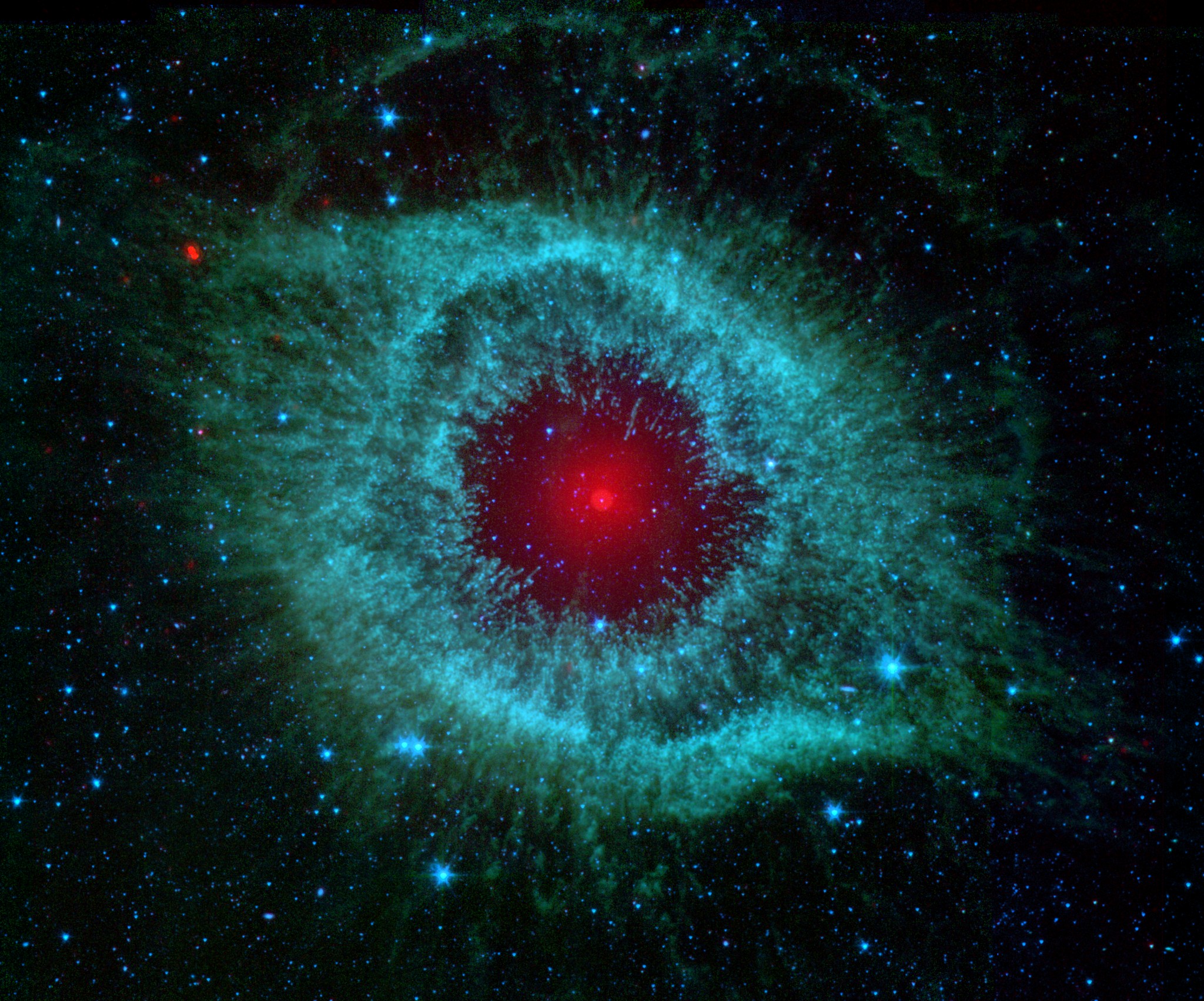
塵によってこの宇宙の目は赤く見える。スピッツァー宇宙望遠鏡の不気味な画像は、みずがめ座のわずか700光年先にある、よく研究されているヘリックス星雲(NGC 7293)からの赤外線放射を示している。中心の白色矮星を取り囲む直径2光年の塵とガスのベールは、太陽のような恒星の進化の最終段階を表す惑星状星雲の優れた例と長い間考えられてきた。しかし、スピッツァーのデータによると、星雲の中心星自体が驚くほど明るい赤外線の光に包まれている。モデルは、この光が塵の残骸円盤によって生成されていることを示唆している。星雲の物質は何千年も前に恒星から放出されたものだが、近くにある塵は、我々の太陽系のカイパーベルトや彗星のオールトの雲に似た天体の貯蔵庫での衝突によって生成された可能性がある。遠方の惑星系で形成されたこれらの彗星のような天体は、そうでなければ、恒星の進化の劇的な最終段階さえも生き延びていただろう。
原文(English)
Dust makes this cosmic eye look red. The eerie Spitzer Space Telescope image shows infrared radiation from the well-studied Helix Nebula (NGC 7293) a mere 700 light-years away in the constellation Aquarius. The two light-year diameter shroud of dust and gas around a central white dwarf has long been considered an excellent example of a planetary nebula, representing the final stages in the evolution of a sun-like star. But the Spitzer data show the nebula's central star itself is immersed in a surprisingly bright infrared glow. Models suggest the glow is produced by a dust debris disk. Even though the nebular material was ejected from the star many thousands of years ago, the close-in dust could be generated by collisions in a reservoir of objects analogous to our own solar system's Kuiper Belt or cometary Oort cloud. Formed in the distant planetary system, the comet-like bodies would have otherwise survived even the dramatic late stages of the star's evolution.
\ この感動を宇宙仲間にシェア /
宇宙をXでシェア
© NASA / APOD