
🚀 宇宙の記憶・カレンダー検索
🚀 象徴的な写真:
APOD第1回
🚀 創造の柱
🚀 スピリット火星着陸
🚀 ハッブル超深宇宙
🚀 地球へようこそ|ブルー・マーブル
🚀 エンケラドス
🚀 ベテルギウス
🚀 火星着陸
🚀 青い夕焼け
🚀 冥王星のハート
🚀 皆既日食
🚀 アースライズ再構築
🚀 ブラックホール
🚀 ウェッブ初画像
🚀 アポロ11着陸
APOD30周年(2025年6月16日)
赤外線で見る炎星雲
The Flame Nebula in Infrared
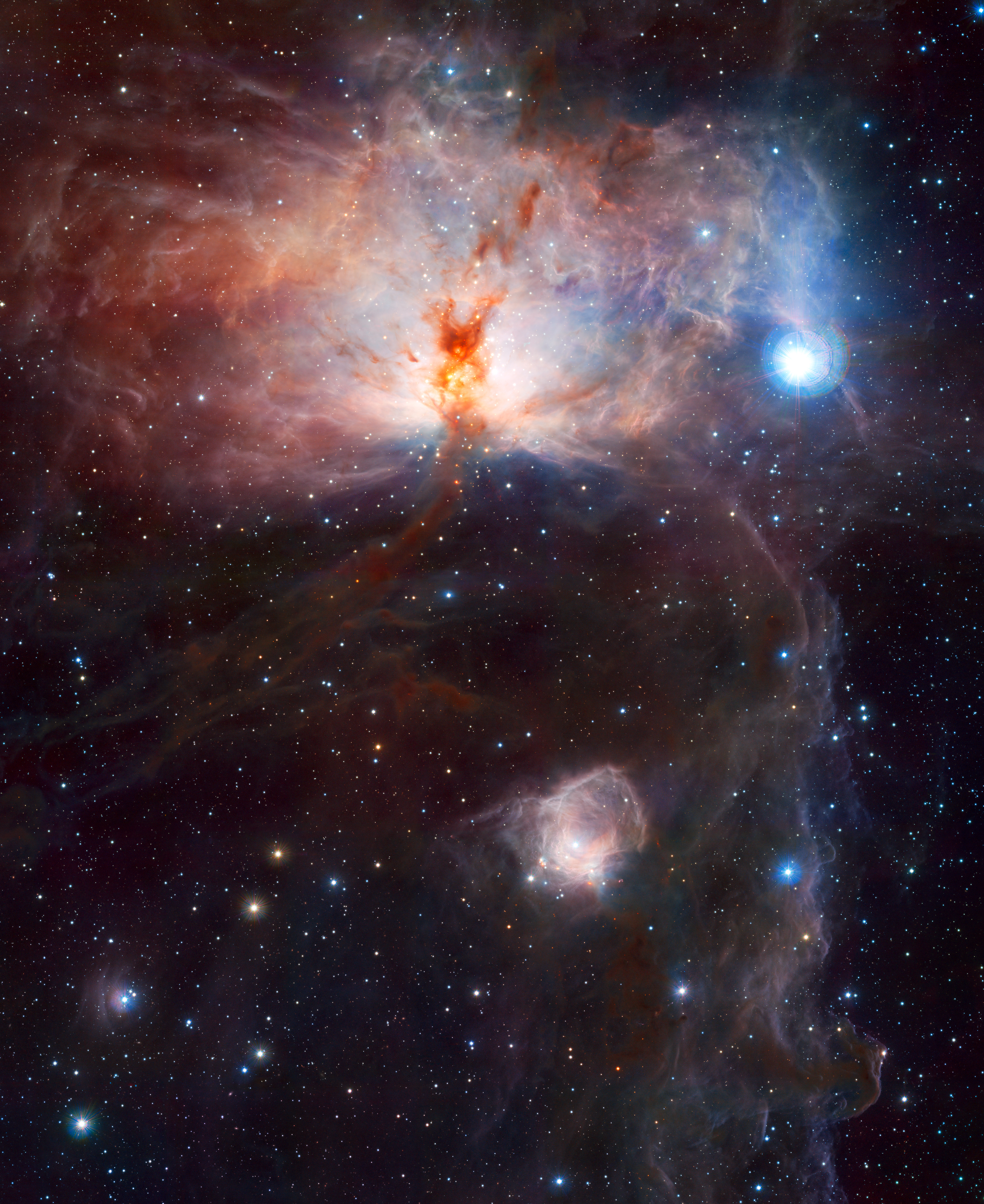
炎星雲を照らすものは何でしょうか?オリオン座の方向に1500光年離れたところに、左側に、光と暗い塵の帯から、まるで燃え盛る炎のように見える星雲があります。しかし、この炎星雲を輝かせているのは、酸素の急速な獲得である「炎」ではありません。むしろ、星雲のすぐ上に見えるオリオン座の三つ星の最も東にある明るい星アルニタクが、炎星雲にエネルギーの高い光を照射し、そこにある巨大な水素ガスの雲から電子をはじき飛ばしているのです。光の大部分は、電子と電離した水素が再結合することによって生じます。上の炎星雲(NGC 2024)の擬似カラー画像は赤外線で撮影されたもので、若い星団が見えるようになっています。炎星雲は、オリオン分子雲複合体の一部であり、有名な馬頭星雲(上の右端に見える)を含む星形成領域です。注:APODの編集者が、今週木曜日の夜、ミシガン州ホートンで素晴らしい宇宙写真をレビューします。
原文(English)
What lights up the Flame Nebula? Fifteen hundred light years away towards the constellation of Orion lies a nebula which, from its glow and dark dust lanes, appears, on the left, like a billowing fire. But fire, the rapid acquisition of oxygen, is not what makes this Flame glow. Rather the bright star Alnitak, the easternmost star in the Belt of Orion visible just above the nebula, shines energetic light into the Flame that knocks electrons away from the great clouds of hydrogen gas that reside there. Much of the glow results when the electrons and ionized hydrogen recombine. The above false-color picture of the Flame Nebula (NGC 2024) was taken in infrared light, where a young star cluster becomes visible. The Flame Nebula is part of the Orion Molecular Cloud Complex, a star-forming region that includes the famous Horsehead Nebula, visible above on the far right. Note: An APOD editor will review great space images this Thursday night in Houghton, Michigan.
\ この感動を宇宙仲間にシェア /
宇宙をXでシェア
© ESO / APOD