
🚀 宇宙の記憶・カレンダー検索
🚀 象徴的な写真:
APOD第1回
🚀 創造の柱
🚀 スピリット火星着陸
🚀 ハッブル超深宇宙
🚀 地球へようこそ|ブルー・マーブル
🚀 エンケラドス
🚀 ベテルギウス
🚀 火星着陸
🚀 青い夕焼け
🚀 冥王星のハート
🚀 皆既日食
🚀 アースライズ再構築
🚀 ブラックホール
🚀 ウェッブ初画像
🚀 アポロ11着陸
APOD30周年(2025年6月16日)
クモとハエ
The Spider and The Fly
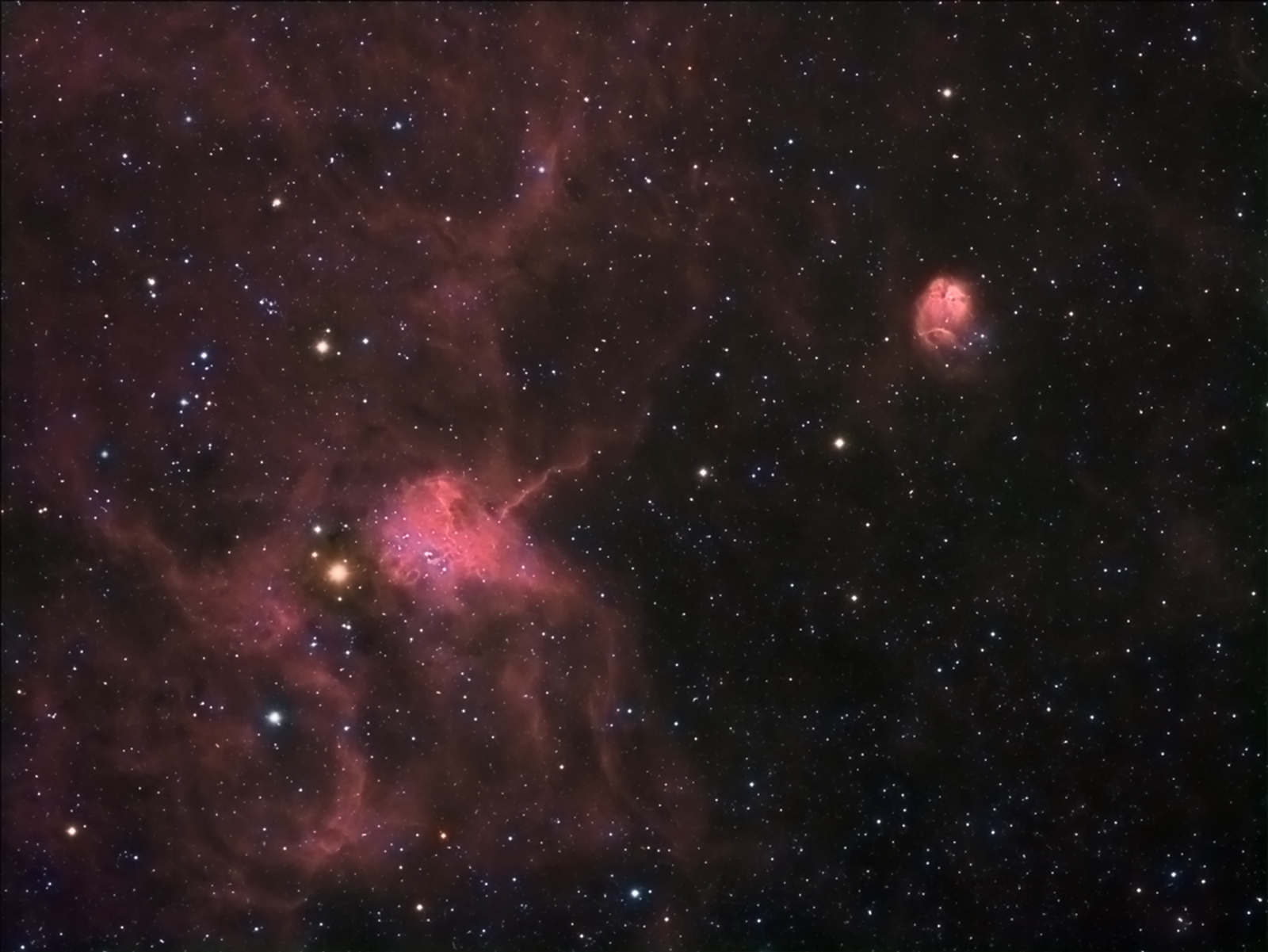
古来より北の星座であるぎょしゃ座には、明るい星団や星雲が数多く存在します。この領域には、散開星団M38、オタマジャクシ星雲IC 410、ぎょしゃ座固有の燃える星雲IC 405、そして興味深いペアであるIC 417(左下)とNGC 1931が含まれます。広大なIC 417と小さなNGC 1931を想像力豊かに見ると、宇宙のクモとハエを連想させます。どちらも約1万光年離れたところにあり、星間雲で形成され、今もなお輝く水素ガスの中に埋もれている若い散開星団です。スケールとして、よりコンパクトなNGC 1931は直径約10光年です。注:APOD編集者が1月14日(木)にミシガン州ホートンで素晴らしい宇宙画像をレビューします。
原文(English)
Bright clusters and nebulae abound in the ancient northern constellation of Auriga. The region includes the open star cluster M38, emission nebula IC 410 with Tadpoles, Auriga's own Flaming Star Nebula IC 405, and this interesting pair IC 417 (lower left) and NGC 1931. An imaginative eye toward the expansive IC 417 and diminutive NGC 1931 suggests a cosmic spider and fly. About 10,000 light-years distant, both represent young, open star clusters formed in interstellar clouds and still embedded in glowing hydrogen gas. For scale, the more compact NGC 1931 is about 10 light-years across. Note: An APOD editor will review great space images on Thursday, January 14, in Houghton, Michigan.
\ この感動を宇宙仲間にシェア /
宇宙をXでシェア
© Troy Tsounis / APOD