
🚀 宇宙の記憶・カレンダー検索
🚀 象徴的な写真:
APOD第1回
🚀 創造の柱
🚀 スピリット火星着陸
🚀 ハッブル超深宇宙
🚀 地球へようこそ|ブルー・マーブル
🚀 エンケラドス
🚀 ベテルギウス
🚀 火星着陸
🚀 青い夕焼け
🚀 冥王星のハート
🚀 皆既日食
🚀 アースライズ再構築
🚀 ブラックホール
🚀 ウェッブ初画像
🚀 アポロ11着陸
APOD30周年(2025年6月16日)
ミレニアム金環日食
Millennium Annular Solar Eclipse
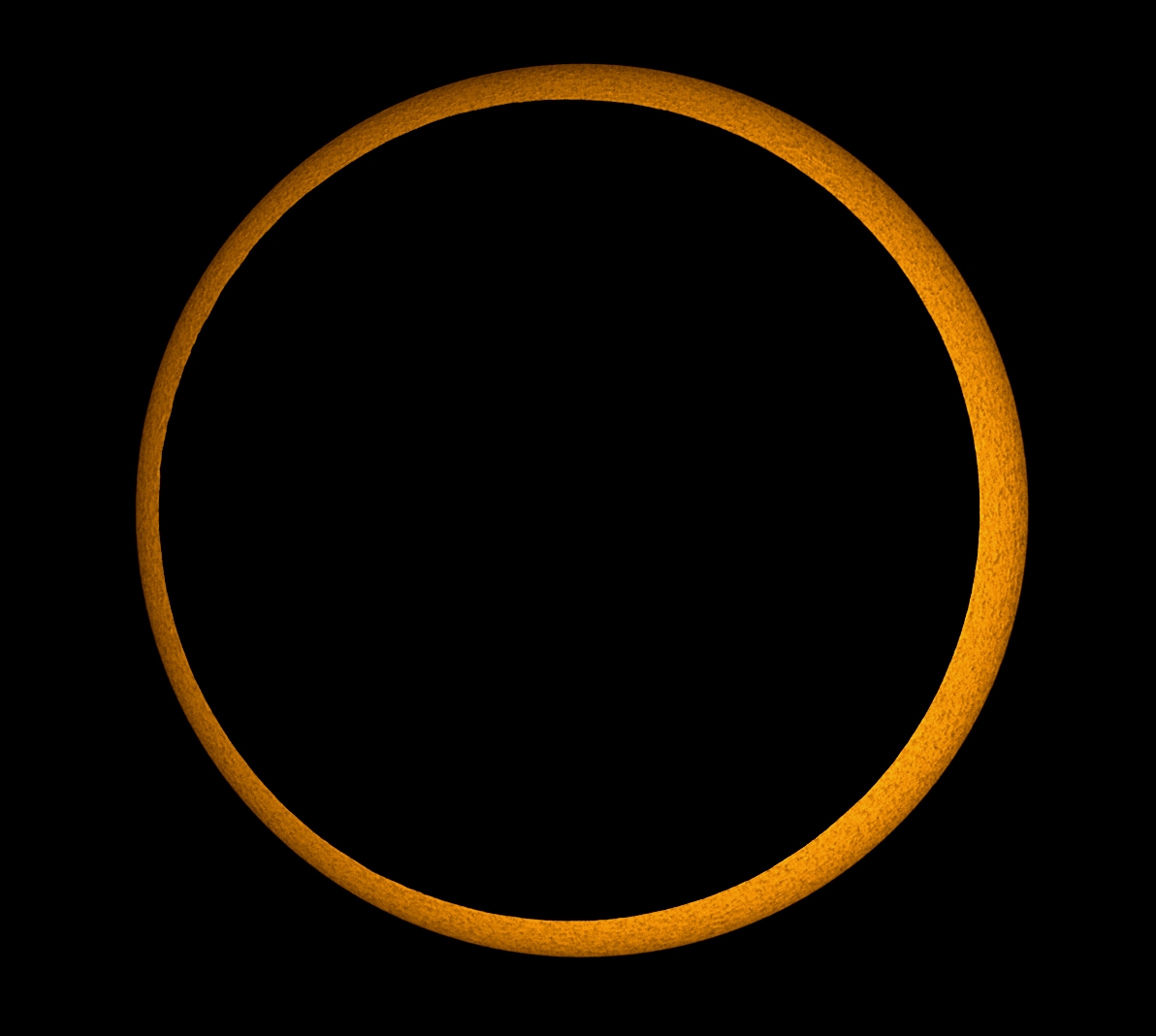
1月15日、月の影が地球を横切りました。月の見かけの大きさが太陽を完全に覆うには小さすぎたため、影の中心線内にいた観測者は金環日食を目撃することができました。視覚的に劇的な炎の輪となった金環食は、場所によって最大11分8秒続き、今後1000年間で最長の金環日食となりました。この月食の真夜中直前の月のシルエットの写真は、インド最南端のカンニヤークマリ市から日食帯内で撮影されました。望遠鏡画像は、可視光のほとんどを遮断するが水素原子からの光は透過するフィルターを通して撮影されました。その結果、暗い月の円盤の周りに、太陽大気の熱対流によって引き起こされる細かい斑点、つまり粒状構造が見られます。
原文(English)
The Moon's shadow raced across planet Earth on January 15. Observers within the central shadow track were able to witness an annular solar eclipse as the Moon's apparent size was too small to completely cover the Sun. A visually dramatic ring of fire, the annular phase lasted up to 11 minutes and 8 seconds depending on location, the longest annular solar eclipse for the next 1,000 years. This picture of the Moon's silhouette just before mid-eclipse was taken within the eclipse path from the city of Kanyakumari at the southern tip of India. The telescopic image was made through a filter that blocks most visible light, but still transmits light from hydrogen atoms. As a result, detailed mottling, or granulation, caused by heat convection in the Sun's atmosphere can be seen around the dark lunar disk.
\ この感動を宇宙仲間にシェア /
宇宙をXでシェア
© Mikael Svalgaard / APOD