
🚀 宇宙の記憶・カレンダー検索
🚀 象徴的な写真:
APOD第1回
🚀 創造の柱
🚀 スピリット火星着陸
🚀 ハッブル超深宇宙
🚀 地球へようこそ|ブルー・マーブル
🚀 エンケラドス
🚀 ベテルギウス
🚀 火星着陸
🚀 青い夕焼け
🚀 冥王星のハート
🚀 皆既日食
🚀 アースライズ再構築
🚀 ブラックホール
🚀 ウェッブ初画像
🚀 アポロ11着陸
APOD30周年(2025年6月16日)
白鳥の中のチューリップ
The Tulip in the Swan
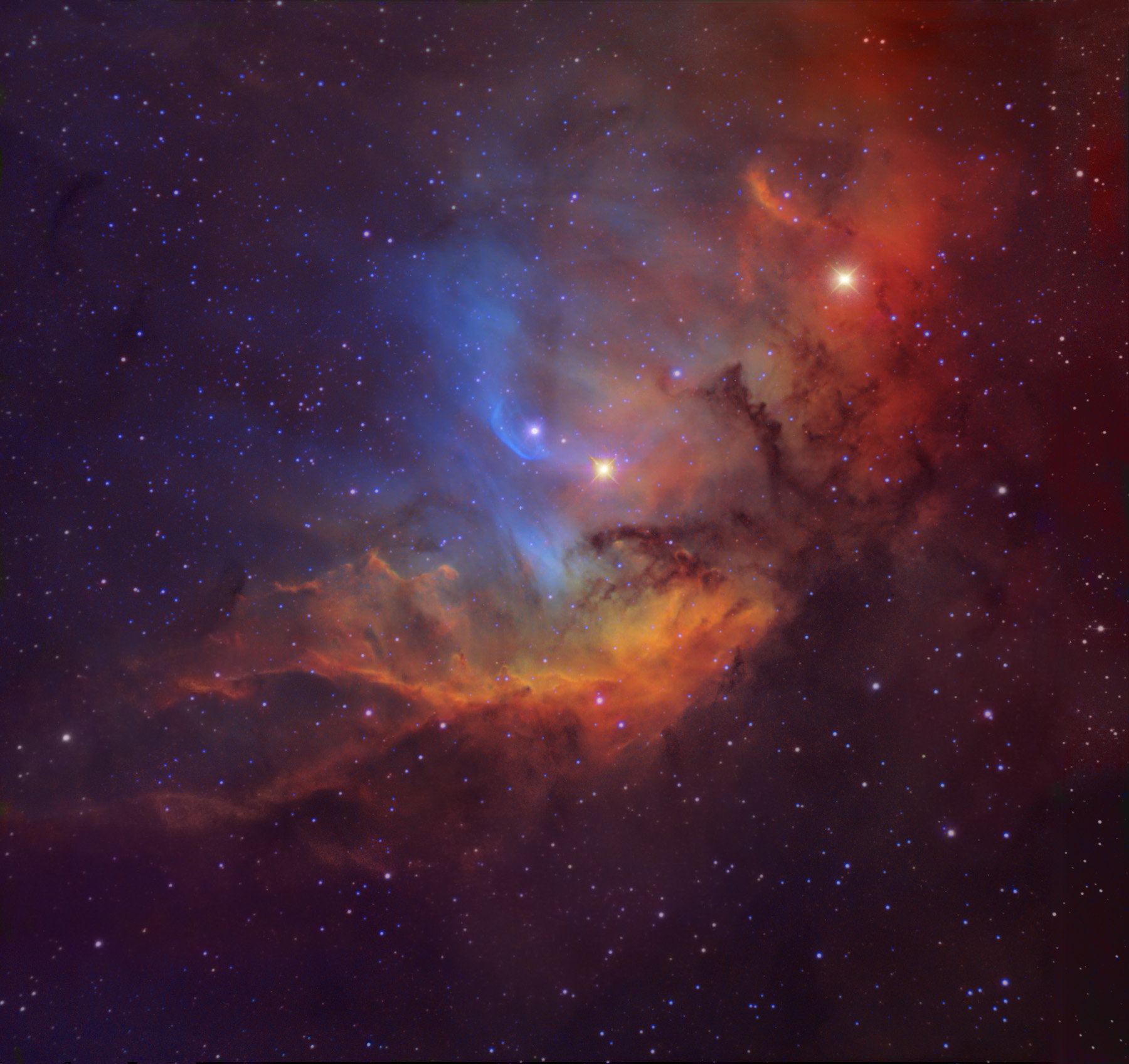
明るい放射領域を囲むこの望遠鏡画像は、天の川銀河の平面に沿って星雲が豊富な星座である白鳥座を向いています。一般にチューリップ星雲と呼ばれるこの輝く星間ガスと塵の雲は、天文学者スチュワート・シャープレスによる1959年のカタログではSh2-101としても記載されています。約8,000光年離れたこの星雲は、当然ながら花のイメージを想起させる唯一の宇宙の雲ではありません。複雑で美しいこの星雲は、電離した硫黄、水素、酸素原子からの放射を赤、緑、青の色にマッピングした合成画像でここに示されています。若い高エネルギーO型星HDE 227018からの紫外線放射が原子を電離し、チューリップ星雲からの放射を駆動しています。HDE 227018は、画像の中心にある青い弧のすぐ近くにある明るい星です。
原文(English)
Framing a bright emission region this telescopic view looks out along the plane of our Milky Way Galaxy toward the nebula rich constellation Cygnus the Swan. Popularly called the Tulip Nebula the glowing cloud of interstellar gas and dust is also found in the 1959 catalog by astronomer Stewart Sharpless as Sh2-101. About 8,000 light-years distant the nebula is understandably not the only cosmic cloud to evoke the imagery of flowers. The complex and beautiful nebula is shown here in a composite image that maps emission from ionized sulfur, hydrogen, and oxygen atoms into red, green, and blue colors. Ultraviolet radiation from young, energetic O star HDE 227018 ionizes the atoms and powers the emission from the Tulip Nebula. HDE 227018 is the bright star very near the blue arc at image center.
\ この感動を宇宙仲間にシェア /
宇宙をXでシェア
© West Mountain
Observatory / APOD