
🚀 宇宙の記憶・カレンダー検索
🚀 象徴的な写真:
APOD第1回
🚀 創造の柱
🚀 スピリット火星着陸
🚀 ハッブル超深宇宙
🚀 地球へようこそ|ブルー・マーブル
🚀 エンケラドス
🚀 ベテルギウス
🚀 火星着陸
🚀 青い夕焼け
🚀 冥王星のハート
🚀 皆既日食
🚀 アースライズ再構築
🚀 ブラックホール
🚀 ウェッブ初画像
🚀 アポロ11着陸
APOD30周年(2025年6月16日)
ドイツ上空の夜光
Airglow Over Germany
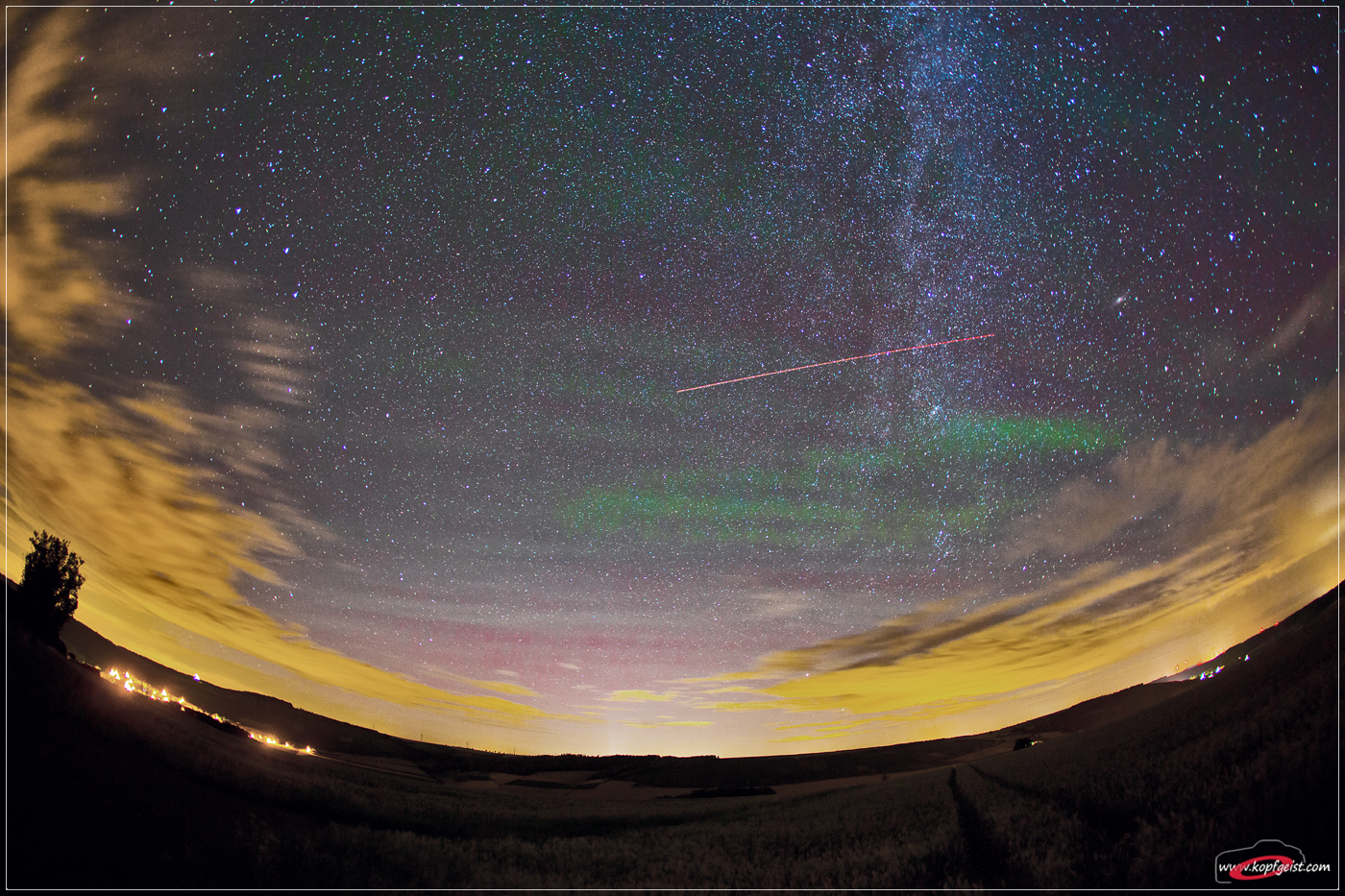
空気は光るのでしょうか?確かに光りますが、通常は目に見えにくいものです。しかし、条件が整えば、高度約90キロメートル付近に微かな光が観測でき、広角レンズで長時間露光撮影を行うと最も容易に捉えることができます。同じ大気光は、地球軌道上から撮影された写真では、地表付近に浮かぶ微かな弧として、下方から見下ろすと頻繁に見られます。上の写真では、ベージュ色の雲の間、湾曲した地球の上、飛行機の後ろ、そして輝く星々の前に、緑色の大気光の帯が見られます。この光は主に太陽からの紫外線による原子の励起によって生じ、帯は上昇する大気重力波によって引き起こされる密度変動によって生じます。上の画像は7月中旬にドイツのヴァイカースハイム上空で撮影されました。雷やオーロラも空気を光らせることがありますが、これらは粒子衝突によって生じるため、より短時間で消えてしまいます。天体物理学者の皆様へ:天体物理学ソースコードライブラリに500以上のコードが登録されました。
原文(English)
Does air glow? It does, but it is usually hard to see. When conditions are right, however, a faint glow about 90 kilometers up can be observed, most easily with a wide-angle long-duration camera exposure. The same airglow can also frequently be seen looking down -- in pictures taken from Earth orbit -- as a faint arc hovering above the surface. Pictured above between the beige clouds, above the curving Earth, behind the streaking airplane, and in front of the sparkling stars are some green bands of airglow. The glow is predominantly created by the excitation of atoms by ultraviolet light from the Sun, with the bands resulting from density fluctuations caused by upward moving atmospheric gravity waves. The above image was taken in mid-July above Weikersheim, Germany. Lightning and aurorae can also cause air to glow, but result from particle collisions and are more fleeting. Astrophysicists: Now over 500 codes in the Astrophysics Source Code Library
\ この感動を宇宙仲間にシェア /
宇宙をXでシェア
© Jens Hackmann / APOD