
🚀 宇宙の記憶・カレンダー検索
🚀 象徴的な写真:
APOD第1回
🚀 創造の柱
🚀 スピリット火星着陸
🚀 ハッブル超深宇宙
🚀 地球へようこそ|ブルー・マーブル
🚀 エンケラドス
🚀 ベテルギウス
🚀 火星着陸
🚀 青い夕焼け
🚀 冥王星のハート
🚀 皆既日食
🚀 アースライズ再構築
🚀 ブラックホール
🚀 ウェッブ初画像
🚀 アポロ11着陸
APOD30周年(2025年6月16日)
特異な楕円銀河ケンタウルス座A
Peculiar Elliptical Galaxy Centaurus A
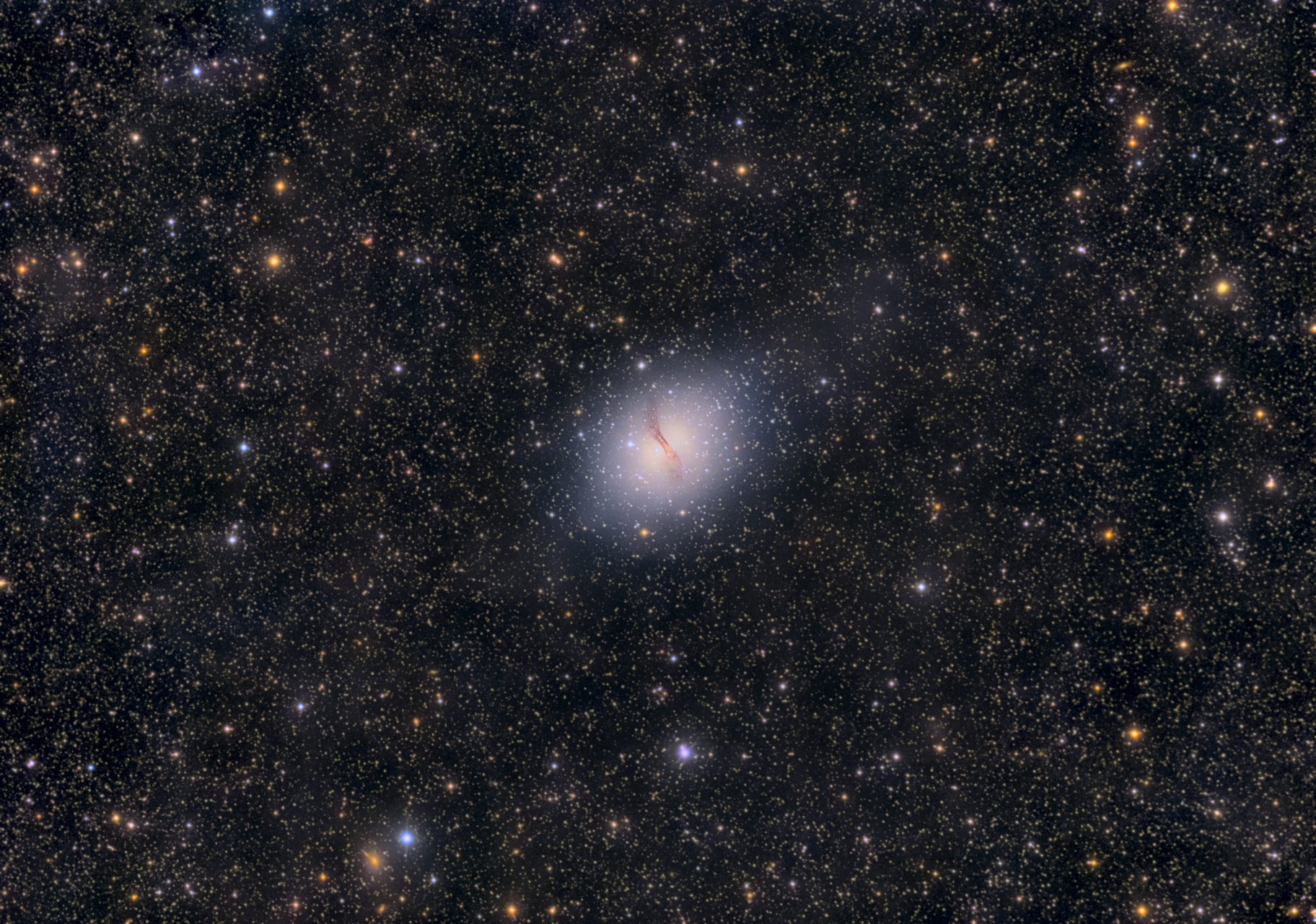
この銀河の中心はどうなっているのでしょうか? ケンタウルス座Aの楕円銀河の中心には、珍しい、劇的なダストレーンが走っています。これらのダストレーンは非常に厚く、可視光では銀河の中心をほぼ完全に覆い隠しています。ケンタウルス座Aの赤い星と丸い形は巨大楕円銀河の特徴であり、巨大楕円銀河は通常、暗黒のダストが少ないため、これは特に珍しいことです。NGC 5128としても知られるケンタウルス座Aは、若い青い星の割合が高く、非常に強い電波源であるという点でも、平均的な楕円銀河と比べて珍しいです。証拠によると、ケンタウルス座Aは2つの通常の銀河の衝突の結果である可能性が高いです。衝突中に多くの若い星が形成されましたが、ケンタウルス座Aの珍しいダストベルトの形成の詳細については、まだ研究中です。ケンタウルス座Aはわずか1300万光年しか離れておらず、最も近い活動銀河です。上に示したケンタウルス座Aは、6万光年にわたって広がり、双眼鏡を使えばケンタウルス座の方向で見ることができる。
原文(English)
What's happened to the center of this galaxy? Unusual and dramatic dust lanes run across the center of elliptical galaxy Centaurus A. These dust lanes are so thick they almost completely obscure the galaxy's center in visible light. This is particularly unusual as Cen A's red stars and round shape are characteristic of a giant elliptical galaxy, a galaxy type usually low in dark dust. Cen A, also known as NGC 5128, is also unusual compared to an average elliptical galaxy because it contains a higher proportion of young blue stars and is a very strong source of radio emission. Evidence indicates that Cen A is likely the result of the collision of two normal galaxies. During the collision, many young stars were formed, but details of the creation of Cen A's unusual dust belts are still being researched. Cen A lies only 13 million light years away, making it the closest active galaxy. Cen A, pictured above, spans 60,000 light years and can be seen with binoculars toward the constellation of Centaurus.
\ この感動を宇宙仲間にシェア /
宇宙をXでシェア
© Roberto Colombari / APOD