
🚀 宇宙の記憶・カレンダー検索
🚀 象徴的な写真:
APOD第1回
🚀 創造の柱
🚀 スピリット火星着陸
🚀 ハッブル超深宇宙
🚀 地球へようこそ|ブルー・マーブル
🚀 エンケラドス
🚀 ベテルギウス
🚀 火星着陸
🚀 青い夕焼け
🚀 冥王星のハート
🚀 皆既日食
🚀 アースライズ再構築
🚀 ブラックホール
🚀 ウェッブ初画像
🚀 アポロ11着陸
APOD30周年(2025年6月16日)
ウォルフ・ライエ星124:恒星風発生装置
Wolf-Rayet Star 124: Stellar Wind Machine
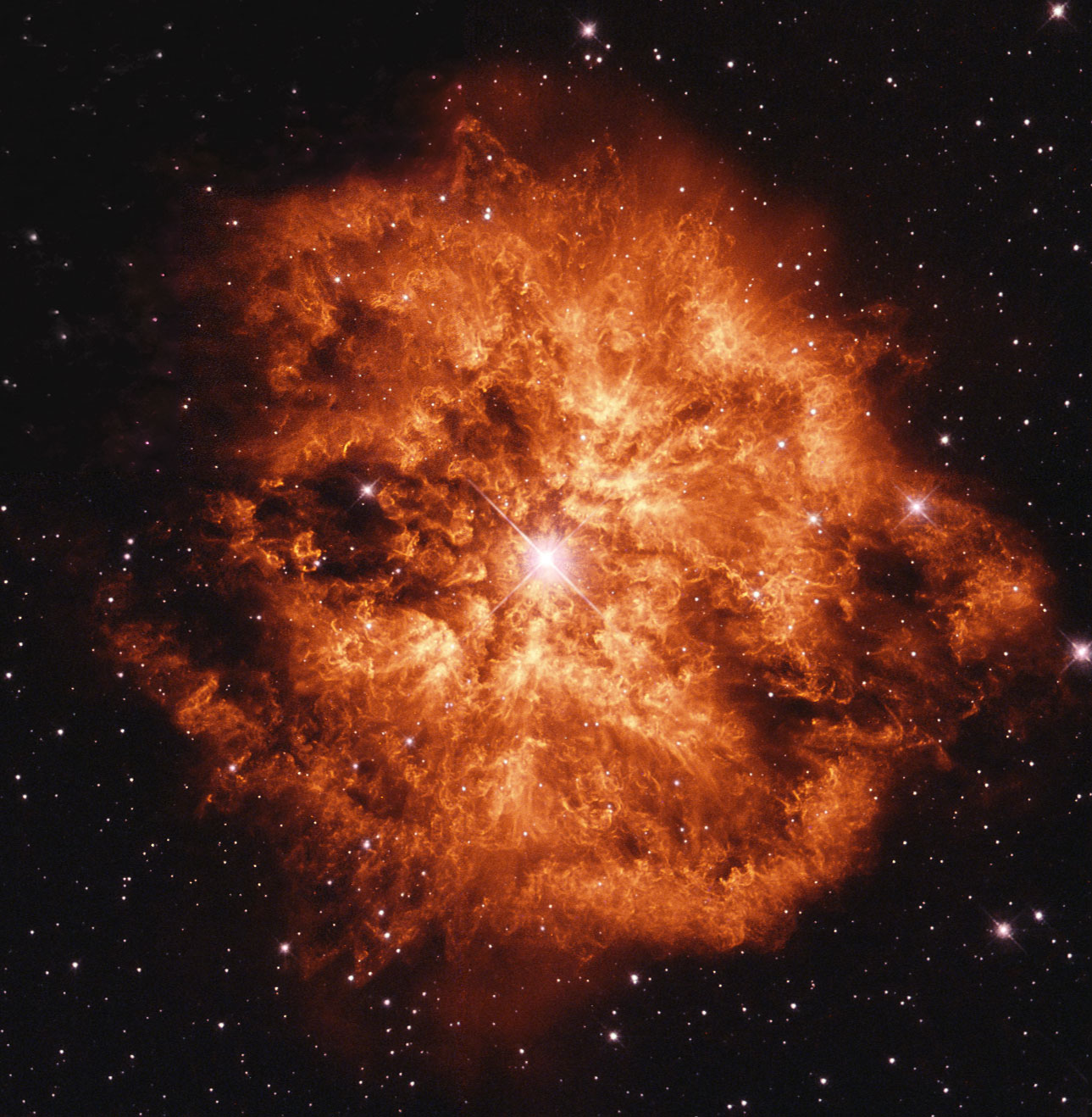
Some stars explode in slow motion. Rare, massive Wolf-Rayet stars are so tumultuous and hot that they slowly disintegrating right before our telescopes. Glowing gas globs each typically over 30 times more massive than the Earth are being expelled by violent stellar winds. Wolf-Rayet star WR 124, visible near the above image center spanning six light years across, is thus creating the surrounding nebula known as M1-67. Details of why this star has been slowly blowing itself apart over the past 20,000 years remains a topic of research. WR 124 lies 15,000 light-years away towards the constellation of Sagitta. The fate of any given Wolf-Rayet star likely depends on how massive it is, but many are thought to end their lives with spectacular explosions such as supernovas or gamma-ray bursts.
原文(English)
Some stars explode in slow motion. Rare, massive Wolf-Rayet stars are so tumultuous and hot that they slowly disintegrating right before our telescopes. Glowing gas globs each typically over 30 times more massive than the Earth are being expelled by violent stellar winds. Wolf-Rayet star WR 124, visible near the above image center spanning six light years across, is thus creating the surrounding nebula known as M1-67. Details of why this star has been slowly blowing itself apart over the past 20,000 years remains a topic of research. WR 124 lies 15,000 light-years away towards the constellation of Sagitta. The fate of any given Wolf-Rayet star likely depends on how massive it is, but many are thought to end their lives with spectacular explosions such as supernovas or gamma-ray bursts.
\ この感動を宇宙仲間にシェア /
宇宙をXでシェア
© NASA / APOD