
🚀 宇宙の記憶・カレンダー検索
🚀 象徴的な写真:
APOD第1回
🚀 創造の柱
🚀 スピリット火星着陸
🚀 ハッブル超深宇宙
🚀 地球へようこそ|ブルー・マーブル
🚀 エンケラドス
🚀 ベテルギウス
🚀 火星着陸
🚀 青い夕焼け
🚀 冥王星のハート
🚀 皆既日食
🚀 アースライズ再構築
🚀 ブラックホール
🚀 ウェッブ初画像
🚀 アポロ11着陸
APOD30周年(2025年6月16日)
馬頭星雲(青色から赤外線まで)
The Horsehead Nebula from Blue to Infrared
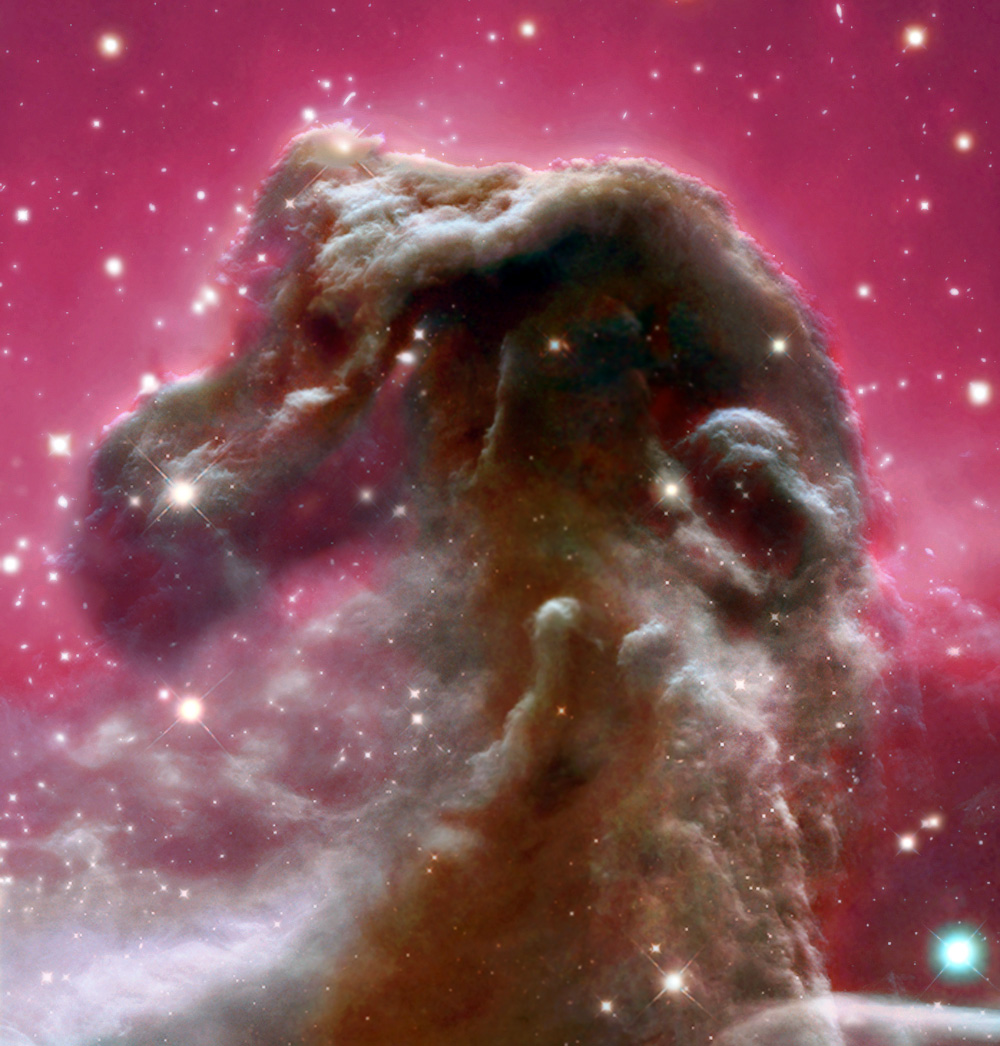
空で最も識別しやすい星雲の一つであるオリオン座の馬頭星雲は、巨大な暗黒分子雲の一部です。バーナード33としても知られるこの独特な形状は、1800年代後半に写真乾板で初めて発見されました。赤い輝きは、星雲の背後にある水素ガスが近くの明るい星シグマ・オリオンによって電離されたことに由来します。馬頭星雲の暗さは主に厚い塵によるものですが、首の下部は左側に影を落としています。星雲から流れ出るガスの流れは、強い磁場によって集中しています。馬頭星雲の底にある明るい点は、まさに形成過程にある若い星です。馬頭星雲から地球に光が届くまでには約1500年かかります。上の画像は、アルゼンチンから青、緑、赤、水素アルファ光で撮影された画像と、軌道上のハッブル宇宙望遠鏡が赤外線で撮影した画像をデジタル合成したものです。 APODをフォローするには、Facebook、Google Plus、またはTwitterをご覧ください。
原文(English)
One of the most identifiable nebulae in the sky, the Horsehead Nebula in Orion, is part of a large, dark, molecular cloud. Also known as Barnard 33, the unusual shape was first discovered on a photographic plate in the late 1800s. The red glow originates from hydrogen gas predominantly behind the nebula, ionized by the nearby bright star Sigma Orionis. The darkness of the Horsehead is caused mostly by thick dust, although the lower part of the Horsehead's neck casts a shadow to the left. Streams of gas leaving the nebula are funneled by a strong magnetic field. Bright spots in the Horsehead Nebula's base are young stars just in the process of forming. Light takes about 1,500 years to reach us from the Horsehead Nebula. The above image is a digital combination of images taken in blue, green, red, and hydrogen-alpha light from the Argentina, and an image taken in infrared light by the orbiting Hubble Space Telescope. Follow APOD on: Facebook, Google Plus, or Twitter
\ この感動を宇宙仲間にシェア /
宇宙をXでシェア
© Optical:
Aldo Mottino & Carlos Colazo,
OAC, C�rdoba;
Infrared: Hubble Legacy Archive / APOD