
🚀 宇宙の記憶・カレンダー検索
🚀 象徴的な写真:
APOD第1回
🚀 創造の柱
🚀 スピリット火星着陸
🚀 ハッブル超深宇宙
🚀 地球へようこそ|ブルー・マーブル
🚀 エンケラドス
🚀 ベテルギウス
🚀 火星着陸
🚀 青い夕焼け
🚀 冥王星のハート
🚀 皆既日食
🚀 アースライズ再構築
🚀 ブラックホール
🚀 ウェッブ初画像
🚀 アポロ11着陸
APOD30周年(2025年6月16日)
ペルセウス座流星群の下部
A Perseid Below
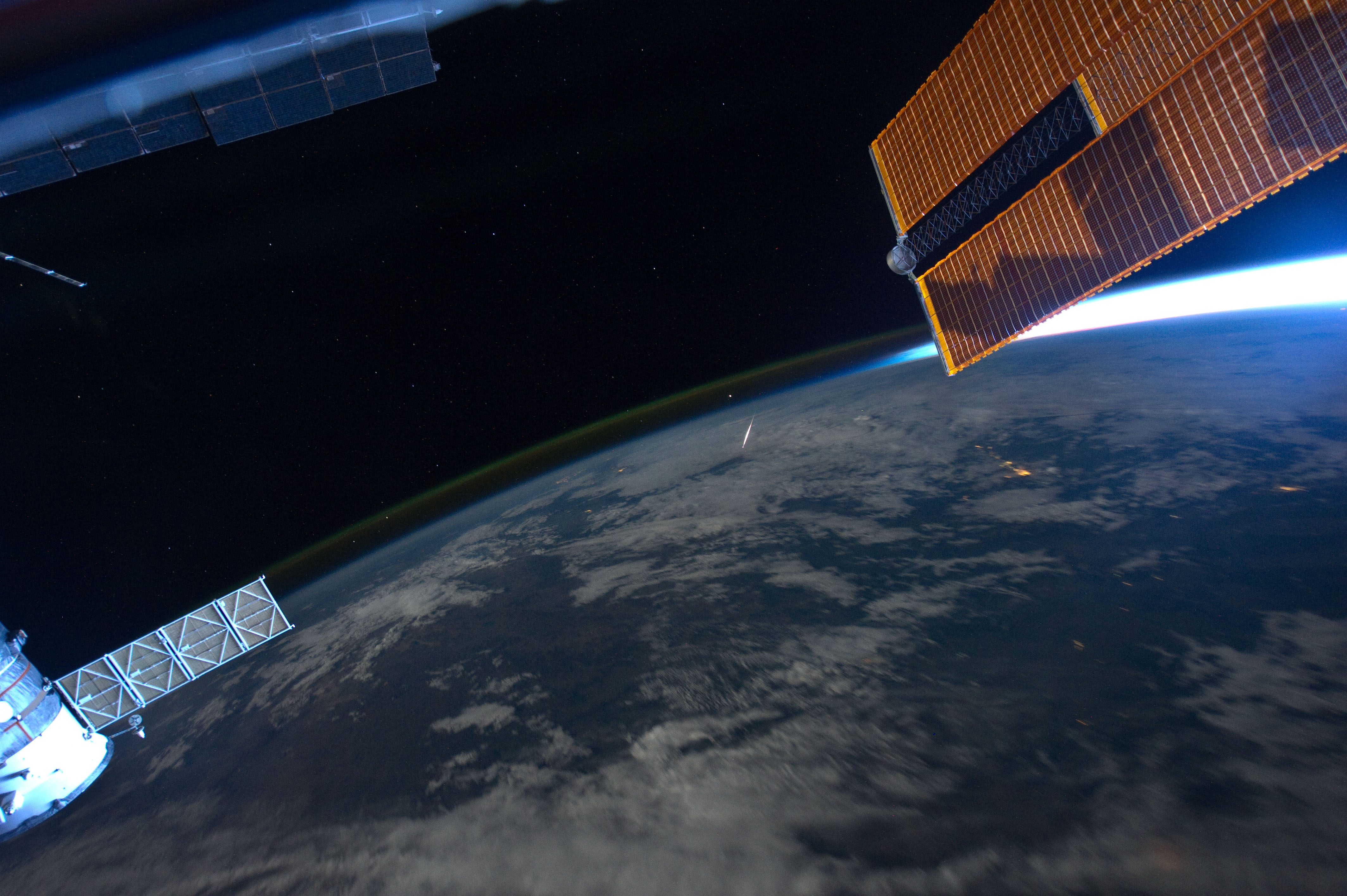
地球の住人は通常、空を見上げて流星群を観測します。しかし、宇宙飛行士ロン・ガランが2011年8月13日に撮影したこの素晴らしい写真は、下を見下ろしてペルセウス座流星群を捉えたものです。高度約380キロメートルを周回する国際宇宙ステーションに搭乗しているガランの視点から見ると、ペルセウス座流星群は、スウィフト・タットル彗星が残した塵を巻き上げ、白熱した光となって下を流れていきます。輝く彗星の塵の粒は、地球表面から約100キロメートル上空のより密度の高い大気中を秒速約60キロメートルで移動しています。この場合、短縮された流星の閃光は、地球の湾曲した縁と緑がかった大気光の層の下、明るい星アークトゥルスのすぐ下の、画面中央より右にあります。流星群を見上げたいですか?幸運なことに、2014年のペルセウス座流星群は今週ピークを迎えます。残念ながら、今年の流星群の中でも暗い流星は、ほぼ満月の光で照らされた比較的明るい空では見づらいだろう。
原文(English)
Denizens of planet Earth typically watch meteor showers by looking up. But this remarkable view, captured on August 13, 2011 by astronaut Ron Garan, caught a Perseid meteor by looking down. From Garan's perspective onboard the International Space Station orbiting at an altitude of about 380 kilometers, the Perseid meteors streak below, swept up dust left from comet Swift-Tuttle heated to incandescence. The glowing comet dust grains are traveling at about 60 kilometers per second through the denser atmosphere around 100 kilometers above Earth's surface. In this case, the foreshortened meteor flash is right of frame center, below the curving limb of the Earth and a layer of greenish airglow, just below bright star Arcturus. Want to look up at a meteor shower? You're in luck, as the 2014 Perseids meteor shower peaks this week. Unfortunately, the fainter meteors in this year's shower will be hard to see in a relatively bright sky lit by the glow of a nearly full Moon.
\ この感動を宇宙仲間にシェア /
宇宙をXでシェア
© NASA / APOD