
🚀 宇宙の記憶・カレンダー検索
🚀 象徴的な写真:
APOD第1回
🚀 創造の柱
🚀 スピリット火星着陸
🚀 ハッブル超深宇宙
🚀 地球へようこそ|ブルー・マーブル
🚀 エンケラドス
🚀 ベテルギウス
🚀 火星着陸
🚀 青い夕焼け
🚀 冥王星のハート
🚀 皆既日食
🚀 アースライズ再構築
🚀 ブラックホール
🚀 ウェッブ初画像
🚀 アポロ11着陸
APOD30周年(2025年6月16日)
雲、星団、彗星のサイディングスプリング
Cloud, Clusters and Comet Siding Spring
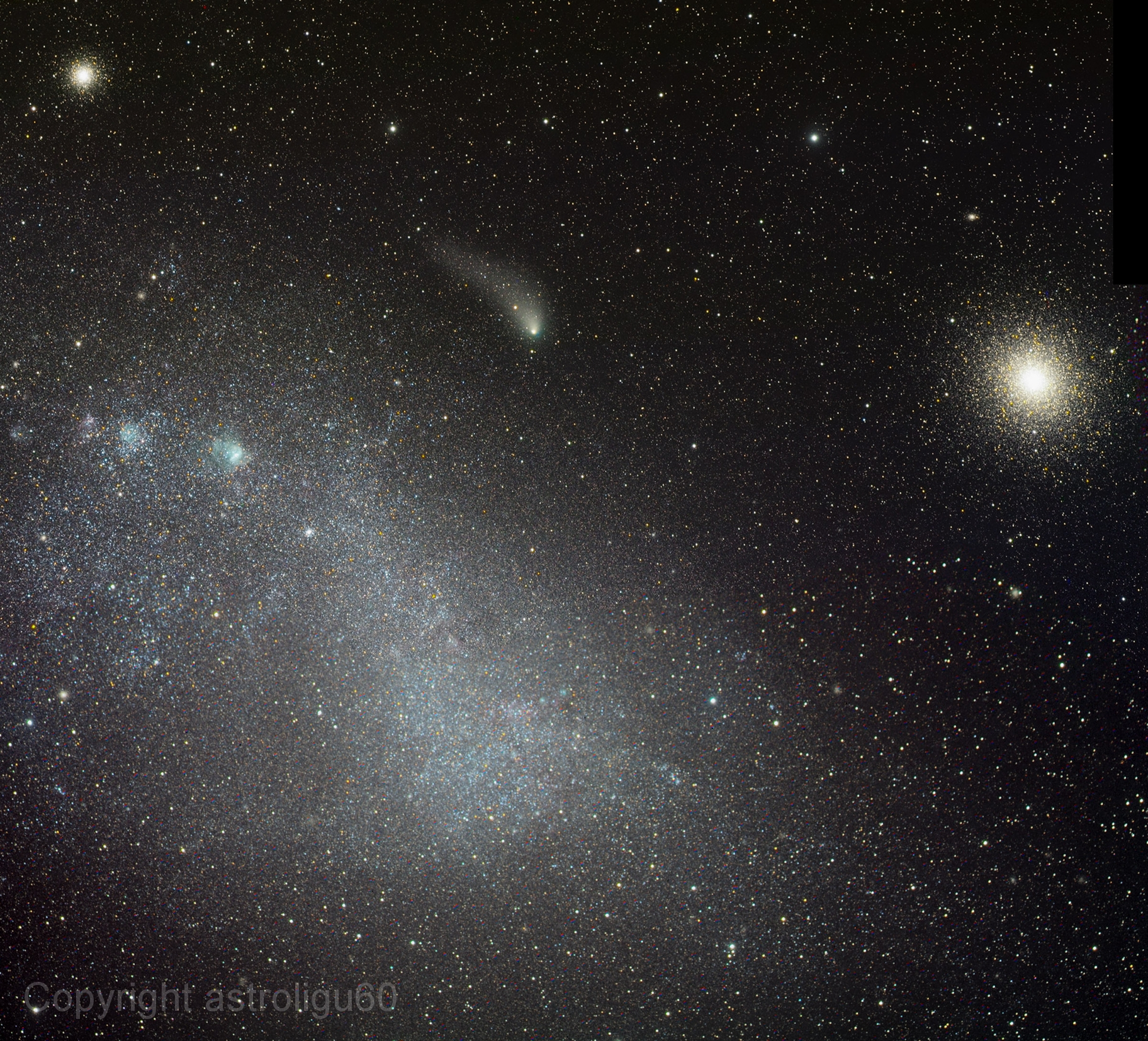
10月19日、サイディング・スプリング彗星を観測するのに最適な場所は火星です。この彗星(C/2013 A1)は、2013年1月にオーストラリアのサイディング・スプリング天文台のロバート・マクノートによって発見され、その後、火星から132,000キロメートル以内を通過します。これは地球と月の距離の3分の1強に相当する、非常に近い距離です。しかし、地球の南半球の住民にとっては、現在でも彗星の素晴らしい眺めが楽しめます。8月29日に撮影されたこの望遠鏡の写真は、彗星の白っぽいコマと弧を描く塵の尾が南の空を横切る様子を捉えています。素晴らしい視野には、小マゼラン雲と球状星団47 Tucanae(右)とNGC 362(左上)が含まれています。火星軌道上の宇宙船が心配ですか?彗星から放出される塵粒子は危険をもたらす可能性があるため、管制官は彗星が火星に接近する際に、火星周回探査機を惑星の反対側に配置する計画を立てている。
原文(English)
On October 19th, a good place to watch Comet Siding Spring will be from Mars. Then, this inbound visitor (C/2013 A1) to the inner solar system, discovered in January 2013 by Robert McNaught at Australia's Siding Spring Observatory, will pass within 132,000 kilometers of the Red Planet. That's a near miss, equivalent to just over 1/3 the Earth-Moon distance. Great views of the comet for denizens of planet Earth's southern hemisphere are possible now, though. This telescopic snapshot from August 29 captured the comet's whitish coma and arcing dust tail sweeping through southern skies. The fabulous field of view includes, the Small Magellanic Cloud and globular star clusters 47 Tucanae (right) and NGC 362 (upper left). Worried about all those spacecraft in Martian orbit? Streaking dust particles from the comet could pose a danger and controllers plan to position Mars orbiters on the opposite side of the planet during the comet's close flyby.
\ この感動を宇宙仲間にシェア /
宇宙をXでシェア
© CARA Project / APOD