
🚀 宇宙の記憶・カレンダー検索
🚀 象徴的な写真:
APOD第1回
🚀 創造の柱
🚀 スピリット火星着陸
🚀 ハッブル超深宇宙
🚀 地球へようこそ|ブルー・マーブル
🚀 エンケラドス
🚀 ベテルギウス
🚀 火星着陸
🚀 青い夕焼け
🚀 冥王星のハート
🚀 皆既日食
🚀 アースライズ再構築
🚀 ブラックホール
🚀 ウェッブ初画像
🚀 アポロ11着陸
APOD30周年(2025年6月16日)
射手座の星空
A Sagittarius Starscape
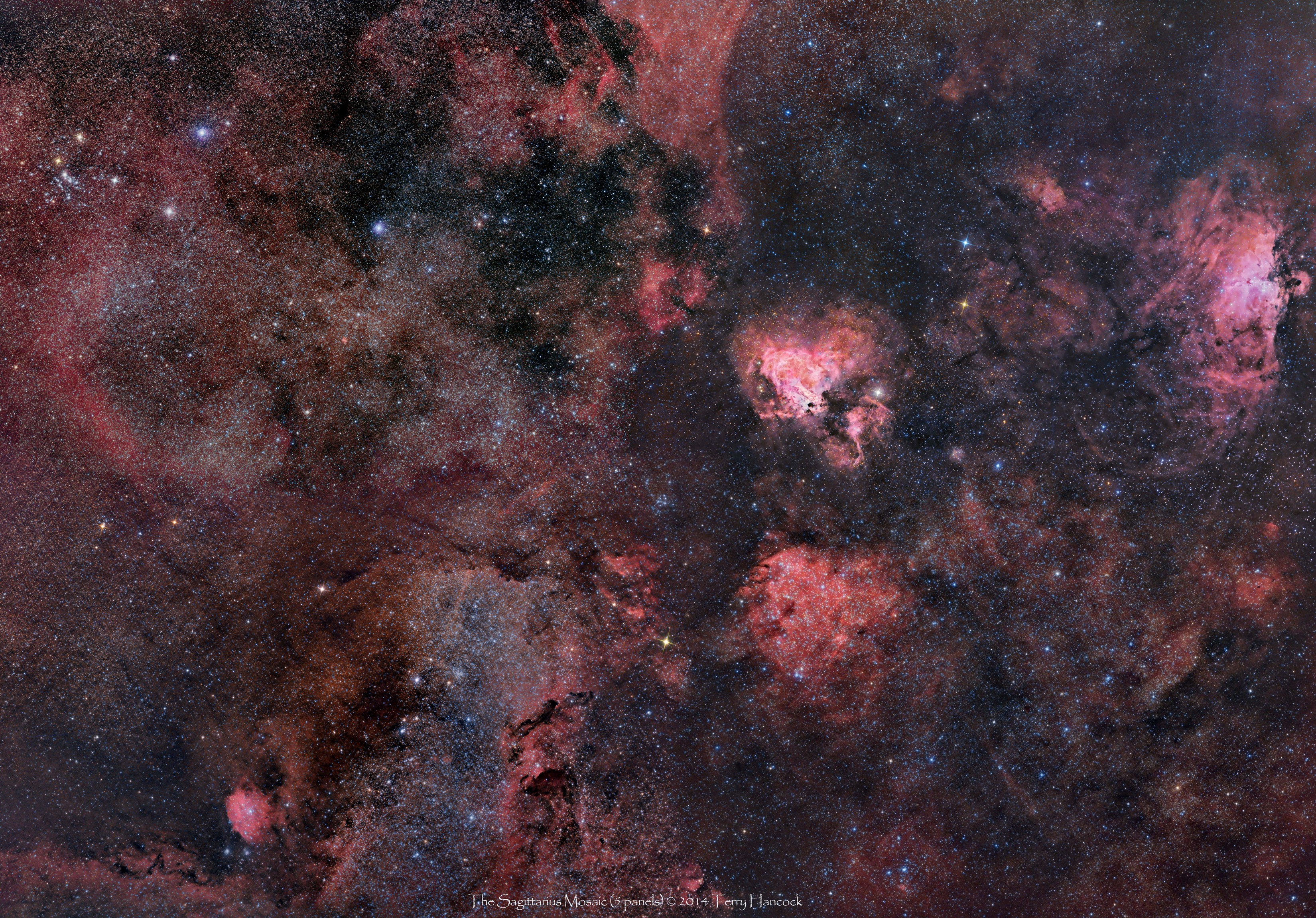
この豊かな星空は、いて座の渦状腕と天の川銀河の中心に向かって、空の約7度に広がっています。望遠鏡で撮影されたモザイク画像には、18世紀の宇宙旅行者シャルル・メシエがカタログ化した、よく知られた明るい星雲や星団が写っています。今でも天体観測者に人気のスポットであるM16(わし座、右端)とM17(白鳥座、中央付近)の星雲は、最も明るい星形成領域です。翼幅は約100光年で、5000光年以上離れたところから、水素原子特有の赤みがかった光を放っています。画面左上の端付近にあるカラフルな散開星団M25は、わずか2000光年の距離にあり、直径は約20光年と、より近い位置にあります。いて座星雲としても知られるM24は、画面下部の中央やや左寄りに密集しており、星間塵の遮蔽領域を通して、より暗く遠い天の川の星々が狭い窓から見えている。
原文(English)
This rich starscape spans nearly 7 degrees on the sky, toward the Sagittarius spiral arm and the center of our Milky Way galaxy. A telescopic mosaic, it features well-known bright nebulae and star clusters cataloged by 18th century cosmic tourist Charles Messier. Still popular stops for skygazers M16, the Eagle (far right), and M17, the Swan (near center) nebulae are the brightest star-forming emission regions. With wingspans of 100 light-years or so, they shine with the telltale reddish glow of hydrogen atoms from over 5,000 light-years away. Colorful open star cluster M25 near the upper left edge of the scene is closer, a mere 2,000 light-years distant and about 20 light-years across. M24, also known as the Sagittarius Star Cloud, crowds in just left of center along the bottom of the frame, fainter and more distant Milky Way stars seen through a narrow window in obscuring fields of interstellar dust.
\ この感動を宇宙仲間にシェア /
宇宙をXでシェア
© Terry Hancock / APOD