
🚀 宇宙の記憶・カレンダー検索
🚀 象徴的な写真:
APOD第1回
🚀 創造の柱
🚀 スピリット火星着陸
🚀 ハッブル超深宇宙
🚀 地球へようこそ|ブルー・マーブル
🚀 エンケラドス
🚀 ベテルギウス
🚀 火星着陸
🚀 青い夕焼け
🚀 冥王星のハート
🚀 皆既日食
🚀 アースライズ再構築
🚀 ブラックホール
🚀 ウェッブ初画像
🚀 アポロ11着陸
APOD30周年(2025年6月16日)
星屑とガスで描かれたラグーン星雲
The Lagoon Nebula in Stars Dust and Gas
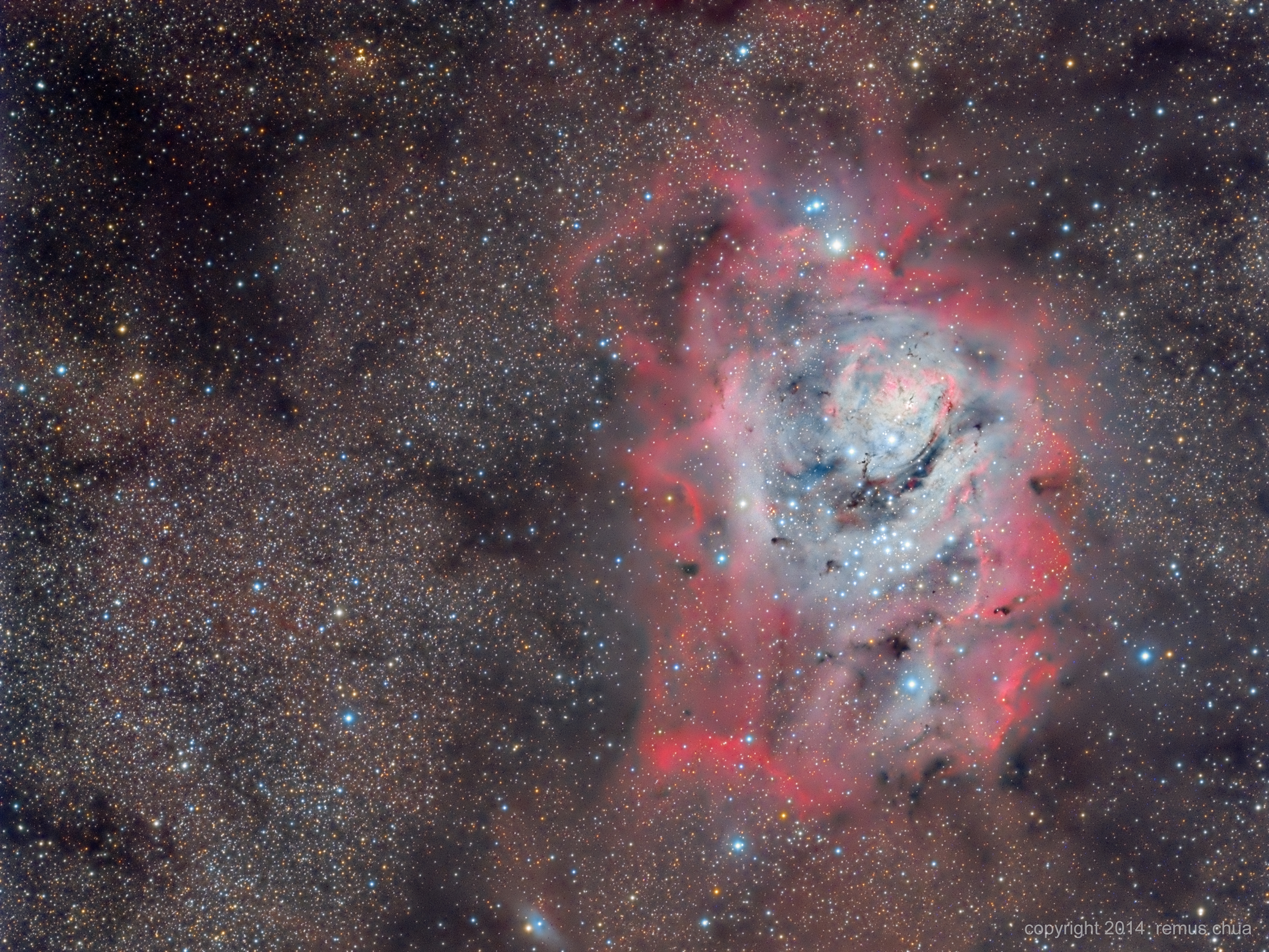
壮大で雄大なラグーン星雲は、多くの若い星と高温ガスの住処です。直径100光年にも及ぶラグーン星雲は、地球からわずか5000光年ほどの距離にありながら、非常に大きく明るいため、望遠鏡を使わなくてもいて座の方向から見ることができます。数百万年前にこの星雲内で形成された散開星団NGC 6530からは、多くの明るい星が見えます。M8やNGC 6523としても知られるこの大きな星雲は、散開星団の中心の左側に見られる塵の帯にちなんで「ラグーン」と名付けられました。星雲の中心にあるガスと塵の明るい塊は、砂時計星雲として知られています。掲載されている写真は、M8の新たに処理されたパノラマ写真で、月の直径の5倍の大きさを捉えています。ラグーン星雲では、そこに存在する多くの球状星団が示すように、星形成が続いています。APOD壁掛けカレンダー:星雲と星団
原文(English)
The large majestic Lagoon Nebula is home for many young stars and hot gas. Spanning 100 light years across while lying only about 5000 light years distant, the Lagoon Nebula is so big and bright that it can be seen without a telescope toward the constellation of Sagittarius. Many bright stars are visible from NGC 6530, an open cluster that formed in the nebula only several million years ago. The greater nebula, also known as M8 and NGC 6523, is named "Lagoon" for the band of dust seen to the left of the open cluster's center. A bright knot of gas and dust in the nebula's center is known as the Hourglass Nebula. The featured picture is a newly processed panorama of M8, capturing five times the diameter of the Moon. Star formation continues in the Lagoon Nebula as witnessed by the many globules that exist there. APOD Wall Calendar: Nebulas and Star Clusters
\ この感動を宇宙仲間にシェア /
宇宙をXでシェア
© Remus Chua
(Celestial Portraits) / APOD