
🚀 宇宙の記憶・カレンダー検索
🚀 象徴的な写真:
APOD第1回
🚀 創造の柱
🚀 スピリット火星着陸
🚀 ハッブル超深宇宙
🚀 地球へようこそ|ブルー・マーブル
🚀 エンケラドス
🚀 ベテルギウス
🚀 火星着陸
🚀 青い夕焼け
🚀 冥王星のハート
🚀 皆既日食
🚀 アースライズ再構築
🚀 ブラックホール
🚀 ウェッブ初画像
🚀 アポロ11着陸
APOD30周年(2025年6月16日)
NGC 206とアンドロメダ銀河の星雲
NGC 206 and the Star Clouds of Andromeda
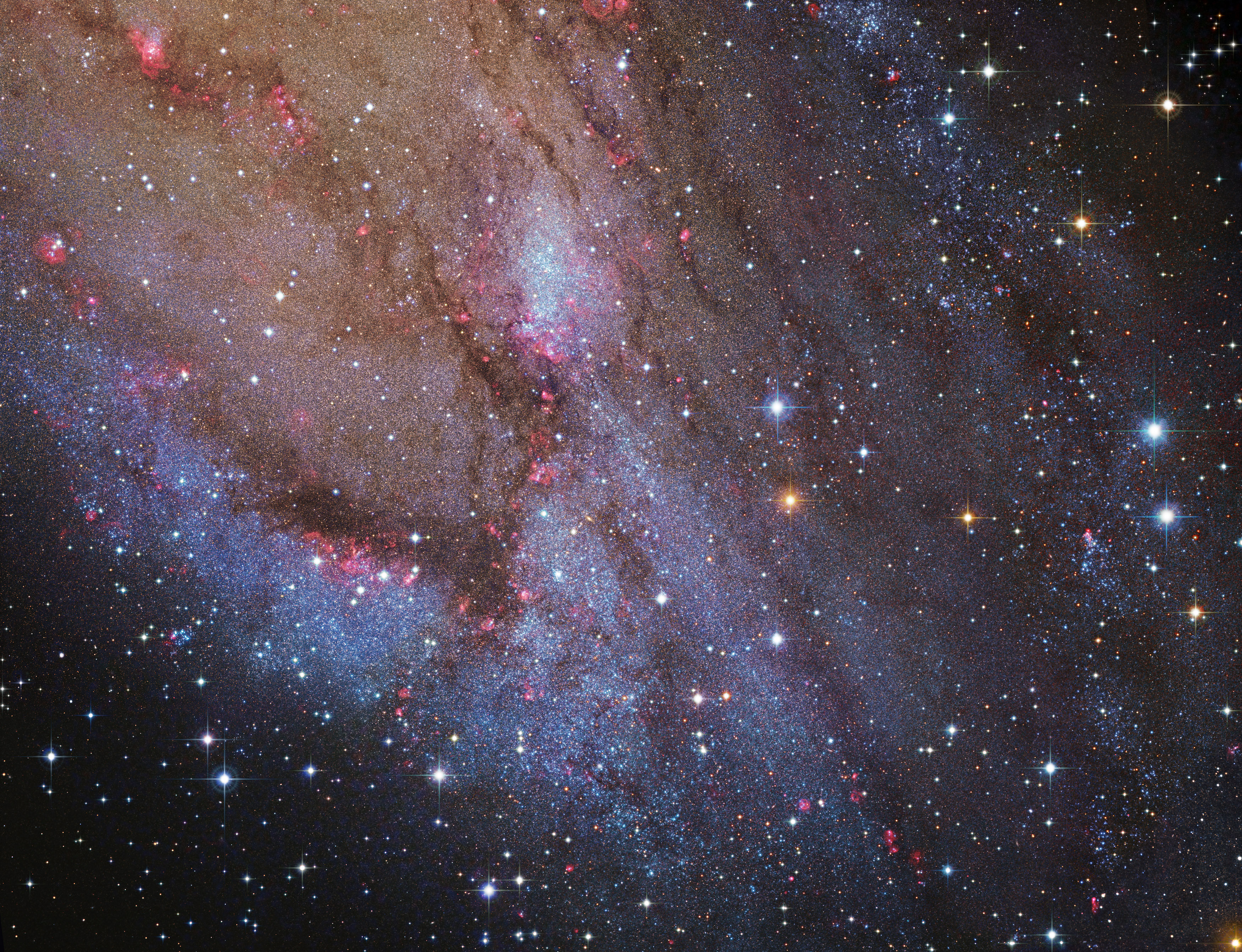
NGC 206 としてカタログ化されている巨大な星団は、隣接するアンドロメダ銀河の塵に覆われた腕の中に位置している。M31 としても知られるこの渦巻銀河は、わずか 250 万光年しか離れていない。NGC 206 は、宇宙と地上の観測所からのデータを合成したこの見事なアンドロメダ銀河円盤の南西端のクローズアップ画像の上部中央付近にある。NGC 206 の明るい青い星は、その若さを示している。実際、その最も若い大質量星は 1000 万年未満である。天の川銀河の円盤にある若い星の散開星団や銀河団よりもはるかに大きい NGC 206 は、約 4000 光年にわたって広がっている。これは、近くの渦巻銀河 M33 の巨大な星形成領域 NGC 604 や大マゼラン雲のタランチュラ星雲に匹敵する大きさである。アンドロメダ銀河内の星形成領域は、電離水素ガスの雲から発せられる特徴的な赤みがかった放射によって明らかになる。
原文(English)
The large stellar association cataloged as NGC 206 is nestled within the dusty arms of the neighboring Andromeda galaxy. Also known as M31, the spiral galaxy is a mere 2.5 million light-years away. NGC 206 is near top center in this gorgeous close-up of the southwestern extent of Andromeda's disk, a remarkable composite of data from space and ground-based observatories. The bright, blue stars of NGC 206 indicate its youth. In fact, its youngest massive stars are less than 10 million years old. Much larger than the open or galactic clusters of young stars in the disk of our Milky Way galaxy, NGC 206 spans about 4,000 light-years. That's comparable in size to the giant stellar nurseries NGC 604 in nearby spiral M33 and the Tarantula Nebula, in the Large Magellanic Cloud. Star forming sites within Andromeda are revealed by the telltale reddish emission from clouds of ionized hydrogen gas.
\ この感動を宇宙仲間にシェア /
宇宙をXでシェア
© Subaru
Telescope (NAOJ),
Hubble Space
Telescope,
Local Group Galaxy Survey (Phil Massey, PI), Mayall 4-meter
,
Robert
Gendler / APOD