
🚀 宇宙の記憶・カレンダー検索
🚀 象徴的な写真:
APOD第1回
🚀 創造の柱
🚀 スピリット火星着陸
🚀 ハッブル超深宇宙
🚀 地球へようこそ|ブルー・マーブル
🚀 エンケラドス
🚀 ベテルギウス
🚀 火星着陸
🚀 青い夕焼け
🚀 冥王星のハート
🚀 皆既日食
🚀 アースライズ再構築
🚀 ブラックホール
🚀 ウェッブ初画像
🚀 アポロ11着陸
APOD30周年(2025年6月16日)
ディオネの地図
The Map of Dione
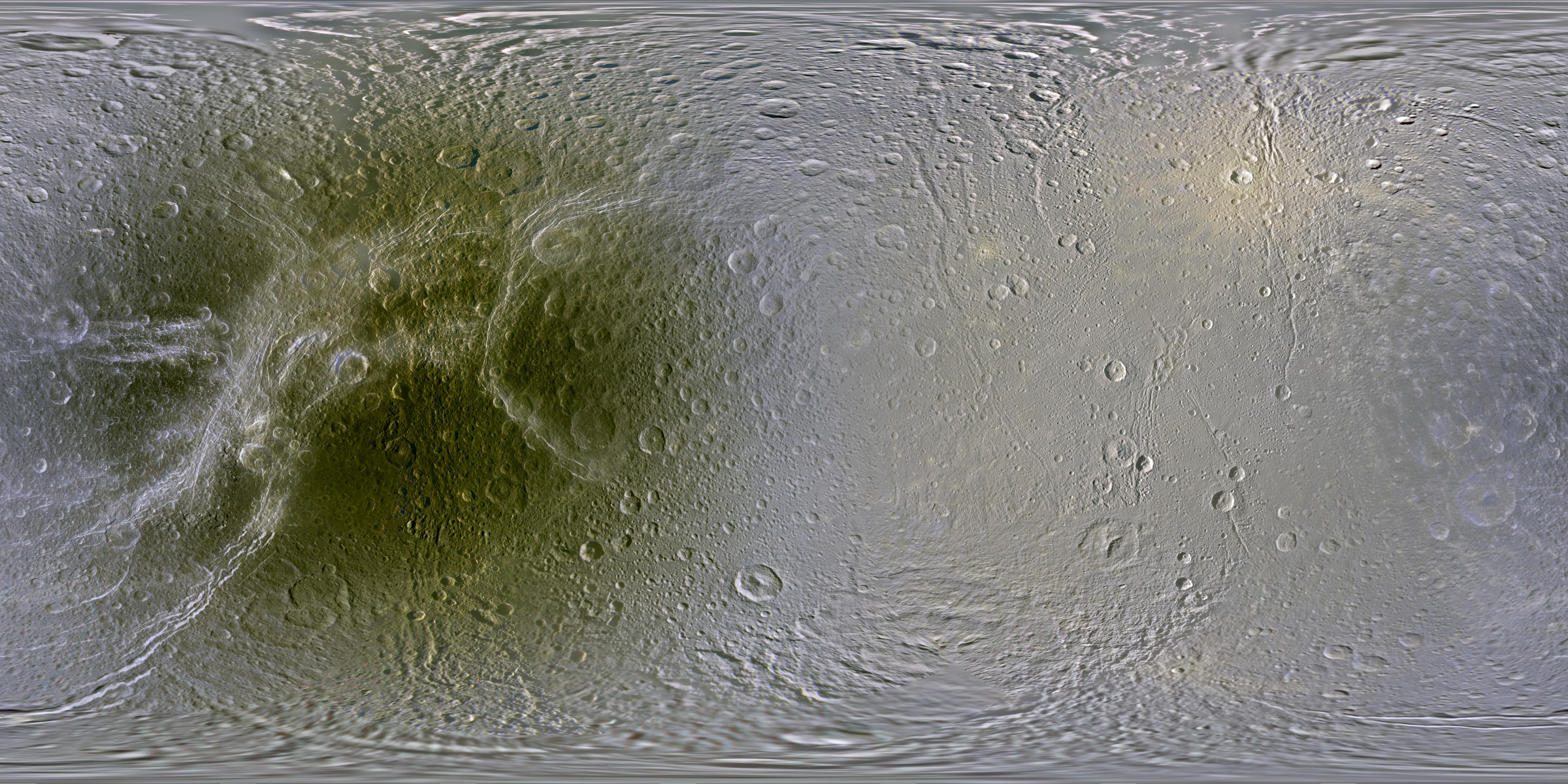
この円筒投影による全球地図は、カッシーニ探査機が10年間収集した画像データを用いて作成された、土星の中型氷衛星6つの新しいカラー地図のうちの1つです。1684年にカッシーニ(天文学者)によって発見されたディオネは、直径約1,120キロメートルです。赤外線から紫外線までのデータに基づいて作成されたこの最新の宇宙時代の地図の解像度は、1ピクセルあたり250メートルです。潮汐固定された衛星の明るい前縁半球(右)と暗い後縁半球の顕著な明るさの違いがはっきりと見て取れます。広大なE環の内側を公転する他の土星の衛星と同様に、ディオネの前縁半球は、淡い環の氷の物質のコーティングを受けることで輝きを保っています。E環の物質は、衛星エンケラドゥスの南極にある間欠泉によって絶えず補充されています。また、暗くクレーターだらけの後縁半球を横切る、より明るく若い表面の亀裂も見られます。
原文(English)
This cylindrical projection global map is one of six new color maps of Saturn's midsized icy moons, constructed using 10 years of image data from the Cassini spacecraft. Discovered by Cassini (the astronomer) in 1684, Dione is about 1,120 kilometers across. Based on data extending from infrared to ultraviolet, the full resolution of this latest space-age map is 250 meters per pixel. The remarkable brightness difference between the tidally locked moon's lighter leading hemisphere (right) and darker trailing hemisphere clearly stands out. Like other Saturn moons orbiting within the broad E-ring, Dione's leading hemisphere is kept shiny as it picks up a coating of the faint ring's icy material. The E-ring material is constantly replenished by geysers on moon Enceladus' south pole. Lighter, younger surface fractures also appear to cross the dark, cratered trailing hemisphere.
\ この感動を宇宙仲間にシェア /
宇宙をXでシェア
© NASA / APOD