
🚀 宇宙の記憶・カレンダー検索
🚀 象徴的な写真:
APOD第1回
🚀 創造の柱
🚀 スピリット火星着陸
🚀 ハッブル超深宇宙
🚀 地球へようこそ|ブルー・マーブル
🚀 エンケラドス
🚀 ベテルギウス
🚀 火星着陸
🚀 青い夕焼け
🚀 冥王星のハート
🚀 皆既日食
🚀 アースライズ再構築
🚀 ブラックホール
🚀 ウェッブ初画像
🚀 アポロ11着陸
APOD30周年(2025年6月16日)
トッレ・デ・ラ・グアイタの上のしし座流星群
Leonids Above Torre de la Guaita
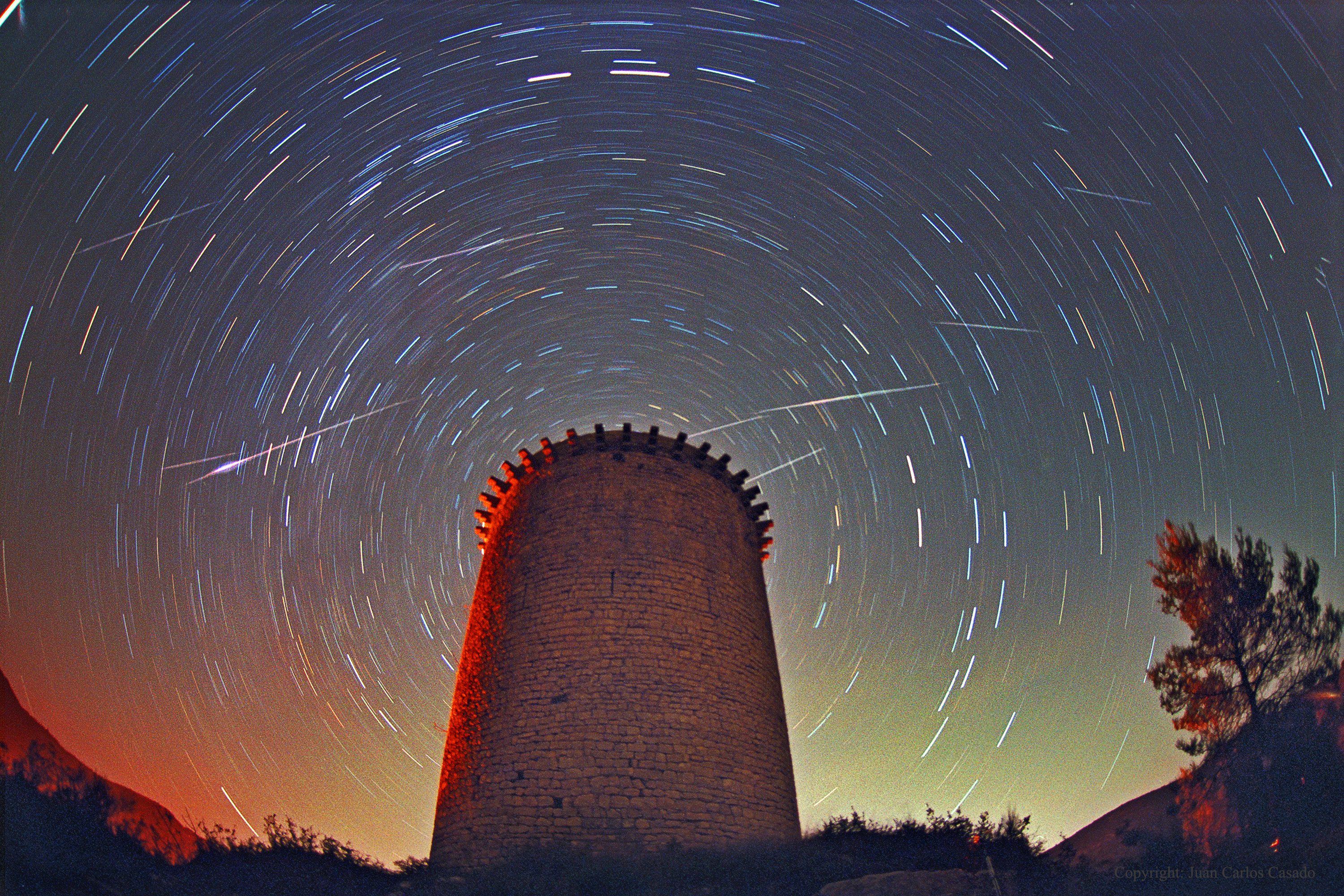
しし座流星群は1999年に印象的なピークを迎えました。ヨーロッパの観測者は、11月18日早朝の協定世界時02時10分頃に、見える流星の数が急激に増加したのを目撃しました。その時の流星数は1時間あたり1000個を超え、真の流星群を定義するのに必要な最低数に達しました。世界の他の時間帯や他の場所では、観測者は通常、1時間あたり30個から100個の流星を観測したと報告しています。この写真は、しし座流星群のピークが始まる直前に終了した20分間の露光です。スペインのジローナにある12世紀に使われていた観測塔、トーレ・デ・ラ・グアイタの上空を、少なくとも5つのしし座流星が流れているのが見えます。2014年には、今後数晩にわたって、しし座流星群が再びピークを迎えます。今年は、三日月が夜空の明るさを大きく左右することはないだろうが、地球は1999年よりも穏やかなテンペル・タットル彗星の残骸の帯を通過すると予測されており、暗い場所からは1時間に最大15個の流星が見える可能性がある。
原文(English)
Leonids Meteor Shower came to an impressive crescendo in 1999. Observers in Europe saw a sharp peak in the number of meteors visible around 0210 UTC during the early morning hours of November 18. Meteor counts then exceeded 1000 per hour - the minimum needed to define a true meteor storm. At other times and from other locations around the world, observers typically reported respectable rates of between 30 and 100 meteors per hour. This photograph is a 20-minute exposure ending just before the main Leonids peak began. Visible are at least five Leonid meteors streaking high above the Torre de la Guaita, an observation tower used during the 12th century in Girona, Spain. In 2014, over the next few nights, the Leonids meteor shower will again peak. This year, although the crescent Moon should not create much competing skyglow, the Earth is predicted to pass through a more moderate stream of debris left over from Comet Tempel-Tuttle than in 1999, perhaps resulting in as many as 15 visible meteors per hour from dark locations.
\ この感動を宇宙仲間にシェア /
宇宙をXでシェア
© Juan Carlos Casado / APOD