
🚀 宇宙の記憶・カレンダー検索
🚀 象徴的な写真:
APOD第1回
🚀 創造の柱
🚀 スピリット火星着陸
🚀 ハッブル超深宇宙
🚀 地球へようこそ|ブルー・マーブル
🚀 エンケラドス
🚀 ベテルギウス
🚀 火星着陸
🚀 青い夕焼け
🚀 冥王星のハート
🚀 皆既日食
🚀 アースライズ再構築
🚀 ブラックホール
🚀 ウェッブ初画像
🚀 アポロ11着陸
APOD30周年(2025年6月16日)
HD 95086のダブルダストディスク
The Double Dust Disks of HD 95086
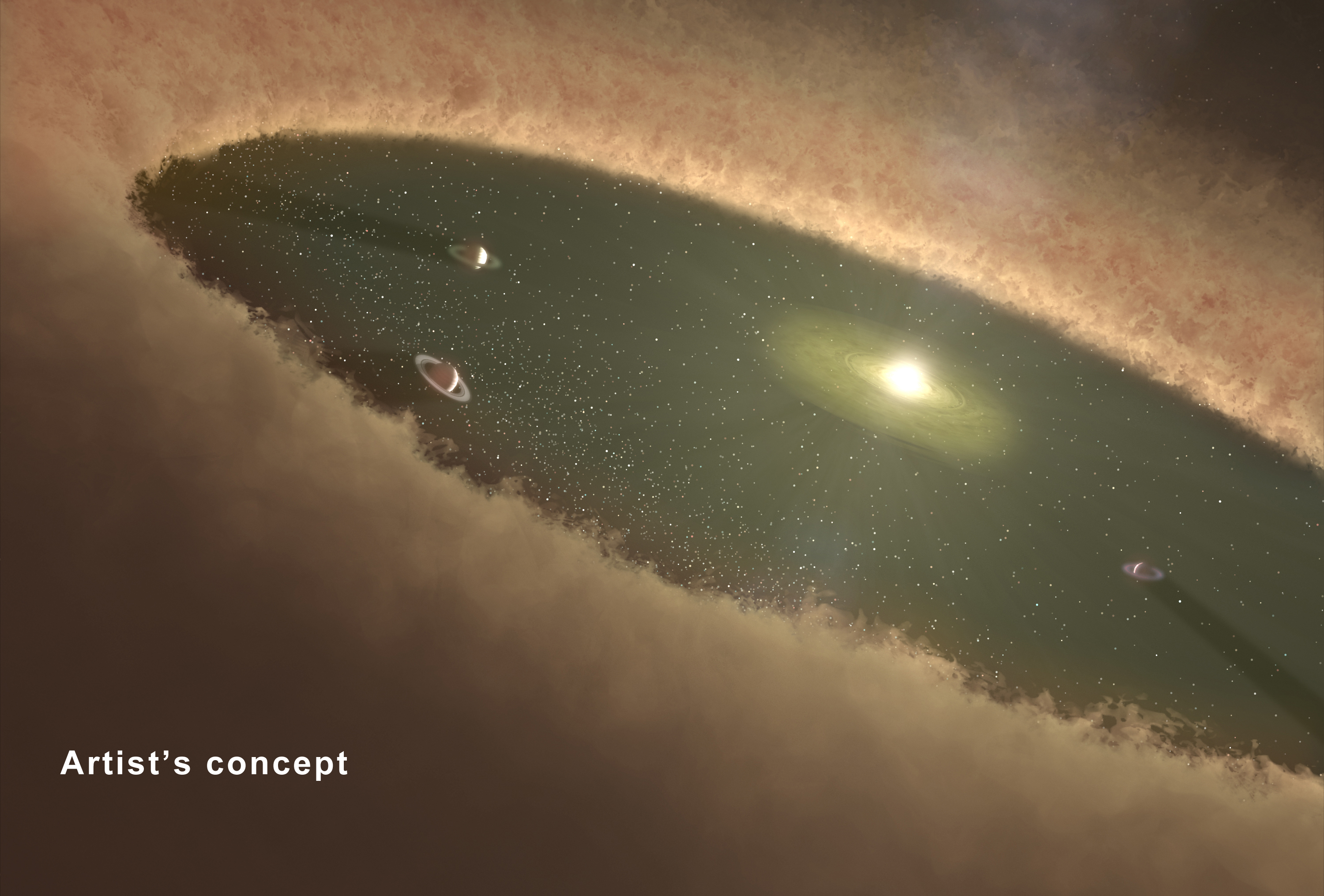
他の恒星系はどのような姿をしているのでしょうか?それを知るために、天文学者たちは近傍の恒星を赤外線で詳細に観測し、惑星を形成している可能性のある塵円盤を持つ恒星を探しています。NASAのスピッツァー宇宙望遠鏡とESAのハーシェル宇宙望遠鏡による観測で、惑星系HD 95086には2つの塵円盤があることが分かりました。1つは主星の近くにある高温の円盤、もう1つはそれよりも遠いところにある低温の円盤です。ここでは、円盤の間を大きな環で公転する仮想の惑星を含め、この系がどのように見えるかを示す想像図が掲載されています。惑星は、重力で塵を吸収したり偏向させたりすることで、円盤間の大きな隙間を作り出した可能性があります。HD 95086は、太陽より約60%質量が大きい青色の恒星で、地球から約300光年離れたところにあり、りゅうこつ座の方向に双眼鏡で見ることができます。HD 95086系の研究は、天文学者が地球だけでなく、私たちの太陽系の形成と進化をよりよく理解するのに役立つかもしれません。新しいミラーサイト:APODがセルビア語でセルビアから利用できるようになりました。
原文(English)
What do other star systems look like? To help find out, astronomers are carrying out detailed observations of nearby stars in infrared light to see which have dust disks that might be forming planets. Observations by NASA's Spitzer Space Telescope and ESA's Herschel Space Observatory have found that planetary system HD 95086 has two dust disks: a hot one near the parent star and a cooler one farther out. An artist's illustration of how the system might appear is featured here, including hypothetical planets with large rings that orbit between the disks. The planets may have created the large gap between the disks by absorbing and deflecting dust with their gravity. HD 95086 is a blue star about 60 percent more massive than our Sun that lies about 300 light years from Earth and is visible with binoculars toward the constellation of Carina. Studying the HD 95086 system may help astronomers better understand the formation and evolution of our own Solar System as well as the Earth. New Mirror Site: APOD is now available from Serbia in Serbian.
\ この感動を宇宙仲間にシェア /
宇宙をXでシェア
© NASA / APOD