
🚀 宇宙の記憶・カレンダー検索
🚀 象徴的な写真:
APOD第1回
🚀 創造の柱
🚀 スピリット火星着陸
🚀 ハッブル超深宇宙
🚀 地球へようこそ|ブルー・マーブル
🚀 エンケラドス
🚀 ベテルギウス
🚀 火星着陸
🚀 青い夕焼け
🚀 冥王星のハート
🚀 皆既日食
🚀 アースライズ再構築
🚀 ブラックホール
🚀 ウェッブ初画像
🚀 アポロ11着陸
APOD30周年(2025年6月16日)
エータ・カリーナと拡大するホムンクルス星雲
Eta Carinae and the Expanding Homunculus Nebula
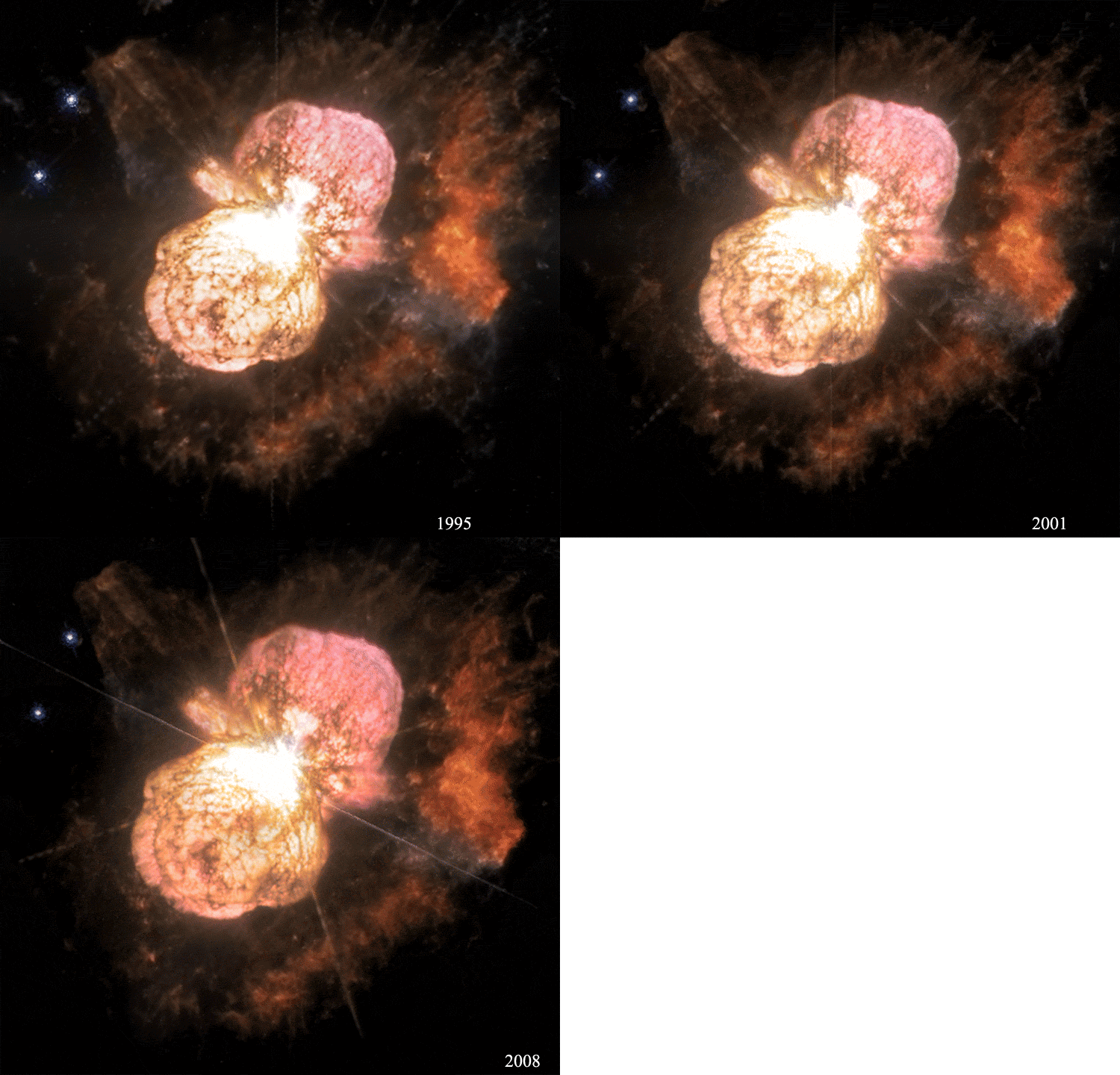
イータ・カリーナ星系はどのようにしてこの珍しい膨張星雲を作り出したのでしょうか?誰も確かなことは知りません。約170年前、南天のイータ・カリーナ(イータ・カー)星系は、夜空で2番目に明るい星系として謎に包まれました。20年後、太陽よりも多くの質量を放出した後、イータ・カーは予期せず暗くなりました。どういうわけか、この爆発がホムンクルス星雲を作り出したようです。3コマのビデオには、ハッブル宇宙望遠鏡が1995年、2001年、2008年に撮影した星雲の画像が映っています。ホムンクルス星雲の中心は明るい中心星からの光で照らされ、周囲の領域は暗い塵のフィラメントが絡み合った膨張するガスのローブです。中心星から噴出するジェットがローブを二分しています。膨張する残骸には、既存の物質との衝突によって生じた流れるひげやバウショックが含まれます。イータ・カーマ星は依然として予期せぬ爆発を起こしており、その高い質量と不安定性から、今後数百万年以内に壮大な超新星爆発を起こす可能性のある候補天体である。
原文(English)
How did the Eta Carinae star system create this unusual expanding nebula? No one knows for sure. About 170 years ago, the southern star system Eta Carinae (Eta Car) mysteriously became the second brightest star system in the night sky. Twenty years later, after ejecting more mass than our Sun, Eta Car unexpectedly faded. Somehow, this outburst appears to have created the Homunculus Nebula. The three-frame video features images of the nebula taken by the Hubble Space Telescope in 1995, 2001, and 2008. The Homunculus nebula's center is lit by light from a bright central star, while the surrounding regions are expanding lobes of gas laced with filaments of dark dust. Jets bisect the lobes emanating from the central stars. Expanding debris includes streaming whiskers and bow shocks caused by collisions with previously existing material. Eta Car still undergoes unexpected outbursts, and its high mass and volatility make it a candidate to explode in a spectacular supernova sometime in the next few million years.
\ この感動を宇宙仲間にシェア /
宇宙をXでシェア
© First Light,
J. L. Dauvergne, P. Henarejos / APOD