
🚀 宇宙の記憶・カレンダー検索
🚀 象徴的な写真:
APOD第1回
🚀 創造の柱
🚀 スピリット火星着陸
🚀 ハッブル超深宇宙
🚀 地球へようこそ|ブルー・マーブル
🚀 エンケラドス
🚀 ベテルギウス
🚀 火星着陸
🚀 青い夕焼け
🚀 冥王星のハート
🚀 皆既日食
🚀 アースライズ再構築
🚀 ブラックホール
🚀 ウェッブ初画像
🚀 アポロ11着陸
APOD30周年(2025年6月16日)
プラトンと月のアルプス
Plato and the Lunar Alps
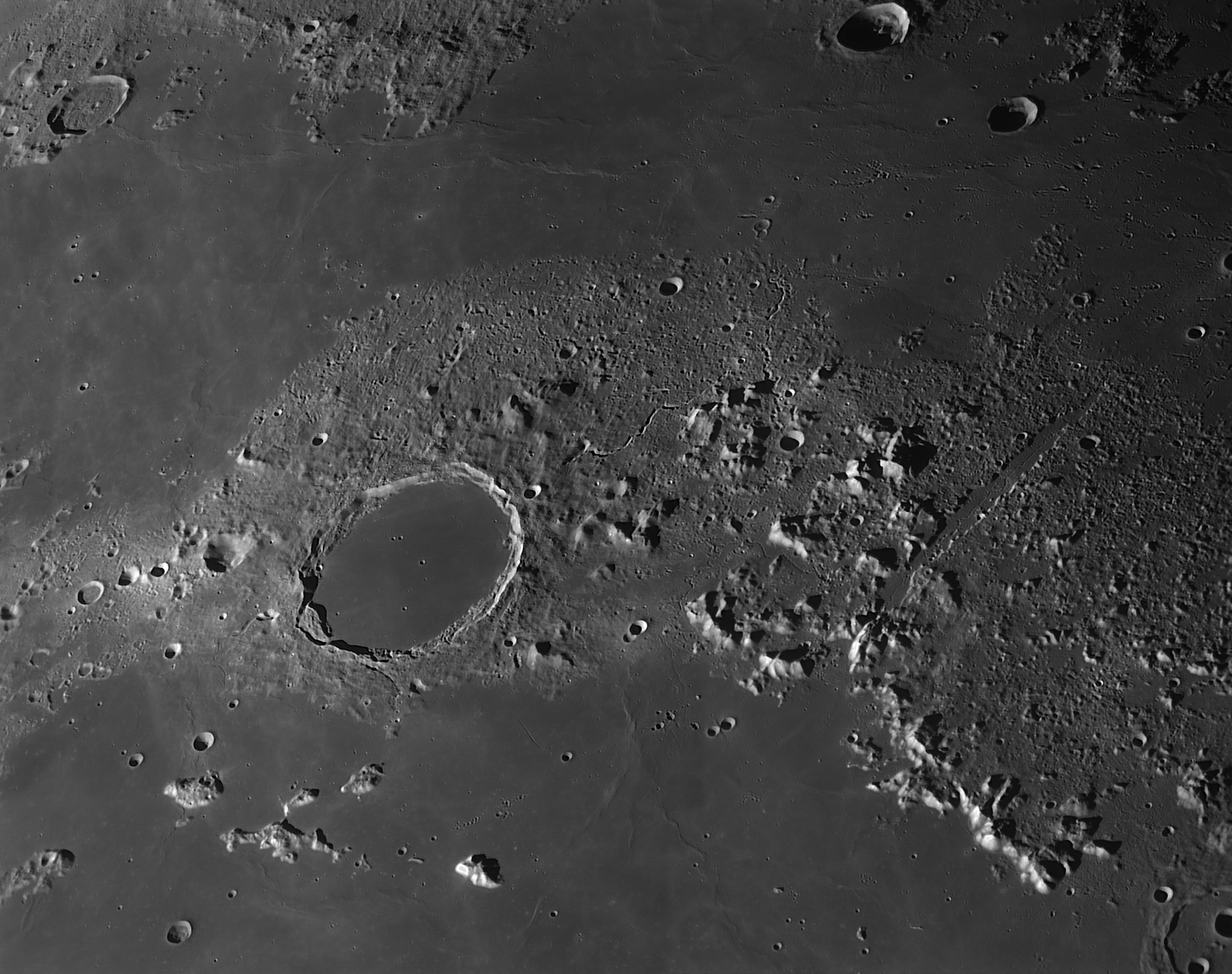
月面を鮮明に捉えたこのデジタル画像には、底が暗い直径95キロメートルのクレーター、プラトと、太陽の光を浴びた月のアルプス山脈(モンテ・アルプス)の峰々が写し出されています。地球のアルプス山脈は、大陸プレートがゆっくりと衝突することで何百万年もかけて隆起しましたが、月のアルプス山脈は、雨の海(Mare Imbrium)として知られる巨大な衝突盆地を形成した突然の衝突によって形成されたと考えられています。境界をなす山脈の下には、一般的に滑らかで溶岩に覆われた月の海底が見えます。山脈を貫く目立つ直線状の地形は、月のアルプス渓谷(Vallis Alpes)です。雨の海と北部の寒の海(Mare Frigoris)を結ぶこの渓谷は、右上方向に伸びており、長さは約160キロメートル、幅は最大10キロメートルです。もちろん、渓谷の下と右側にある大きく明るいアルプスの山は、モンブランと名付けられています。月面アルプスの中で最も高いこの山脈は、地表から3キロメートル以上もの高さに達している。大気も雪もない月面アルプスは、冬の休暇を過ごすには理想的な場所とは言えないだろう。とはいえ、体重150ポンド(約68キロ)のスキーヤーでも、月面ではわずか25ポンド(約11キロ)にしかならない。
原文(English)
The dark-floored, 95 kilometer wide crater Plato and sunlit peaks of the lunar Alps (Montes Alpes) are highlighted in this sharp digital snapshot of the Moon's surface. While the Alps of planet Earth were uplifted over millions of years as continental plates slowly collided, the lunar Alps were likely formed by a sudden collision that created the giant impact basin known as the Mare Imbrium or Sea of Rains. The mare's generally smooth, lava-flooded floor is seen below the bordering mountain range. The prominent straight feature cutting through the mountains is the lunar Alpine Valley (Vallis Alpes). Joining the Mare Imbrium and northern Mare Frigoris (Sea of Cold) the valley extends toward the upper right, about 160 kilometers long and up to 10 kilometers wide. Of course, the large, bright alpine mountain below and right of the valley is named Mont Blanc. The tallest of the lunar Alps, it reaches over 3 kilometers above the surface. Lacking an atmosphere, not to mention snow, the lunar Alps are probably not an ideal location for a winter vacation. Still, a 150 pound skier would weigh a mere 25 pounds on the Moon.
\ この感動を宇宙仲間にシェア /
宇宙をXでシェア
© Richard Bosman / APOD