
🚀 宇宙の記憶・カレンダー検索
🚀 象徴的な写真:
APOD第1回
🚀 創造の柱
🚀 スピリット火星着陸
🚀 ハッブル超深宇宙
🚀 地球へようこそ|ブルー・マーブル
🚀 エンケラドス
🚀 ベテルギウス
🚀 火星着陸
🚀 青い夕焼け
🚀 冥王星のハート
🚀 皆既日食
🚀 アースライズ再構築
🚀 ブラックホール
🚀 ウェッブ初画像
🚀 アポロ11着陸
APOD30周年(2025年6月16日)
チュリュモフ・ゲラシメンコ彗星の断崖
The Cliffs of Comet Churyumov�Gerasimenko
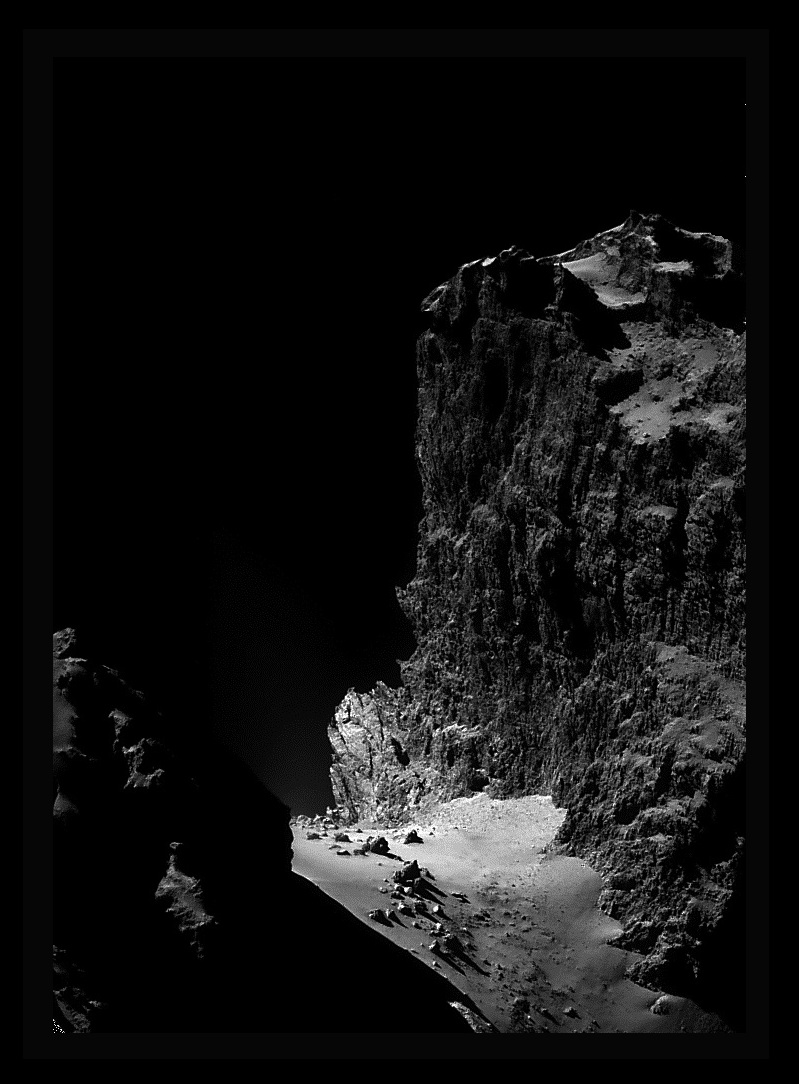
これらの高い崖は彗星の表面に存在します。これらは、8月初旬に彗星の周回軌道に入ったESAのロボット探査機ロゼッタによって、チュリュモフ・ゲラシメンコ彗星(CG)の暗い核の一部であることが発見されました。ここに掲載されているようなギザギザの崖は、約2週間前にロゼッタによって撮影されました。高さは約1キロメートルにも達しますが、CG彗星の表面重力が低いため、人間が崖から飛び降りても生存できる可能性が高いです。崖の麓は比較的なだらかな地形で、直径20メートルにもなる巨岩が点在しています。ロゼッタのデータによると、CG彗星の氷は地球の海洋の水とは重水素の割合が大きく異なり、したがって起源も異なる可能性が高いことが示されています。ロゼッタ探査機は、2015年8月に彗星が太陽に最接近する際にも引き続き同行する予定です。
原文(English)
These high cliffs occur on the surface of a comet. They were discovered to be part of the dark nucleus of Comet Churyumov�Gerasimenko (CG) by Rosetta, a robotic spacecraft launched by ESA which began orbiting the comet in early August. The ragged cliffs, as featured here, were imaged by Rosetta about two weeks ago. Although towering about one kilometer high, the low surface gravity of Comet CG would likely make a jump from the cliffs, by a human, survivable. At the foot of the cliffs is relatively smooth terrain dotted with boulders as large as 20 meters across. Data from Rosetta indicates that the ice in Comet CG has a significantly different deuterium fraction -- and hence likely a different origin -- than the water in Earth's oceans. The Rosetta spacecraft is scheduled to continue to accompany the comet as it makes its closest approach to the Sun in 2015 August.
\ この感動を宇宙仲間にシェア /
宇宙をXでシェア
© NASA / APOD