
🚀 宇宙の記憶・カレンダー検索
🚀 象徴的な写真:
APOD第1回
🚀 創造の柱
🚀 スピリット火星着陸
🚀 ハッブル超深宇宙
🚀 地球へようこそ|ブルー・マーブル
🚀 エンケラドス
🚀 ベテルギウス
🚀 火星着陸
🚀 青い夕焼け
🚀 冥王星のハート
🚀 皆既日食
🚀 アースライズ再構築
🚀 ブラックホール
🚀 ウェッブ初画像
🚀 アポロ11着陸
APOD30周年(2025年6月16日)
WISEによる赤外線オリオン座
Infrared Orion from WISE
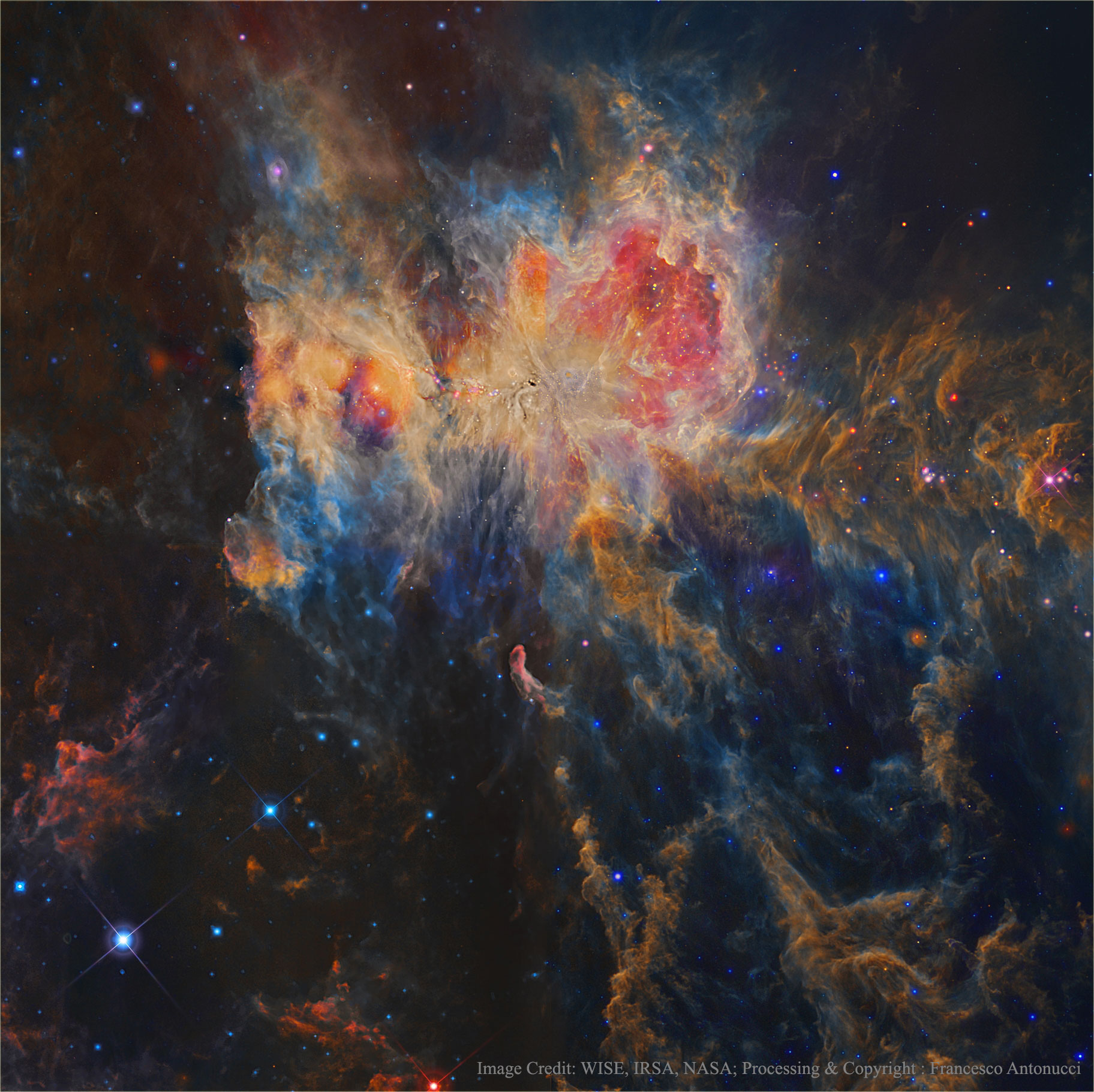
オリオン大星雲は興味深い場所です。肉眼ではオリオン座の小さなぼんやりとした斑点として見えますが、地球周回軌道上のWISE天文台が赤外線の異なる波長帯で撮影したこの錯視色彩の4枚パネルモザイク画像を見ると、オリオン大星雲は最近形成された星々、高温ガス、そして暗い塵が活発に集まる場所であることがわかります。オリオン大星雲(M42)の大部分を支えているのは、上の広視野画像の中央付近に見えるトラペジウム星団の星々です。ここに写っている明るい星々を取り囲むオレンジ色の光は、この領域の大部分を覆う複雑な塵のフィラメントによって反射された星々自身の光です。馬頭星雲を含む現在のオリオン大星雲の雲複合体は、今後10万年かけてゆっくりと散逸していくでしょう。APOD 2015壁掛けカレンダー発売中
原文(English)
The Great Nebula in Orion is an intriguing place. Visible to the unaided eye, it appears as a small fuzzy patch in the constellation of Orion. But this image, an illusory-color four-panel mosaic taken in different bands of infrared light with the Earth orbiting WISE observatory, shows the Orion Nebula to be a bustling neighborhood of recently formed stars, hot gas, and dark dust. The power behind much of the Orion Nebula (M42) is the stars of the Trapezium star cluster, seen near the center of the above wide field image. The orange glow surrounding the bright stars pictured here is their own starlight reflected by intricate dust filaments that cover much of the region. The current Orion Nebula cloud complex, which includes the Horsehead Nebula, will slowly disperse over the next 100,000 years. Now Available: APOD 2015 Wall Calendars
\ この感動を宇宙仲間にシェア /
宇宙をXでシェア
© :
Francesco Antonucci / APOD