
🚀 宇宙の記憶・カレンダー検索
🚀 象徴的な写真:
APOD第1回
🚀 創造の柱
🚀 スピリット火星着陸
🚀 ハッブル超深宇宙
🚀 地球へようこそ|ブルー・マーブル
🚀 エンケラドス
🚀 ベテルギウス
🚀 火星着陸
🚀 青い夕焼け
🚀 冥王星のハート
🚀 皆既日食
🚀 アースライズ再構築
🚀 ブラックホール
🚀 ウェッブ初画像
🚀 アポロ11着陸
APOD30周年(2025年6月16日)
太陽に咲くフィブリルの花
Fibrils Flower on the Sun
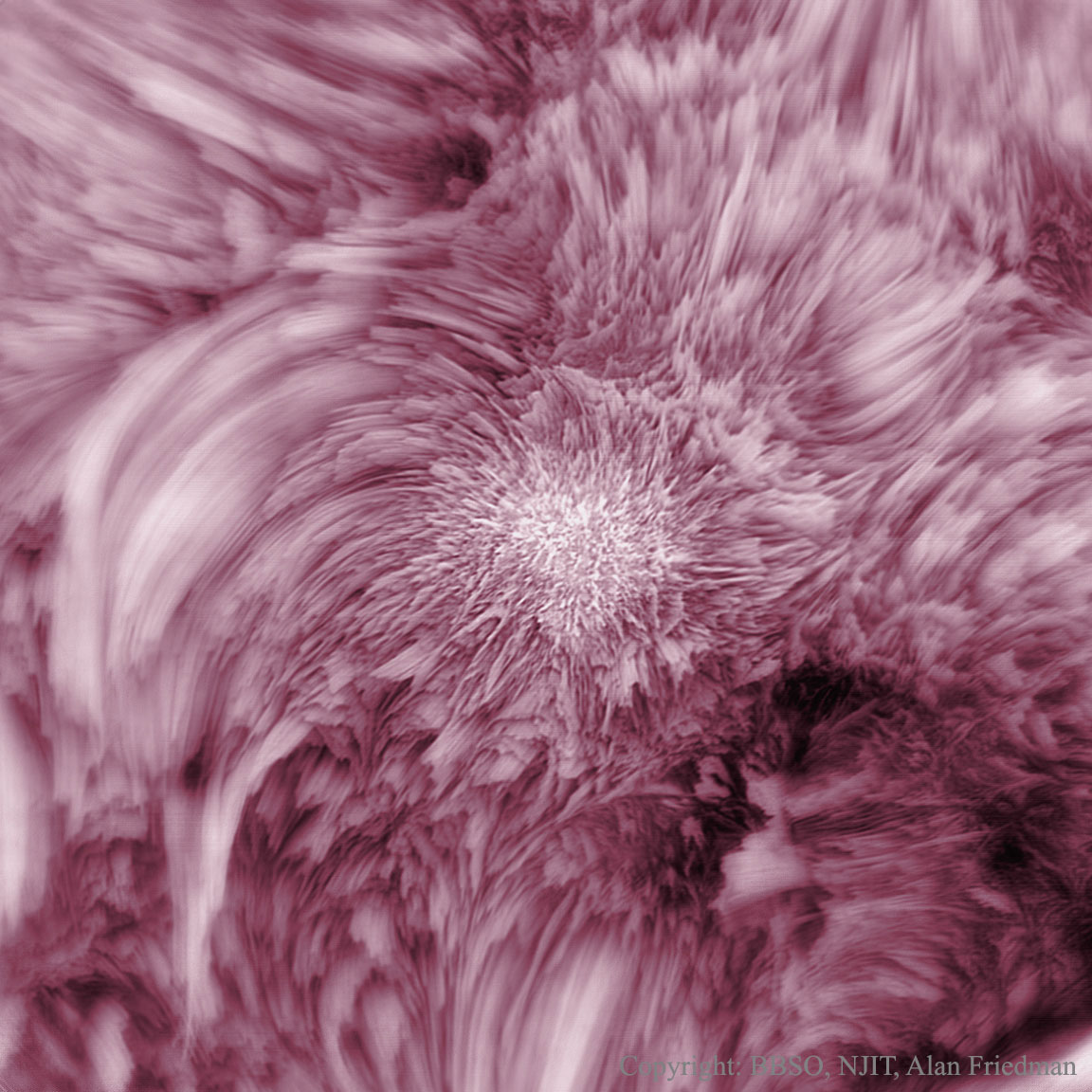
太陽が花のように見えるのはどんな時でしょうか?ここに示されているように、水素から放出される特定の赤色の光では、太陽彩層の一部がバラの花のように見えることがあります。この色反転画像は2014年10月に撮影されたもので、活動領域2177を示しています。画面を支配している花びらは、実際にはフィブリルと呼ばれる高温プラズマの磁気的に閉じ込められた管で、その一部は地球の直径よりも長く伸びています。中心部ではこれらのフィブリルの多くが先端を向いているのに対し、周囲の領域には湾曲したフィブリルが多数見られます。太陽の縁で見られるこれらの巨大なプラズマ管はスピキュールと呼ばれ、活動の少ない領域で見られる場合は斑点と呼ばれます。太陽黒点領域2177は、太陽表面を突き抜ける複雑で激しい磁場が再び変化するまで、さらに数日間存続しました。APODをフォローするには、Facebook、Google Plus、またはTwitterをご覧ください。
原文(English)
When does the Sun look like a flower? In a specific color of red light emitted by hydrogen, as featured here, some regions of the solar chromosphere may resemble a rose. The color-inverted image was taken in 2014 October and shows active solar region 2177. The petals dominating the frame are actually magnetically confined tubes of hot plasma called fibrils, some of which extend longer than the diameter of the Earth. In the central region many of these fibrils are seen end-on, while the surrounding regions are typically populated with curved fibrils. When seen over the Sun's edge, these huge plasma tubes are called spicules, and when they occur in passive regions they are termed mottles. Sunspot region 2177 survived for several more days before the complex and tumultuous magnetic field poking through the Sun's surface evolved yet again. Follow APOD on: Facebook, Google Plus, or Twitter
\ この感動を宇宙仲間にシェア /
宇宙をXでシェア
© Big Bear Solar Obs.,
NJIT,
Alan Friedman
(Averted Imagination) / APOD