
🚀 宇宙の記憶・カレンダー検索
🚀 象徴的な写真:
APOD第1回
🚀 創造の柱
🚀 スピリット火星着陸
🚀 ハッブル超深宇宙
🚀 地球へようこそ|ブルー・マーブル
🚀 エンケラドス
🚀 ベテルギウス
🚀 火星着陸
🚀 青い夕焼け
🚀 冥王星のハート
🚀 皆既日食
🚀 アースライズ再構築
🚀 ブラックホール
🚀 ウェッブ初画像
🚀 アポロ11着陸
APOD30周年(2025年6月16日)
M64:黒い目の銀河
M64: The Black Eye Galaxy
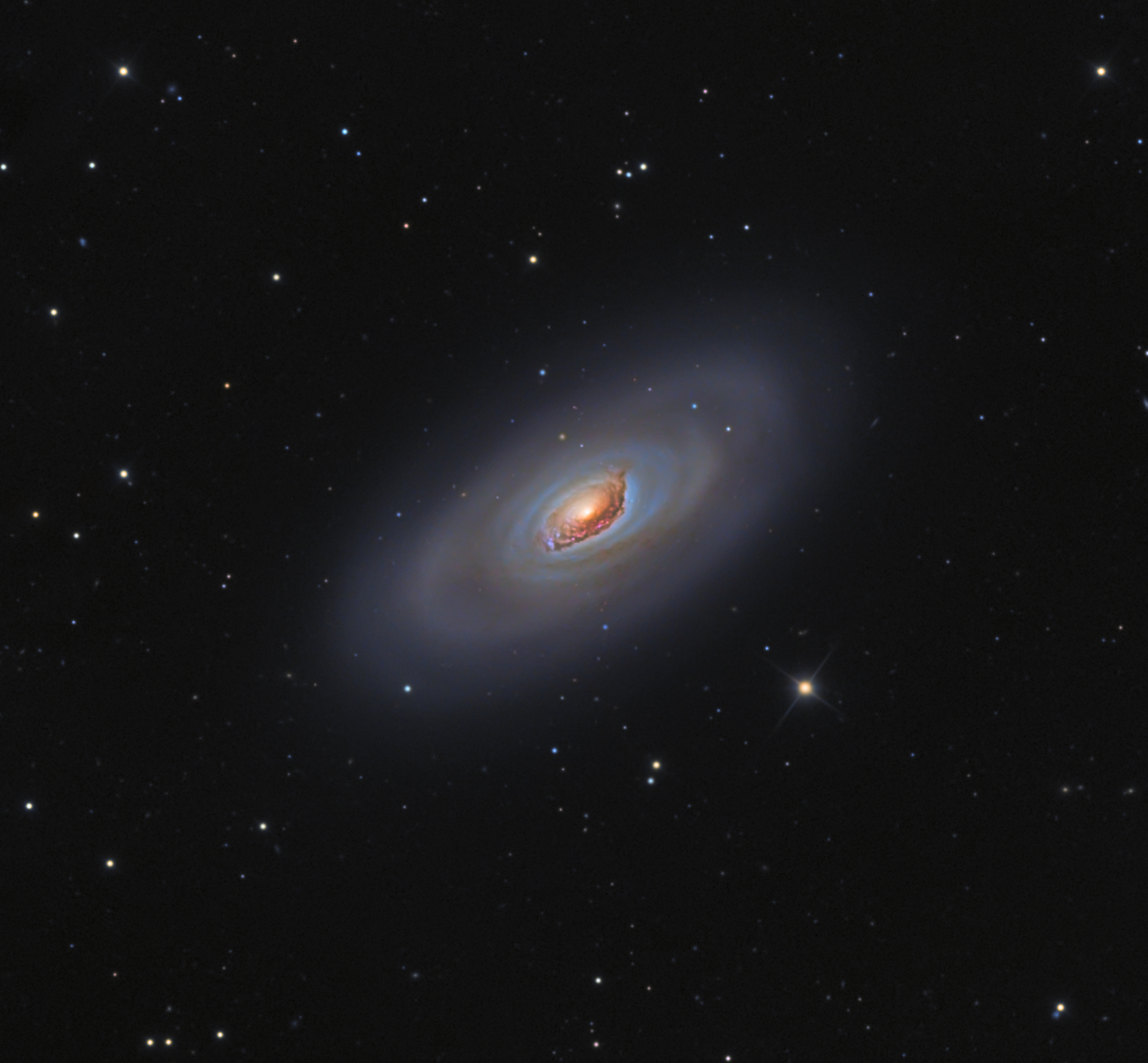
この大きく明るく美しい渦巻銀河はメシエ64(M64)で、望遠鏡で見るとまぶたが重そうに見えることから、しばしば「黒い目銀河」または「眠れる森の美女銀河」と呼ばれています。M64は、整然とした北天の星座であるかみのけ座に位置し、約1700万光年離れています。実際、この色彩豊かな銀河には「赤い目銀河」という呼び名もふさわしいかもしれません。M64の中心領域の手前側を覆う巨大な塵の雲には、星形成領域に関連する水素特有の赤みがかった輝きが散りばめられています。しかし、この銀河の特異な特徴はそれだけではありません。観測によると、M64は実際には2つの同心円状の逆回転するシステムで構成されています。M64のすべての星は銀河の中心領域の星間ガスと同じ方向に回転していますが、約4万光年まで広がる外側の領域のガスは逆方向に回転しています。塵に覆われた目のような形状と奇妙な回転は、おそらく10億年前に2つの異なる銀河が合体した結果であると考えられる。
原文(English)
This big, bright, beautiful spiral galaxy is Messier 64, often called the Black Eye Galaxy or the Sleeping Beauty Galaxy for its heavy-lidded appearance in telescopic views. M64 is about 17 million light-years distant in the otherwise well-groomed northern constellation Coma Berenices. In fact, the Red Eye Galaxy might also be an appropriate moniker in this colorful composition. The enormous dust clouds obscuring the near-side of M64's central region are laced with the telltale reddish glow of hydrogen associated with star forming regions. But they are not this galaxy's only peculiar feature. Observations show that M64 is actually composed of two concentric, counter-rotating systems. While all the stars in M64 rotate in the same direction as the interstellar gas in the galaxy's central region, gas in the outer regions, extending to about 40,000 light-years, rotates in the opposite direction. The dusty eye and bizarre rotation are likely the result of a billion year old merger of two different galaxies.
\ この感動を宇宙仲間にシェア /
宇宙をXでシェア
© Michael Miller / APOD