
🚀 宇宙の記憶・カレンダー検索
🚀 象徴的な写真:
APOD第1回
🚀 創造の柱
🚀 スピリット火星着陸
🚀 ハッブル超深宇宙
🚀 地球へようこそ|ブルー・マーブル
🚀 エンケラドス
🚀 ベテルギウス
🚀 火星着陸
🚀 青い夕焼け
🚀 冥王星のハート
🚀 皆既日食
🚀 アースライズ再構築
🚀 ブラックホール
🚀 ウェッブ初画像
🚀 アポロ11着陸
APOD30周年(2025年6月16日)
ハッブル宇宙望遠鏡が捉えた渦巻銀河M96
Spiral Galaxy M96 from Hubble
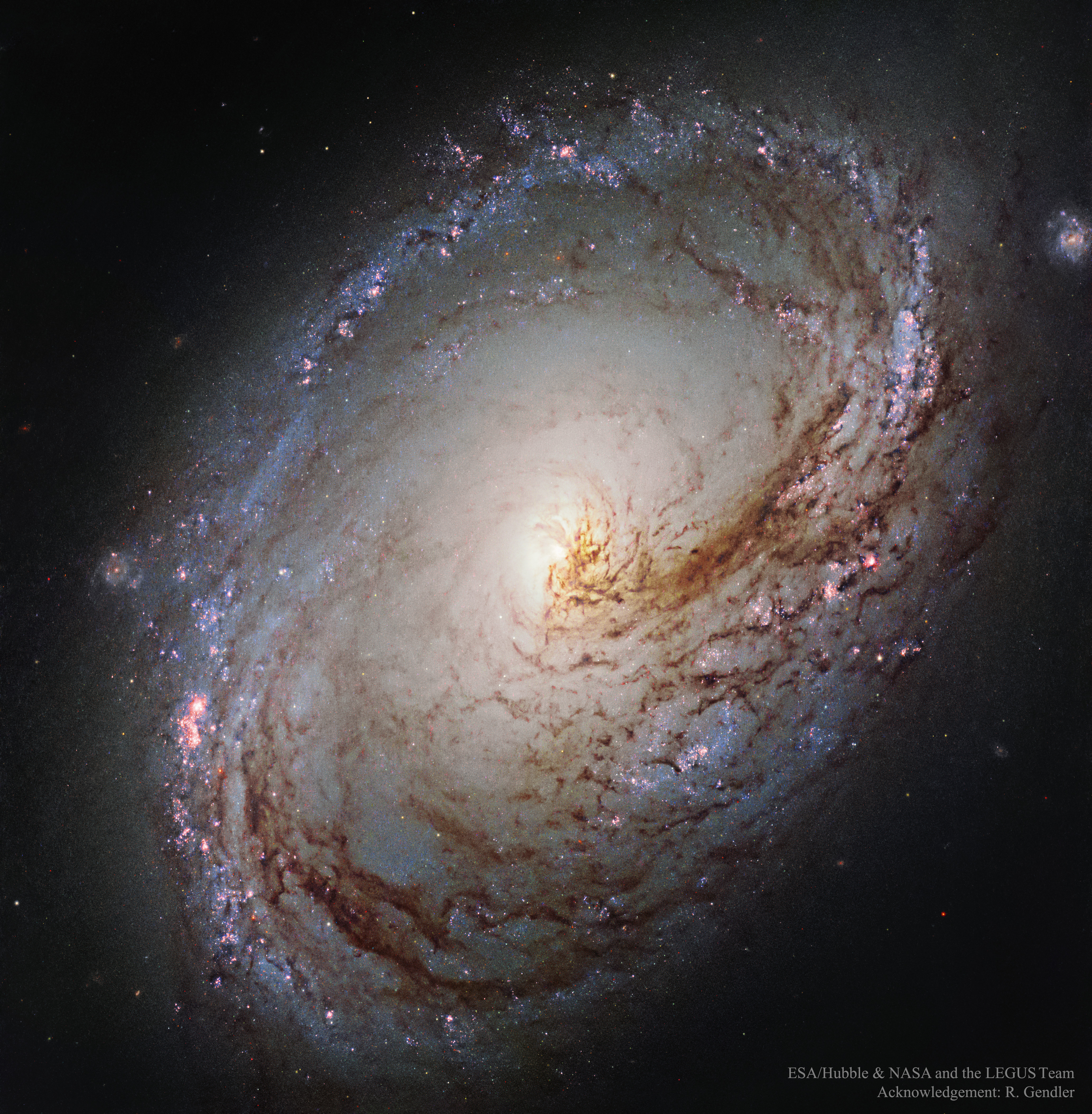
この色彩豊かで詳細な画像では、美しい島宇宙の中心であるメシエ96の中心核の周りを塵の帯が渦巻いているように見えます。もちろんM96は渦巻銀河であり、明るい中心領域の外側に伸びるかすかな腕を含めると、約10万光年もの大きさがあり、私たちの天の川銀河とほぼ同じ大きさです。NGC 3368としても知られるM96は、約3500万光年離れた場所にあり、しし座I銀河群の主要メンバーとして知られています。この画像はハッブル宇宙望遠鏡によって撮影されました。M96の非対称性の理由は不明です。他のしし座I銀河群の銀河との重力相互作用によって生じた可能性もありますが、銀河群内部の拡散光が見られないことから、最近の相互作用はほとんどなかったと考えられます。画像の端を調べると、遠く背景にある銀河を見つけることができます。宇宙を探検しよう:ランダムAPODジェネレーター
原文(English)
Dust lanes seem to swirl around the core of Messier 96 in this colorful, detailed portrait of the center of a beautiful island universe. Of course M96 is a spiral galaxy, and counting the faint arms extending beyond the brighter central region, it spans 100 thousand light-years or so, making it about the size of our own Milky Way. M96, also known as NGC 3368, is known to be about 35 million light-years distant and a dominant member of the Leo I galaxy group. The featured image was taken by the Hubble Space Telescope. The reason for M96's asymmetry is unclear -- it could have arisen from gravitational interactions with other Leo I group galaxies, but the lack of an intra-group diffuse glow seems to indicate few recent interactions. Galaxies far in the background can be found by examining the edges of the picture. Explore your Universe: Random APOD Generator
\ この感動を宇宙仲間にシェア /
宇宙をXでシェア
© NASA / APOD