
🚀 宇宙の記憶・カレンダー検索
🚀 象徴的な写真:
APOD第1回
🚀 創造の柱
🚀 スピリット火星着陸
🚀 ハッブル超深宇宙
🚀 地球へようこそ|ブルー・マーブル
🚀 エンケラドス
🚀 ベテルギウス
🚀 火星着陸
🚀 青い夕焼け
🚀 冥王星のハート
🚀 皆既日食
🚀 アースライズ再構築
🚀 ブラックホール
🚀 ウェッブ初画像
🚀 アポロ11着陸
APOD30周年(2025年6月16日)
リンズ暗黒星雲1251
Lynds Dark Nebula 1251
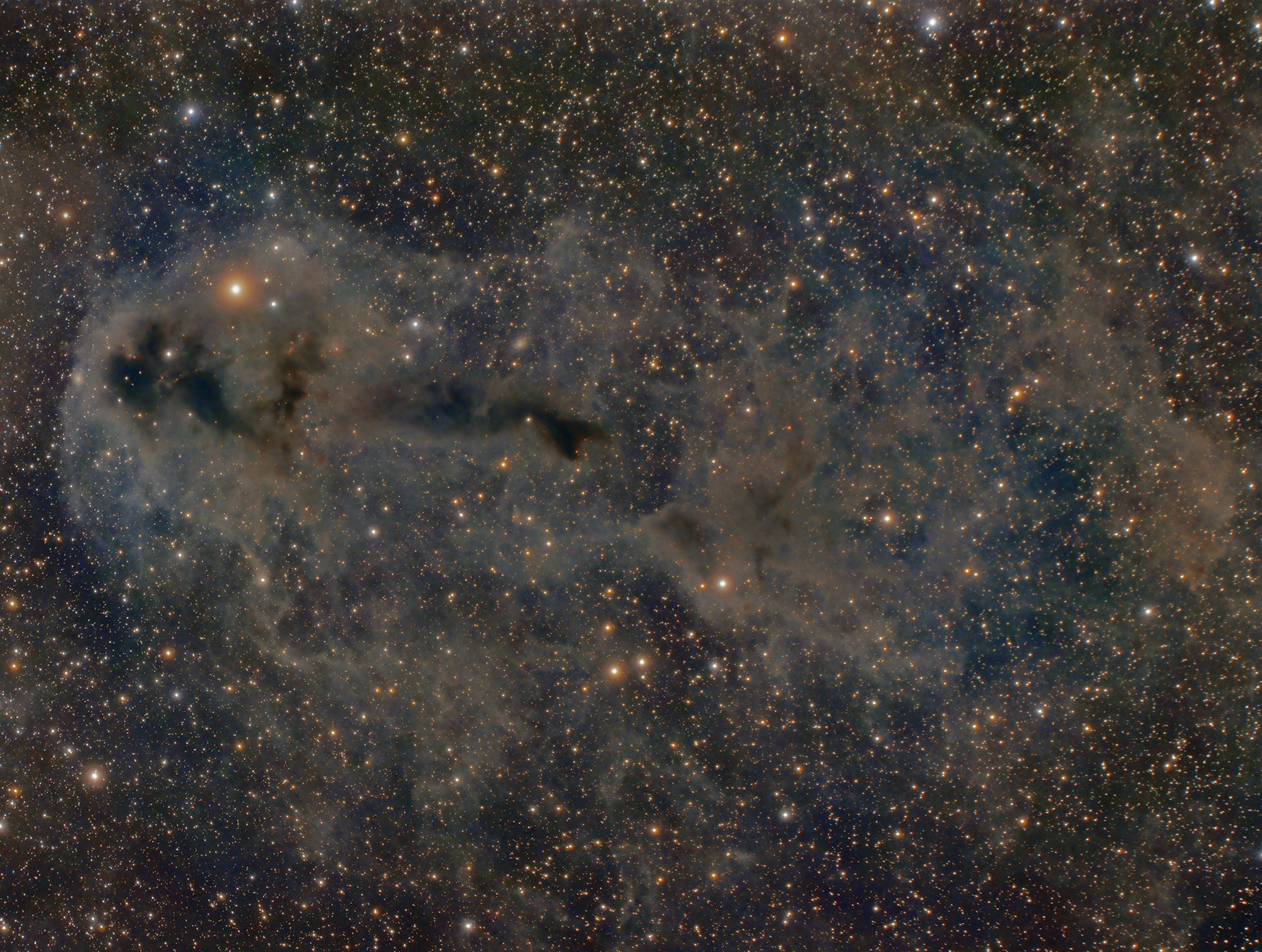
リンズ暗黒星雲(LDN)1251では星が形成されています。約1,000光年離れたこの塵に覆われた分子雲は、ケフェウス座フレア領域に向かってマッピングされた暗黒星雲群の一部であり、天の川銀河の平面の上を漂っています。この星間雲を遮る天文学的探査では、スペクトル全体にわたって、生まれたばかりの星に関連する高エネルギーの衝撃波と流出が明らかになっており、この鮮明な画像に見られる散乱したハービッグ・ハロー天体からの特徴的な赤みがかった輝きもその一つです。遠方の背景銀河もこの光景に潜んでおり、塵の広がりの背後に視覚的に埋もれています。この望遠鏡の深い視野は、空で満月約2つ分、またはLDN 1251の推定距離で17光年に及びます。
原文(English)
Stars are forming in Lynds Dark Nebula (LDN) 1251. About 1,000 light-years away, the dusty molecular cloud is part of a complex of dark nebulae mapped toward the Cepheus flare region, drifting above the plane of our Milky Way galaxy. Across the spectrum, astronomical explorations of the obscuring interstellar clouds reveal energetic shocks and outflows associated with newborn stars, including the telltale reddish glow from scattered Herbig-Haro objects seen in this sharp image. Distant background galaxies also lurk on the scene, visually buried behind the dusty expanse. The deep telescopic field of view spans about two full moons on the sky, or 17 light-years at the estimated distance of LDN 1251.
\ この感動を宇宙仲間にシェア /
宇宙をXでシェア
© Lynn Hilborn / APOD