
🚀 宇宙の記憶・カレンダー検索
🚀 象徴的な写真:
APOD第1回
🚀 創造の柱
🚀 スピリット火星着陸
🚀 ハッブル超深宇宙
🚀 地球へようこそ|ブルー・マーブル
🚀 エンケラドス
🚀 ベテルギウス
🚀 火星着陸
🚀 青い夕焼け
🚀 冥王星のハート
🚀 皆既日食
🚀 アースライズ再構築
🚀 ブラックホール
🚀 ウェッブ初画像
🚀 アポロ11着陸
APOD30周年(2025年6月16日)
エンケ彗星はほぼ3つの尾を持つ
Almost Three Tails for Comet Encke
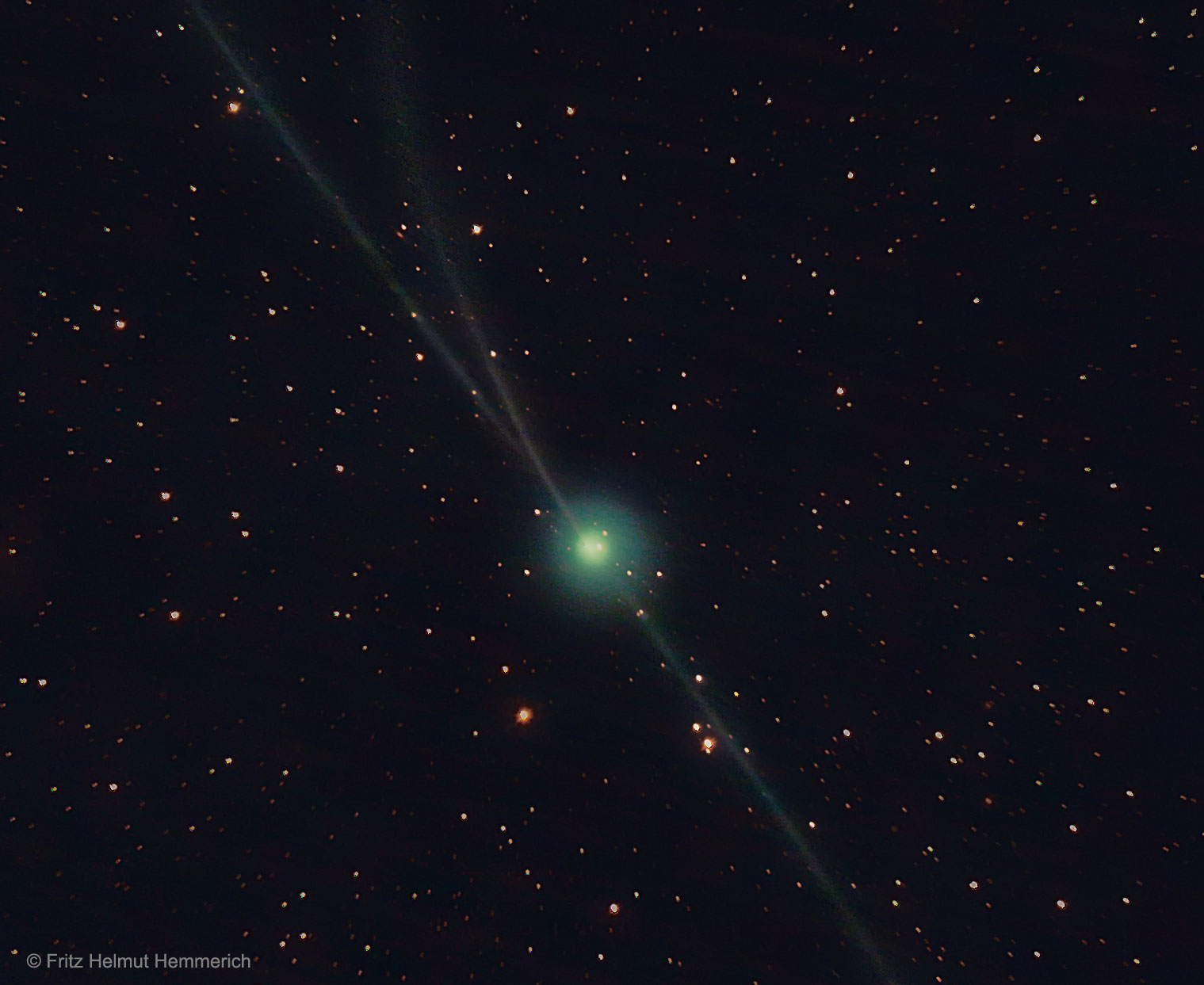
彗星に3本の尾があるのはなぜでしょうか?通常、彗星には2本の尾があります。1つは彗星から放出され、太陽風によって押し出される荷電粒子のイオン尾、もう1つは彗星の後ろを公転する小さな塵の尾で、こちらも太陽風によってある程度押し出されています。多くの場合、彗星には1本の尾しかないように見えます。これは、もう1本の尾が地球から容易に見えないためです。今回紹介する珍しい画像では、彗星2P/エンケに3本の尾があるように見えますが、これは画像が撮影された直後にイオン尾が分裂したためです。複雑な太陽風は時折乱流となり、イオン尾に異常な構造を作り出すことがあります。まれに、イオン尾が分離する現象も記録されています。2日後に撮影されたエンケ彗星の画像は、おそらくそれほど不可解ではない視点を提供しています。
原文(English)
How can a comet have three tails? Normally, a comet has two tails: an ion tail of charged particles emitted by the comet and pushed out by the wind from the Sun, and a dust tail of small debris that orbits behind the comet but is also pushed out, to some degree, by the solar wind. Frequently a comet will appear to have only one tail because the other tail is not easily visible from the Earth. In the featured unusual image, Comet 2P/Encke appears to have three tails because the ion tail split just near to the time when the image was taken. The complex solar wind is occasionally turbulent and sometimes creates unusual structure in an ion tail. On rare occasions even ion-tail disconnection events have been recorded. An image of the Comet Encke taken two days later gives a perhaps less perplexing perspective.
\ この感動を宇宙仲間にシェア /
宇宙をXでシェア
© Fritz Helmut Hemmerich / APOD