
🚀 宇宙の記憶・カレンダー検索
🚀 象徴的な写真:
APOD第1回
🚀 創造の柱
🚀 スピリット火星着陸
🚀 ハッブル超深宇宙
🚀 地球へようこそ|ブルー・マーブル
🚀 エンケラドス
🚀 ベテルギウス
🚀 火星着陸
🚀 青い夕焼け
🚀 冥王星のハート
🚀 皆既日食
🚀 アースライズ再構築
🚀 ブラックホール
🚀 ウェッブ初画像
🚀 アポロ11着陸
APOD30周年(2025年6月16日)
ボイジャー1号から見たエウロパと木星
Europa and Jupiter from Voyager 1
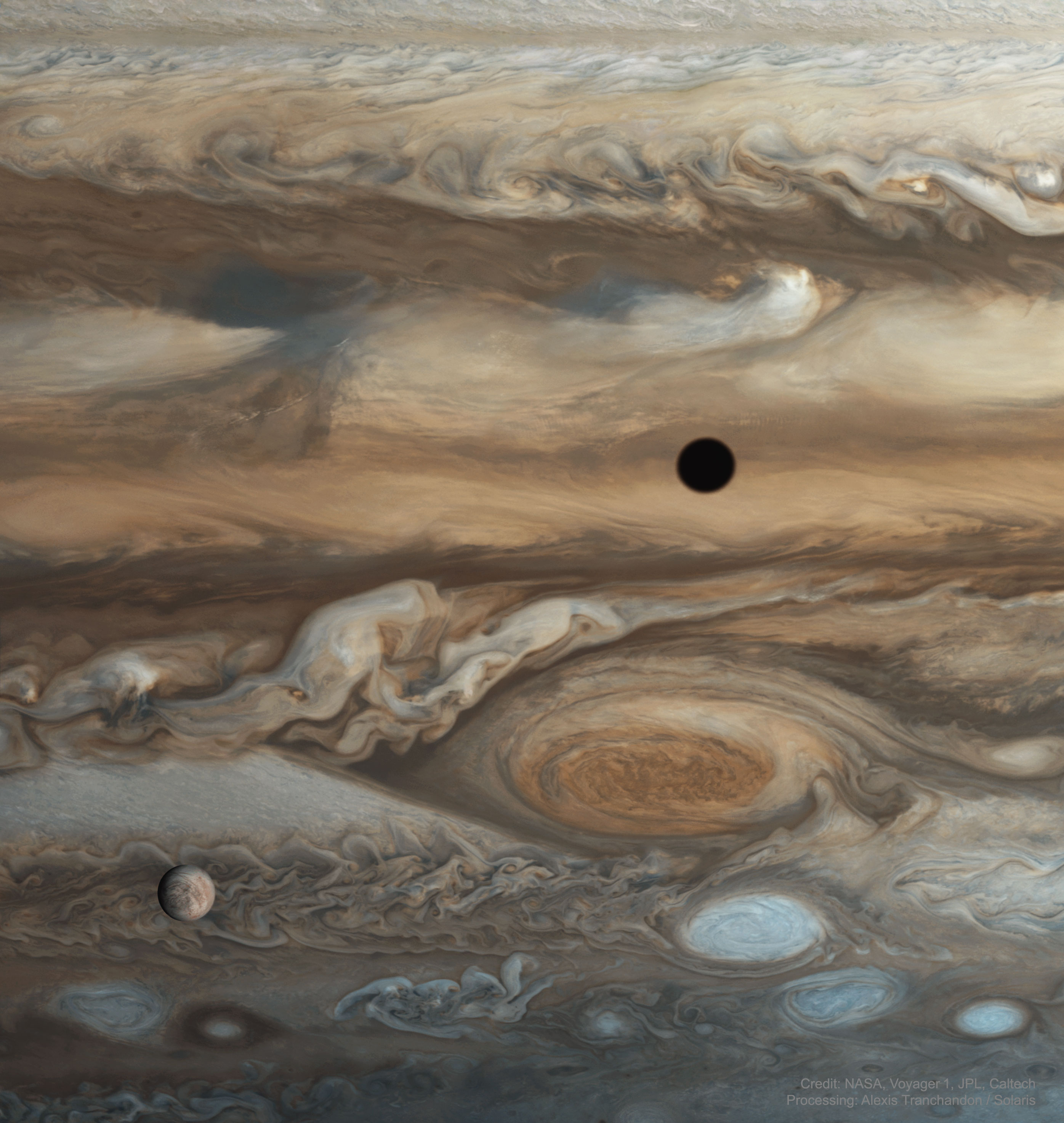
木星にあるあの斑点は何でしょうか? 最も大きく、最も遠く、中央のすぐ右にあるのが大赤斑です。これは、おそらく352年前にジョヴァンニ・カッシーニが記録して以来、木星で猛威を振るっている巨大な嵐のシステムです。この大赤斑がなぜ赤いのかはまだわかっていません。左下にある斑点は、木星最大の衛星の1つであるエウロパです。1979年のボイジャーの画像は、エウロパには地下海があり、したがって地球外生命体を探すのに適した場所であるという現代の仮説を裏付けています。では、右上の暗い斑点は何でしょうか? それは、木星のもう1つの大きな衛星であるイオの影です。ボイジャー1号は、イオが非常に火山活動が活発なため、衝突クレーターが見つからないことを発見しました。1979年のボイジャー1号による木星フライバイの16フレームが最近再処理され、合成されて、この特集画像が作成されました。今から40年前の今日、ボイジャー1号が地球から打ち上げられ、太陽系史上最も偉大な探査の一つが始まりました。40周年記念無料ダウンロード:ボイジャーポスター
原文(English)
What are those spots on Jupiter? Largest and furthest, just right of center, is the Great Red Spot -- a huge storm system that has been raging on Jupiter possibly since Giovanni Cassini's likely notation of it 352 years ago. It is not yet known why this Great Spot is red. The spot toward the lower left is one of Jupiter's largest moons: Europa. Images from Voyager in 1979 bolster the modern hypothesis that Europa has an underground ocean and is therefore a good place to look for extraterrestrial life. But what about the dark spot on the upper right? That is a shadow of another of Jupiter's large moons: Io. Voyager 1 discovered Io to be so volcanic that no impact craters could be found. Sixteen frames from Voyager 1's flyby of Jupiter in 1979 were recently reprocessed and merged to create the featured image. Forty years ago today, Voyager 1 launched from Earth and started one of the greatest explorations of the Solar System ever. Free 40th Anniversary Downloads: Voyager Posters
\ この感動を宇宙仲間にシェア /
宇宙をXでシェア
© NASA / APOD