
🚀 宇宙の記憶・カレンダー検索
🚀 象徴的な写真:
APOD第1回
🚀 創造の柱
🚀 スピリット火星着陸
🚀 ハッブル超深宇宙
🚀 地球へようこそ|ブルー・マーブル
🚀 エンケラドス
🚀 ベテルギウス
🚀 火星着陸
🚀 青い夕焼け
🚀 冥王星のハート
🚀 皆既日食
🚀 アースライズ再構築
🚀 ブラックホール
🚀 ウェッブ初画像
🚀 アポロ11着陸
APOD30周年(2025年6月16日)
宇宙ステーションから見たオーロラとマニクアガン・クレーター
Aurora and Manicouagan Crater from the Space Station
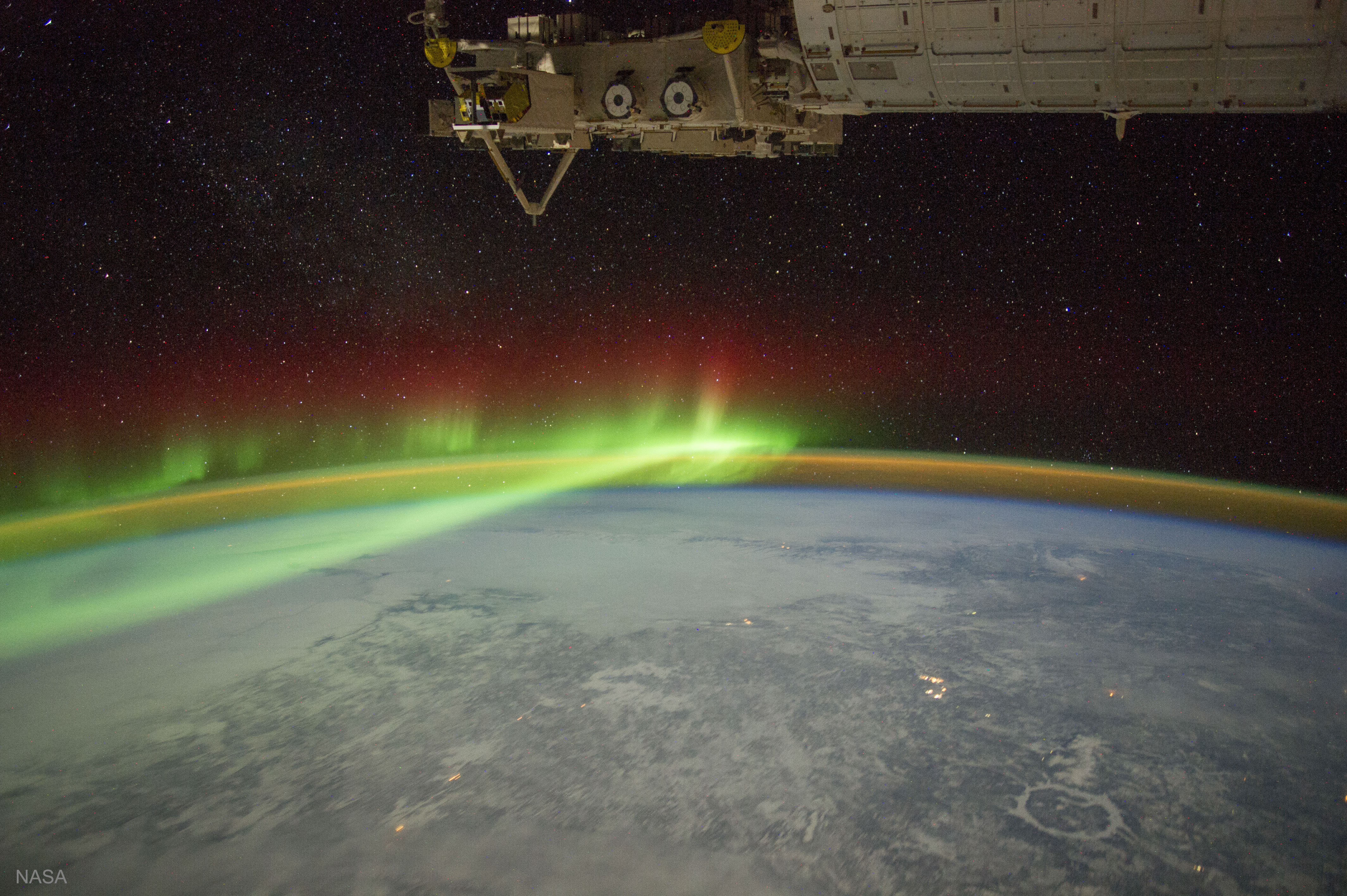
今日の写真には、オーロラ、夜光、地球上で最も古い衝突クレーターの一つ、雪と氷、星、街の明かり、国際宇宙ステーションの一部など、いくつ見つけることができるでしょうか?これらのほとんどは、それぞれの特徴的な色で識別できます。オーロラは、写真の左側に写っており、下部は緑色、上部は赤色に見えます。夜光はオレンジ色で、地球の丸みを帯びた上に浮かんでいるのが見えます。カナダにある円形のマニクアガン・クレーターは、直径約100キロメートル、約2億年前のもので、右下に見えるところにあり、白い雪と氷で覆われています。明るい色の星は、暗い宇宙の背景に点在しています。街の明かりは明るい黄色で、風景に点在しています。最後に、写真の上部には、国際宇宙ステーション(ISS)の一部が、ほとんどが薄茶色に見えます。この写真は、2012年にISSから撮影されたものです。
原文(English)
How many of these can you find in today's featured photograph: an aurora, airglow, one of the oldest impact craters on the Earth, snow and ice, stars, city lights, and part of the International Space Station? Most of these can be identified by their distinctive colors. The aurora here appears green at the bottom, red at the top, and is visible across the left of image. Airglow appears orange and can be seen hovering over the curve of the Earth. The circular Manicouagan Crater in Canada, about 100 kilometers across and 200 million years old, is visible toward the lower right and is covered in white snow and ice. Stars, light in color, dot the dark background of space. City lights appear a bright yellow and dot the landscape. Finally, across the top, part of the International Space Station (ISS) appears mostly tan. The featured image was taken from the ISS in 2012.
\ この感動を宇宙仲間にシェア /
宇宙をXでシェア
© NASA / APOD