
🚀 宇宙の記憶・カレンダー検索
🚀 象徴的な写真:
APOD第1回
🚀 創造の柱
🚀 スピリット火星着陸
🚀 ハッブル超深宇宙
🚀 地球へようこそ|ブルー・マーブル
🚀 エンケラドス
🚀 ベテルギウス
🚀 火星着陸
🚀 青い夕焼け
🚀 冥王星のハート
🚀 皆既日食
🚀 アースライズ再構築
🚀 ブラックホール
🚀 ウェッブ初画像
🚀 アポロ11着陸
APOD30周年(2025年6月16日)
赤外線で見るわし星雲の柱
Pillars of the Eagle Nebula in Infrared
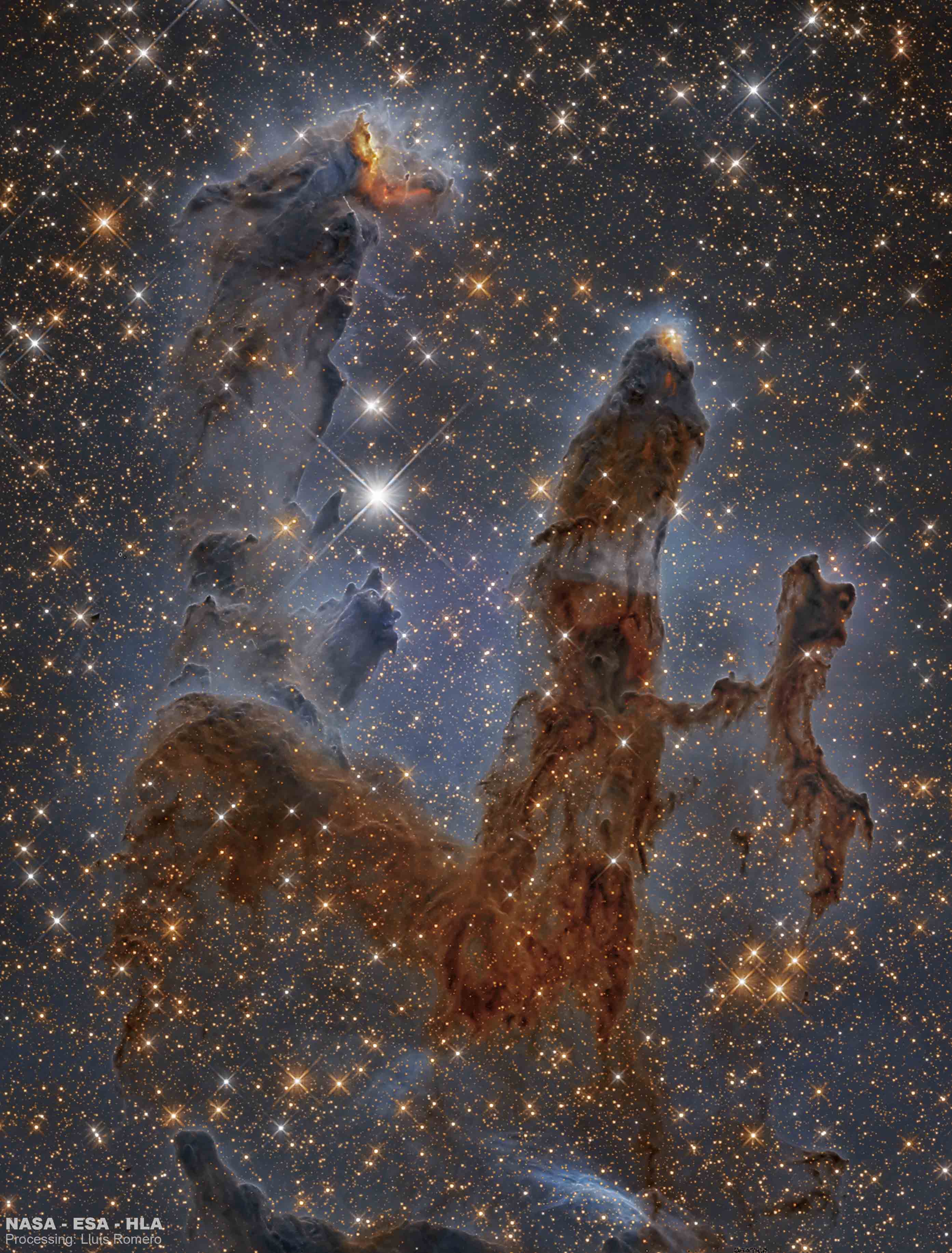
わし星雲では、生まれたばかりの星々が形成されています。重力によって収縮する高密度のガスと塵の柱の中で、これらの新しく形成された明るい星々の強烈な放射線が周囲の物質を蒸発させています。ハッブル宇宙望遠鏡が近赤外線で撮影したこの画像では、可視光では柱を不透明にしている厚い塵の大部分を通して見ることができます。これらの巨大な構造は数光年の長さがあり、非公式に「創造の柱」と呼ばれています。散開星団M16に関連するわし星雲は、地球から約6,500光年離れたところにあります。わし星雲は、蛇座の尾(Serpens Cauda)の方向にある星雲が豊富な領域にあるため、小型望遠鏡でも容易に観測できます。APODイベント:APOD編集者が8月8日にフェルミ国立加速器研究所で講演
原文(English)
Newborn stars are forming in the Eagle Nebula. Gravitationally contracting in pillars of dense gas and dust, the intense radiation of these newly-formed bright stars is causing surrounding material to boil away. This image, taken with the Hubble Space Telescope in near infrared light, allows the viewer to see through much of the thick dust that makes the pillars opaque in visible light. The giant structures are light years in length and dubbed informally the Pillars of Creation. Associated with the open star cluster M16, the Eagle Nebula lies about 6,500 light years away. The Eagle Nebula is an easy target for small telescopes in a nebula-rich part of the sky toward the split constellation Serpens Cauda (the tail of the snake). APOD Event: APOD Editor to speak at Fermilab on August 8
\ この感動を宇宙仲間にシェア /
宇宙をXでシェア
© NASA / APOD