
🚀 宇宙の記憶・カレンダー検索
🚀 象徴的な写真:
APOD第1回
🚀 創造の柱
🚀 スピリット火星着陸
🚀 ハッブル超深宇宙
🚀 地球へようこそ|ブルー・マーブル
🚀 エンケラドス
🚀 ベテルギウス
🚀 火星着陸
🚀 青い夕焼け
🚀 冥王星のハート
🚀 皆既日食
🚀 アースライズ再構築
🚀 ブラックホール
🚀 ウェッブ初画像
🚀 アポロ11着陸
APOD30周年(2025年6月16日)
塵の野原に浮かぶ虹色の星雲
The Iris Nebula in a Field of Dust
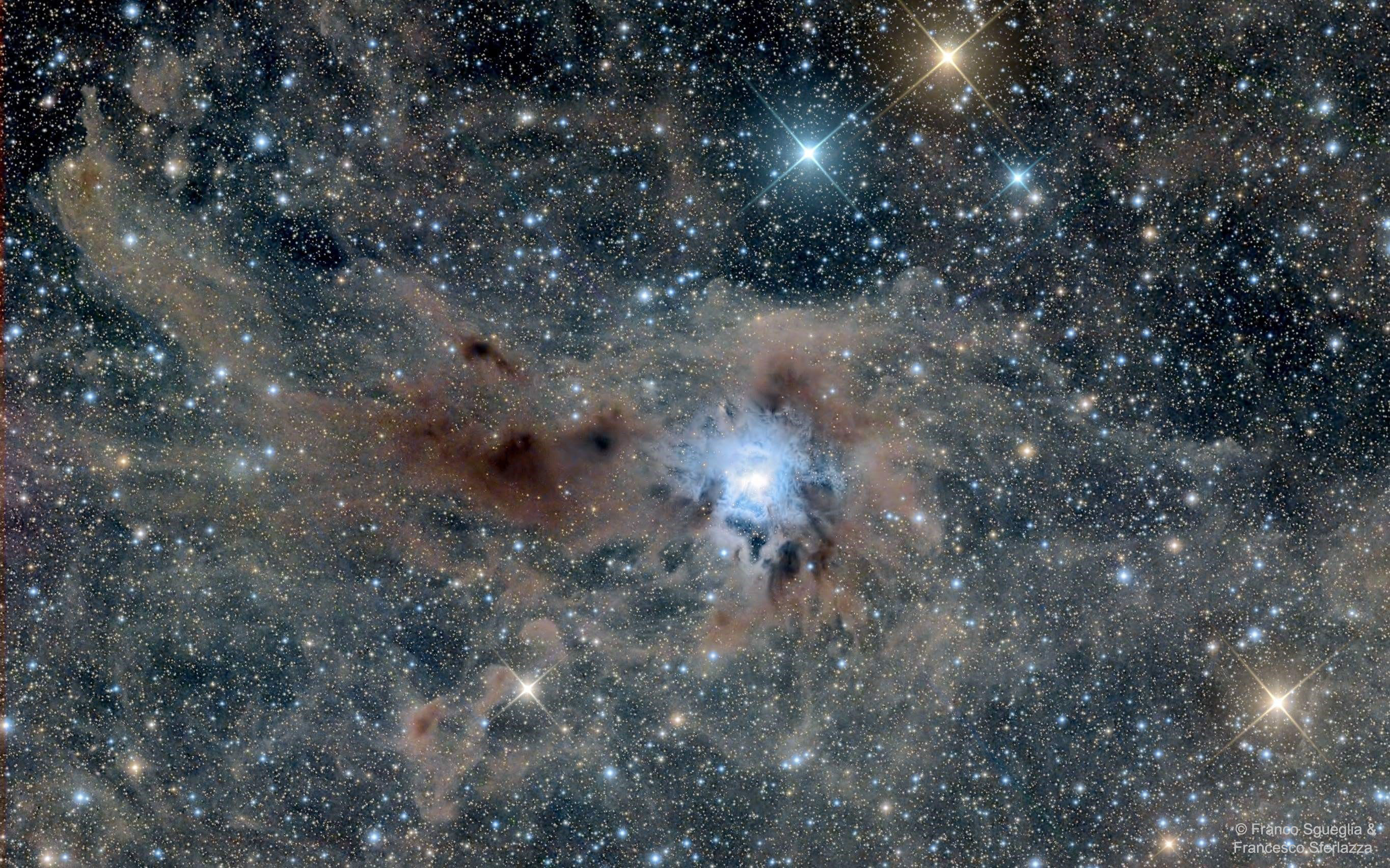
この暗い星間塵の領域に咲く青い花は何でしょう?それはアイリス星雲です。アイリス星雲の鮮やかな青色は、明るい星SAO 19158からの光が、通常は暗い塵の密集した領域で反射することによって生み出されます。星自体がほとんど青色であるだけでなく、星からの青い光が塵によって優先的に反射されるのです。これは地球の空が青く見えるのと同じ効果です。広範囲に広がる塵の茶色がかった色合いは、光ルミネセンス、つまり塵が紫外線を赤色光に変換することによるものです。NGC 7023としてカタログ化されているアイリス星雲は、多環芳香族炭化水素(PAH)が異常に多く存在するため、頻繁に研究されています。PAHは、地球上でも薪の不完全燃焼の際に放出される複雑な分子です。アイリス星雲の明るい青色の部分は、約6光年に及びます。ここに掲載されているアイリス星雲は、約1300光年離れたところにあり、ケフェウス座の方向に小型望遠鏡で見つけることができます。 APODイベント:APOD編集者が8月8日にフェルミ国立加速器研究所で講演
原文(English)
What blue flower grows in this field of dark interstellar dust? The Iris Nebula. The striking blue color of the Iris Nebula is created by light from the bright star SAO 19158 reflecting off of a dense patch of normally dark dust. Not only is the star itself mostly blue, but blue light from the star is preferentially reflected by the dust -- the same effect that makes Earth's sky blue. The brown tint of the pervasive dust comes partly from photoluminescence -- dust converting ultraviolet radiation to red light. Cataloged as NGC 7023, the Iris Nebula is studied frequently because of the unusual prevalence there of Polycyclic Aromatic Hydrocarbons (PAHs), complex molecules that are also released on Earth during the incomplete combustion of wood fires. The bright blue portion of the Iris Nebula spans about six light years. The Iris Nebula, pictured here, lies about 1300 light years distant and can be found with a small telescope toward the constellation of Cepheus. APOD Event: APOD Editor to speak at Fermilab on August 8
\ この感動を宇宙仲間にシェア /
宇宙をXでシェア
© Franco Sgueglia &
Francesco Sferlazza / APOD