
🚀 宇宙の記憶・カレンダー検索
🚀 象徴的な写真:
APOD第1回
🚀 創造の柱
🚀 スピリット火星着陸
🚀 ハッブル超深宇宙
🚀 地球へようこそ|ブルー・マーブル
🚀 エンケラドス
🚀 ベテルギウス
🚀 火星着陸
🚀 青い夕焼け
🚀 冥王星のハート
🚀 皆既日食
🚀 アースライズ再構築
🚀 ブラックホール
🚀 ウェッブ初画像
🚀 アポロ11着陸
APOD30周年(2025年6月16日)
パーカー対ペルセウス座
Parker vs Perseid
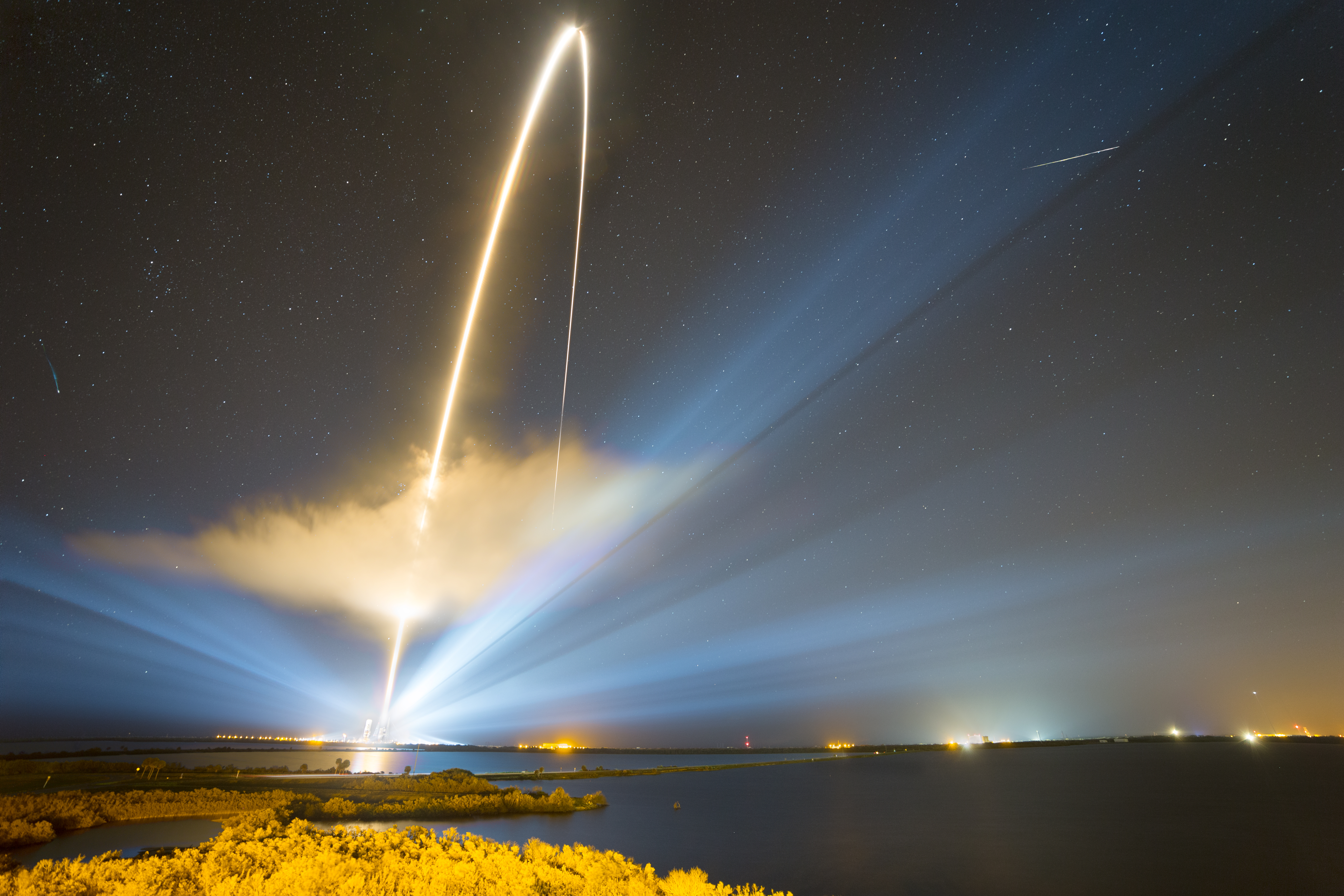
ペルセウス座流星群の明るい流星が、毎年恒例のペルセウス座流星群のピークに近い日曜日の早朝に撮影された一連の合成写真の右上を横切る短い閃光。ケープカナベラル空軍基地のスペース・ローンチ・コンプレックス37から約2マイル離れた場所に設置されたカメラマンは、パーカー・ソーラー・プローブを搭載したデルタIVヘビーロケットが暗い朝の空に4分間続く軌跡を捉えた。ペルセウス座流星は遅いわけではない。周期彗星スウィフト・タットルからの塵の粒は、秒速約60キロメートル(時速13万3000マイル)で地球の上層大気を突き進む際に蒸発する。パーカー・ソーラー・プローブは、7年間のミッション中に金星の重力アシストフライバイを7回行う予定で、太陽への最接近距離は徐々に減少し、最終的には610万キロメートル(380万マイル)に達する。これは水星と太陽の間の距離の約8分の1で、太陽の希薄な外層大気である太陽コロナの内側である。その頃には、太陽に対して秒速約190キロメートル(時速43万マイル)の速度で移動しており、地球から打ち上げられた宇宙船としては最速記録となるでしょう。ギャラリー:ペルセウス座流星群2018
原文(English)
The brief flash of a bright Perseid meteor streaks across the upper right in this composited series of exposures made early Sunday morning near the peak of the annual Perseid meteor shower. Set up about two miles from Space Launch Complex 37 at Cape Canaveral Air Force Station, the photographer also captured the four minute long trail of a Delta IV Heavy rocket carrying the Parker Solar Probe into the dark morning sky. Perseid meteors aren't slow. The grains of dust from periodic comet Swift-Tuttle vaporize as they plow through Earth's upper atmosphere at about 60 kilometers per second (133,000 mph). On its way to seven gravity-assist flybys of Venus over its seven year mission, the Parker Solar Probe's closest approach to the Sun will steadily decrease, finally reaching a distance of 6.1 million kilometers (3.8 million miles). That's about 1/8 the distance between Mercury and the Sun, and within the solar corona, the Sun's tenuous outer atmosphere. By then it will be traveling roughly 190 kilometers per second (430,000 mph) with respect to the Sun, a record for fastest spacecraft from planet Earth. Gallery: Perseid meteor shower 2018
\ この感動を宇宙仲間にシェア /
宇宙をXでシェア
© Derek Demeter / APOD