
🚀 宇宙の記憶・カレンダー検索
🚀 象徴的な写真:
APOD第1回
🚀 創造の柱
🚀 スピリット火星着陸
🚀 ハッブル超深宇宙
🚀 地球へようこそ|ブルー・マーブル
🚀 エンケラドス
🚀 ベテルギウス
🚀 火星着陸
🚀 青い夕焼け
🚀 冥王星のハート
🚀 皆既日食
🚀 アースライズ再構築
🚀 ブラックホール
🚀 ウェッブ初画像
🚀 アポロ11着陸
APOD30周年(2025年6月16日)
ロゼット星雲とコーン星雲の間にある21P彗星
Comet 21P Between Rosette and Cone Nebulas
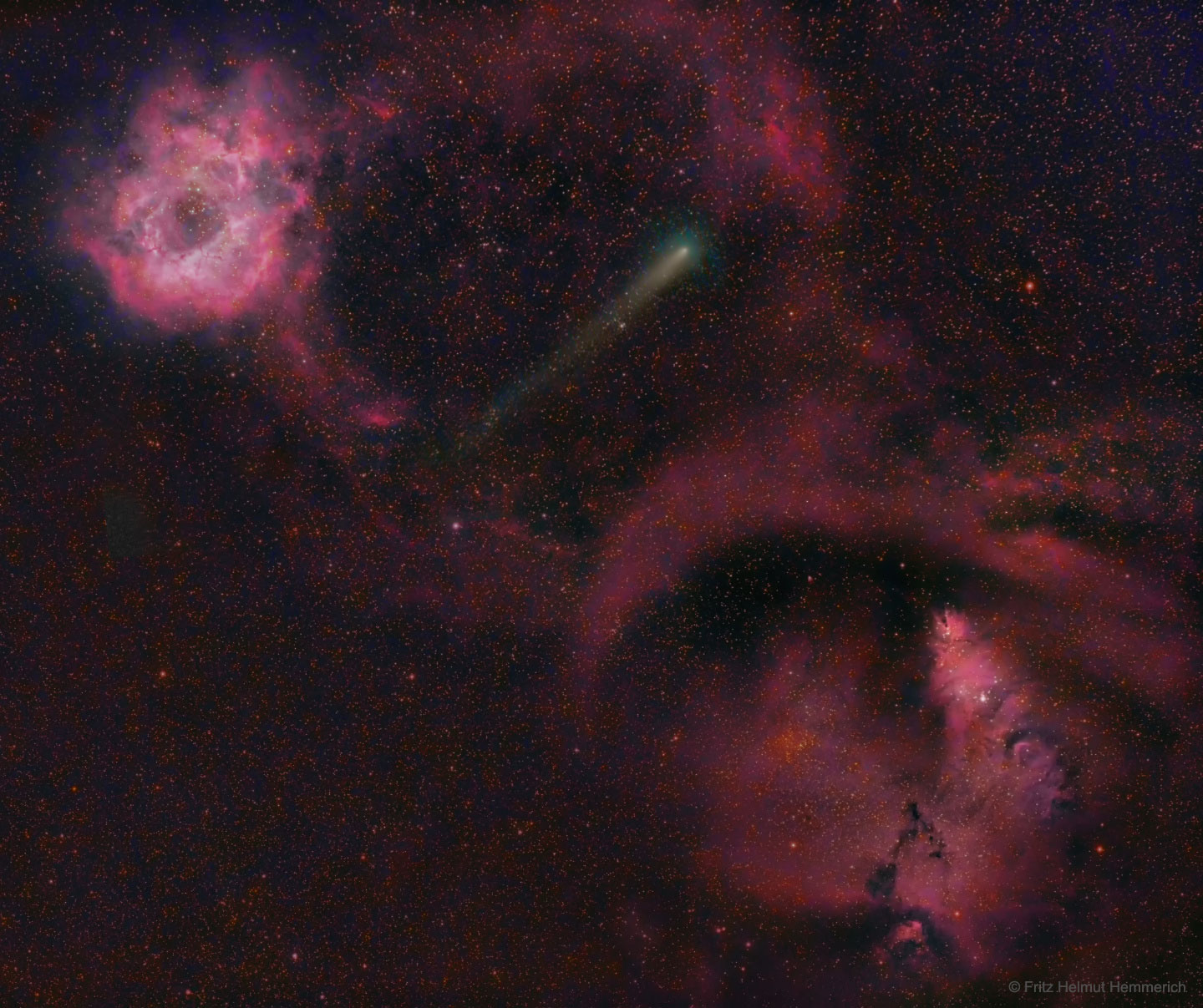
緑がかった灰色の彗星の小さな破片が今夜、地球の大気圏を横切ると予想されています。具体的には、写真にあるジャコビニ・ツィナー彗星(21P)の核が浸食されてできた破片が、毎年恒例のドラコノイド流星群を引き起こし、今夜ピークを迎えます。今年のドラコノイド流星群は、月の光がほとんど届かない日没直後にピークを迎える可能性が高いため、比較的観測しやすいでしょう。しかし、先月21P彗星が地球の軌道付近を通過したことで、ドラコノイド流星群の通常の流星数は1時間あたりわずか数個と予想されているため、今年の流星群の観測には忍耐が必要かもしれません。とはいえ、流星の出現率を予測するのは非常に困難で、1933年、1946年、そして2011年にはりゅう座流星群がかなり目を見張るほど出現しました。特集されている21P彗星は、2週間前にバラ星雲(左上)と円錐星雲(右下)の間に優雅に姿を現し、その後木星の軌道近くに戻り、約6年半後に再び戻ってくる予定です。
原文(English)
Small bits of this greenish-gray comet are expected to streak across Earth's atmosphere tonight. Specifically, debris from the eroding nucleus of Comet 21P / Giacobini-Zinner, pictured, causes the annual Draconids meteor shower, which peaks this evening. Draconid meteors are easy to enjoy this year because meteor rates will likely peak soon after sunset with the Moon's glare nearly absent. Patience may be needed, though, as last month's passing of 21P near the Earth's orbit is not expected to increase the Draconids' normal meteor rate this year of (only) a few meteors per hour. Then again, meteor rates are notoriously hard to predict, and the Draconids were quite impressive in 1933, 1946, and 2011. Featured, Comet 21P gracefully posed between the Rosette (upper left) and Cone (lower right) nebulas two weeks ago before heading back out to near the orbit of Jupiter, to return again in about six and a half years.
\ この感動を宇宙仲間にシェア /
宇宙をXでシェア
© Fritz Helmut Hemmerich / APOD