
🚀 宇宙の記憶・カレンダー検索
🚀 象徴的な写真:
APOD第1回
🚀 創造の柱
🚀 スピリット火星着陸
🚀 ハッブル超深宇宙
🚀 地球へようこそ|ブルー・マーブル
🚀 エンケラドス
🚀 ベテルギウス
🚀 火星着陸
🚀 青い夕焼け
🚀 冥王星のハート
🚀 皆既日食
🚀 アースライズ再構築
🚀 ブラックホール
🚀 ウェッブ初画像
🚀 アポロ11着陸
APOD30周年(2025年6月16日)
塵の野原に浮かぶ虹色の星雲
The Iris Nebula in a Field of Dust
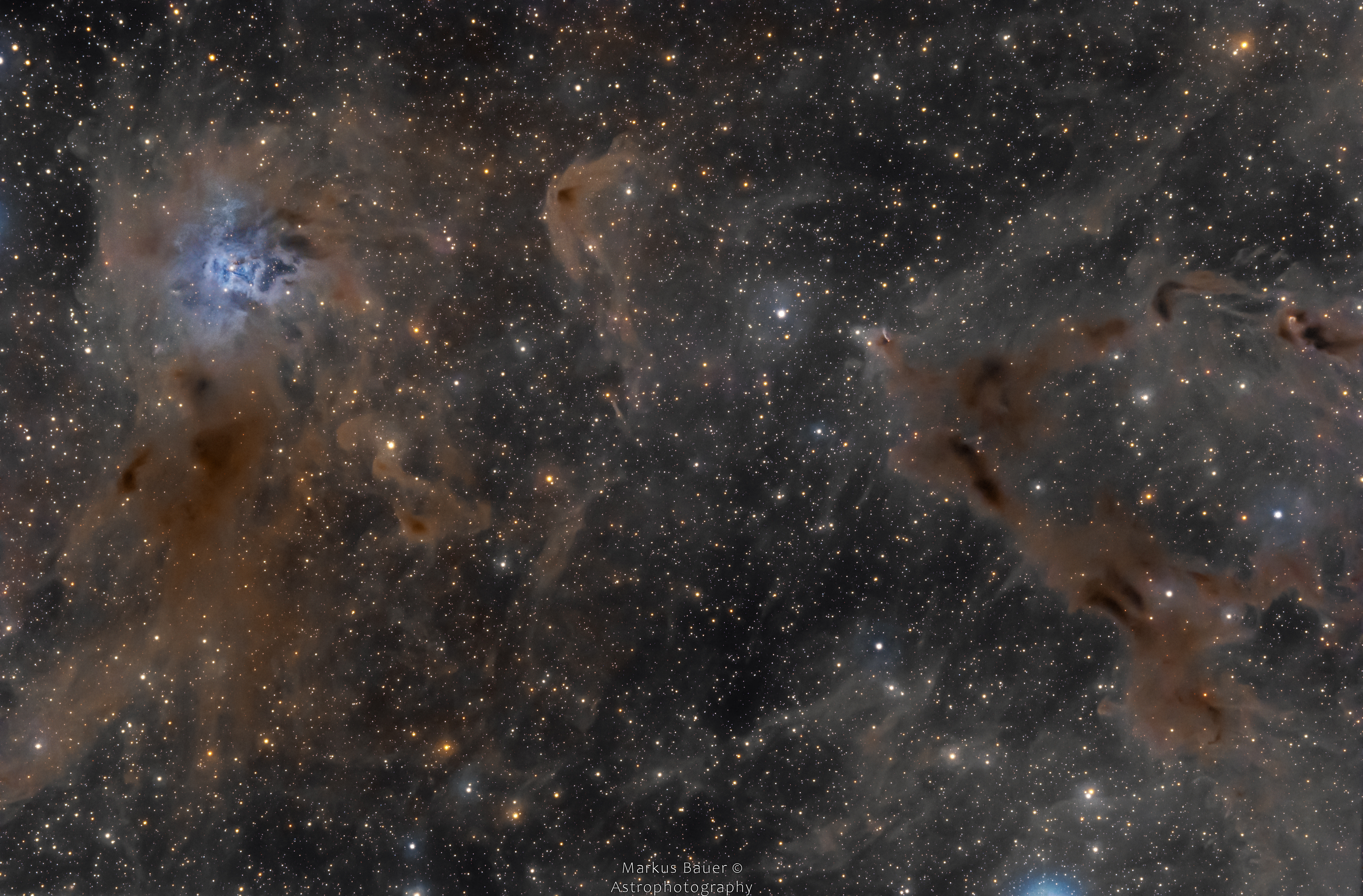
これらの宇宙塵雲は、ケフェウス座の豊かな星野に沿って約1,300光年離れたところを漂っています。左上には、NGC 7023としても知られる美しいアイリス星雲が咲き誇っています。空には花を連想させる星雲はこれだけではありませんが、その美しく対称的な形は、約6光年に及びます。この星雲の支配的な青色は、近くにある高温の青みがかった星からの光を反射する、遍在する塵の粒子の特徴です。しかし、暗く視界を遮る塵雲が、約4度の視野の大部分を覆っています。右側には、リンズ暗黒星雲のLDN 1147/1158複合体があります。星はそこで形成されていますが、まだ暗い雲の核の中に隠れています。しかし、鮮明な画像を探すと、最近形成された星から噴出する衝撃を受けた輝くガスのジェットであるハービッグ・ハロー天体を特定できます。
原文(English)
These cosmic dust clouds drift some 1,300 light-years away along the fertile starfields of the constellation Cepheus. The beautiful Iris Nebula, also known as NGC 7023, blossoms at the upper left. Not the only nebula in the sky to evoke the imagery of flowers, its pretty, symmetric form spans about 6 light-years. This nebula's dominant blue color is characteristic of the pervasive dust grains reflecting light from a nearby hot, bluish star. But darker, obscuring dust clouds cover most of the nearly 4 degree wide field of view. At the right is the LDN 1147/1158 complex of Lynds Dark Nebulae. Stars are forming there, still hidden within the dark cloud cores. A search through the sharp image can identify Herbig-Haro objects though, jets of shocked glowing gas emanating from recently formed stars.
\ この感動を宇宙仲間にシェア /
宇宙をXでシェア
© Markus Bauer / APOD