
🚀 宇宙の記憶・カレンダー検索
🚀 象徴的な写真:
APOD第1回
🚀 創造の柱
🚀 スピリット火星着陸
🚀 ハッブル超深宇宙
🚀 地球へようこそ|ブルー・マーブル
🚀 エンケラドス
🚀 ベテルギウス
🚀 火星着陸
🚀 青い夕焼け
🚀 冥王星のハート
🚀 皆既日食
🚀 アースライズ再構築
🚀 ブラックホール
🚀 ウェッブ初画像
🚀 アポロ11着陸
APOD30周年(2025年6月16日)
赤外線で見るエンケラドゥス
Enceladus in Infrared
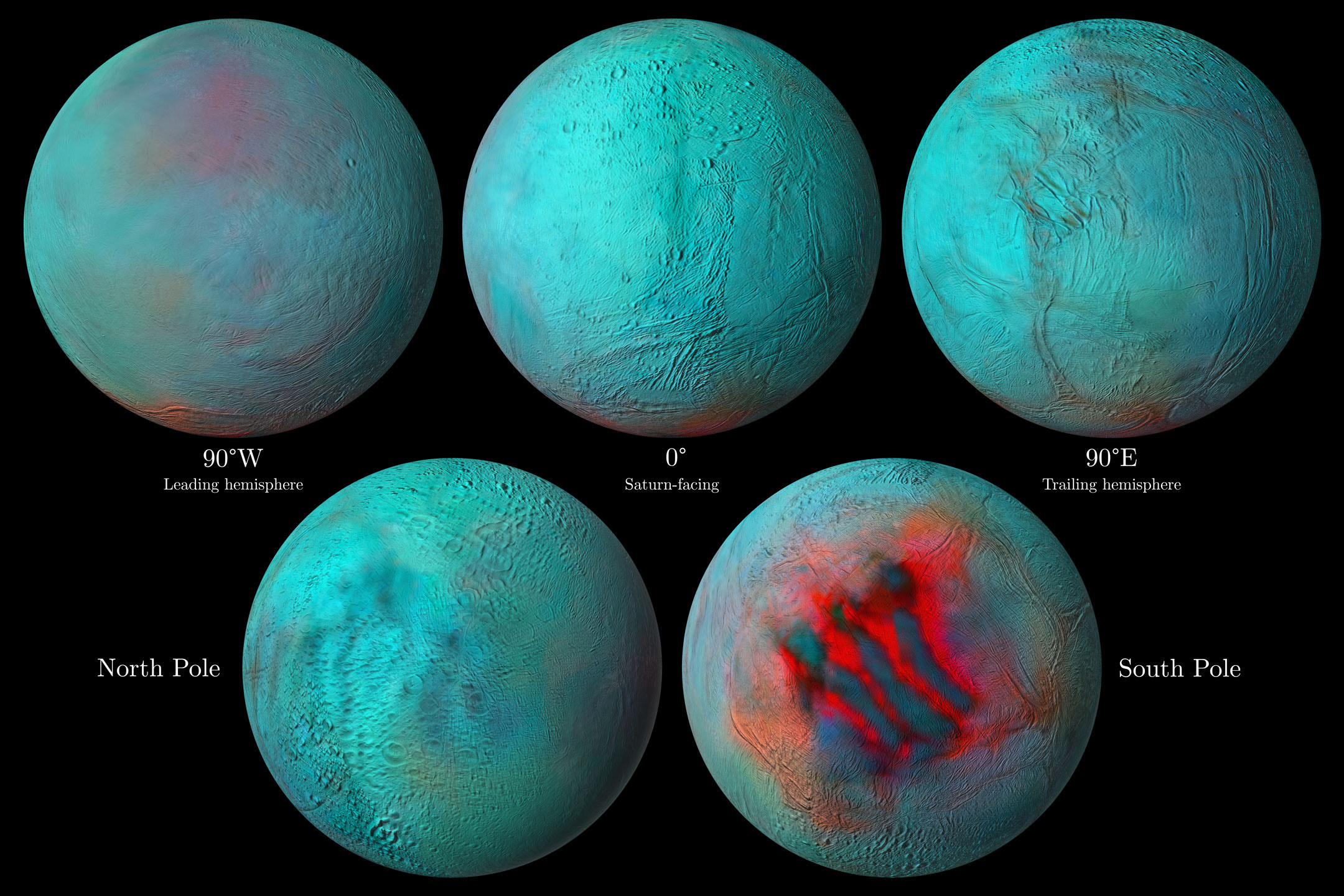
太陽系で最も魅力的な世界の一つ、土星の氷衛星エンケラドゥスが、カッシーニ探査機が捉えた詳細な半球画像に映っている。5枚のパネルは、カッシーニの可視・赤外線マッピング分光計と撮像科学サブシステムによる13年間の赤外線画像データを擬似カラーで表示している。新しい氷は赤く表示され、最も劇的な特徴は、直径500キロメートルのエンケラドゥスの南極地域にある長い裂け目のように見える。それらは、エンケラドゥスの氷殻の下の海に繋がっていると考えられる表面の亀裂であるタイガーストライプの位置に対応している。この亀裂は、宇宙空間に絶えず噴出するエンケラドゥスの氷の噴煙の発生源である。この噴煙は、2005年にカッシーニによって発見された。現在、主要な半球画像の北半分に見られる赤みがかった色合いは、地質学的に活発なこの衛星の他の領域が最近再表面化していることを示しており、生命に適した条件を備えている可能性がある。専門家の討論: 人類はどのようにして地球外生命体を発見するのでしょうか?
原文(English)
One of our Solar System's most tantalizing worlds, icy Saturnian moon Enceladus appears in these detailed hemisphere views from the Cassini spacecraft. In false color, the five panels present 13 years of infrared image data from Cassini's Visual and Infrared Mapping Spectrometer and Imaging Science Subsystem. Fresh ice is colored red, and the most dramatic features look like long gashes in the 500 kilometer diameter moon's south polar region. They correspond to the location of tiger stripes, surface fractures that likely connect to an ocean beneath the Enceladus ice shell. The fractures are the source of the moon's icy plumes that continuously spew into space. The plumes were discovered by by Cassini in 2005. Now, reddish hues in the northern half of the leading hemisphere view also indicate a recent resurfacing of other regions of the geologically active moon, a world that may hold conditions suitable for life. Experts Debate: How will humanity first discover extraterrestrial life?
\ この感動を宇宙仲間にシェア /
宇宙をXでシェア
© NASA / APOD