
🚀 宇宙の記憶・カレンダー検索
🚀 象徴的な写真:
APOD第1回
🚀 創造の柱
🚀 スピリット火星着陸
🚀 ハッブル超深宇宙
🚀 地球へようこそ|ブルー・マーブル
🚀 エンケラドス
🚀 ベテルギウス
🚀 火星着陸
🚀 青い夕焼け
🚀 冥王星のハート
🚀 皆既日食
🚀 アースライズ再構築
🚀 ブラックホール
🚀 ウェッブ初画像
🚀 アポロ11着陸
APOD30周年(2025年6月16日)
ソリス・ラクス:火星の目
Solis Lacus: The Eye of Mars
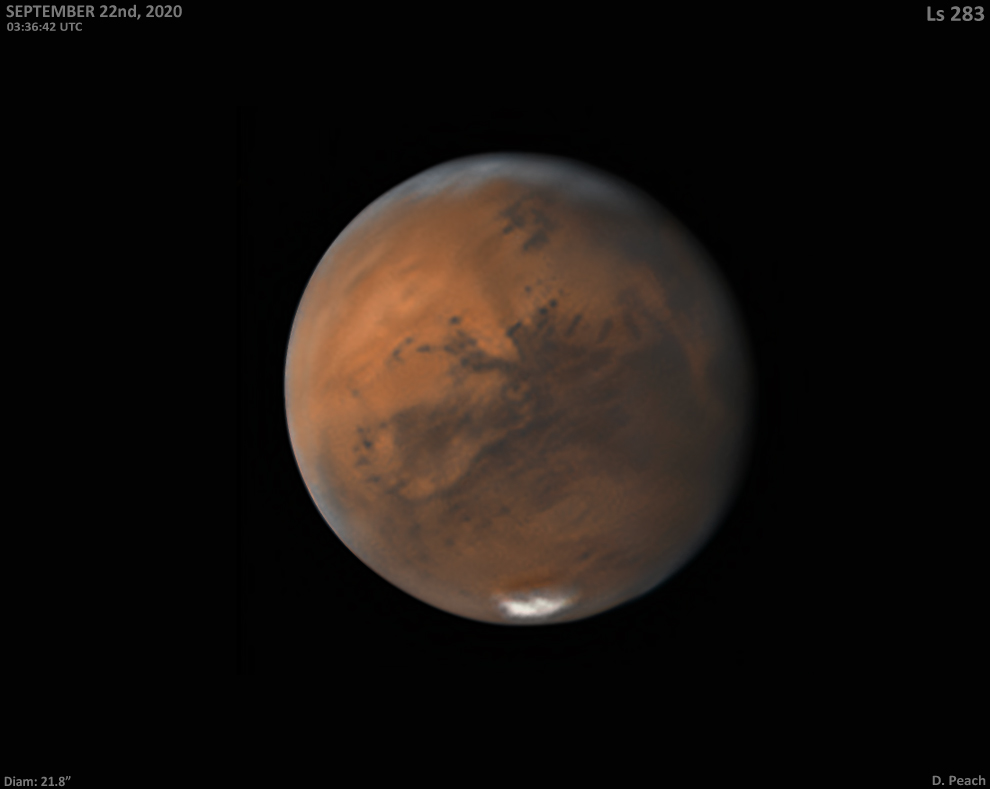
地球上の望遠鏡が観測する中、火星は夜空で明るさを増し、10月13日の2020年の衝に近づいています。9月22日に撮影されたこの赤い惑星の画像では、火星も観測しているように見えます。火星の円盤はすでに地球上の望遠鏡で見える最大サイズに近く、満月の見かけの直径の1/80未満です。季節的に縮小する南極冠は下部にあり、もやのかかった北極雲は上部にあります。円盤の中心のすぐ下と左には、円形の暗いアルベドの特徴であるソリス・ラクス(太陽の湖)があります。マリネリス峡谷の南にある明るい領域に囲まれたソリス・ラクスは、惑星サイズの瞳のように見え、火星の目として有名です。20世紀初頭、天文学者で熱心な火星観測者パーシバル・ローウェルは、火星の目を、彼が赤い惑星のスケッチに描いた運河の合流点と関連付けました。火星の目の大きさや形状に見られる広範囲にわたる目に見える変化は、高解像度の表面画像から、火星の薄い大気中の風によって運ばれる塵が原因であることが現在では理解されている。
原文(English)
As telescopes around planet Earth watch, Mars is growing brighter in night skies, approaching its 2020 opposition on October 13. Mars looks like it's watching too in this view of the Red Planet from September 22. Mars' disk is already near its maximum apparent size for earthbound telescopes, less than 1/80th the apparent diameter of a Full Moon. The seasonally shrinking south polar cap is at the bottom and hazy northern clouds are at the top. A circular, dark albedo feature, Solis Lacus (Lake of the Sun), is just below and left of disk center. Surrounded by a light area south of Valles Marineris, Solis Lacus looks like a planet-sized pupil, famously known as The Eye of Mars . Near the turn of the 20th century, astronomer and avid Mars watcher Percival Lowell associated the Eye of Mars with a conjunction of canals he charted in his drawings of the Red Planet. Broad, visible changes in the size and shape of the Eye of Mars are now understood from high resolution surface images to be due to dust transported by winds in the thin Martian atmosphere.
\ この感動を宇宙仲間にシェア /
宇宙をXでシェア
© Damian Peach / APOD