
🚀 宇宙の記憶・カレンダー検索
🚀 象徴的な写真:
APOD第1回
🚀 創造の柱
🚀 スピリット火星着陸
🚀 ハッブル超深宇宙
🚀 地球へようこそ|ブルー・マーブル
🚀 エンケラドス
🚀 ベテルギウス
🚀 火星着陸
🚀 青い夕焼け
🚀 冥王星のハート
🚀 皆既日食
🚀 アースライズ再構築
🚀 ブラックホール
🚀 ウェッブ初画像
🚀 アポロ11着陸
APOD30周年(2025年6月16日)
ラグーンからパイプまでの中央天の川
The Central Milky Way from Lagoon to Pipe
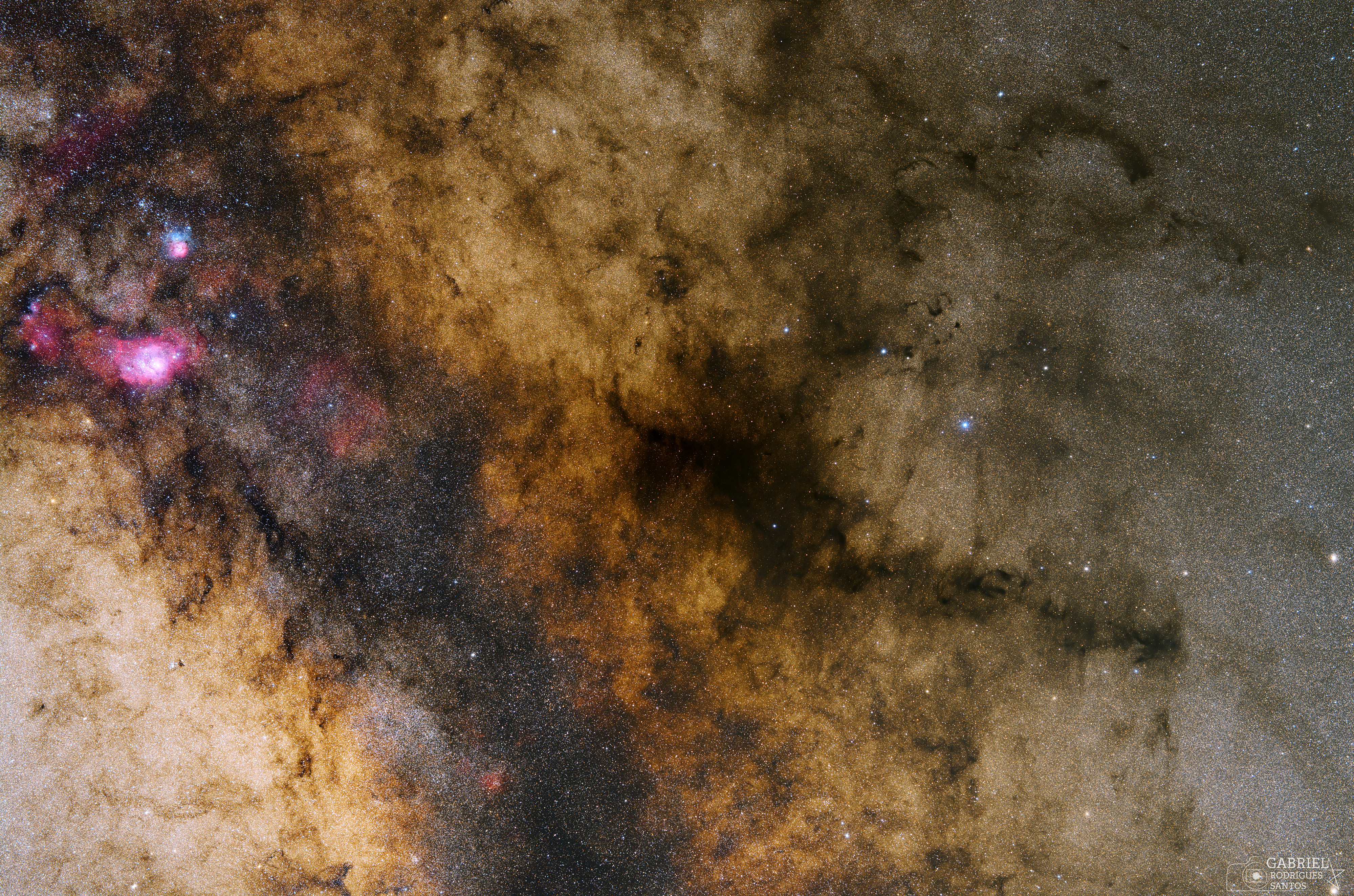
暗い模様と色鮮やかな雲がこの星空に広がっています。深く広大な眺めは、私たちの天の川銀河の中心に向かう密集した星野を横切って、30 個以上の満月まで広がっています。20 世紀初頭に天文学者 E. E. バーナードによってカタログ化された、右側に見える星間塵雲は、わずか 450 光年離れたへびつかい座分子雲複合体の一部である B59、B72、B77、B78 を含みます。肉眼では、それらの組み合わせた形がパイプのステムとボウルのように見えるため、この暗黒星雲はパイプ星雲として知られています。左側に集まっている 3 つの明るい星雲は、いて座の方向に 5,000 光年ほど離れた星形成領域です。18 世紀の天文学者シャルル・メシエは、明るい星団と星雲のカタログに、そのうちの 2 つ、3 つの中で最大の M8 と、そのすぐ上にある色鮮やかな M20 を含めました。 3番目に目立つ輝線領域には、左端のNGC 6559が含まれます。M20は、自身も塵の帯によって分断されているため、三裂星雲としても知られています。M8の一般的な愛称はラグーン星雲です。
原文(English)
Dark markings and colorful clouds inhabit this stellar landscape. The deep and expansive view spans more than 30 full moons across crowded star fields toward the center of our Milky Way Galaxy. Cataloged in the early 20th century by astronomer E. E. Barnard, the obscuring interstellar dust clouds seen toward the right include B59, B72, B77 and B78, part of the Ophiuchus molecular cloud complex a mere 450 light-years away. To the eye their combined shape suggests a pipe stem and bowl, and so the dark nebula's popular name is the Pipe Nebula. Three bright nebulae gathered on the left are stellar nurseries some 5,000 light-years distant toward the constellation Sagittarius. In the 18th century astronomer Charles Messier included two of them in his catalog of bright clusters and nebulae; M8, the largest of the triplet, and colorful M20 just above. The third prominent emission region includes NGC 6559 at the far left. Itself divided by obscuring dust lanes, M20 is also known as the Trifid. M8's popular moniker is the Lagoon Nebula.
\ この感動を宇宙仲間にシェア /
宇宙をXでシェア
© Gabriel Rodrigues Santos / APOD