
🚀 宇宙の記憶・カレンダー検索
🚀 象徴的な写真:
APOD第1回
🚀 創造の柱
🚀 スピリット火星着陸
🚀 ハッブル超深宇宙
🚀 地球へようこそ|ブルー・マーブル
🚀 エンケラドス
🚀 ベテルギウス
🚀 火星着陸
🚀 青い夕焼け
🚀 冥王星のハート
🚀 皆既日食
🚀 アースライズ再構築
🚀 ブラックホール
🚀 ウェッブ初画像
🚀 アポロ11着陸
APOD30周年(2025年6月16日)
南極点の日の出
Sunrise at the South Pole
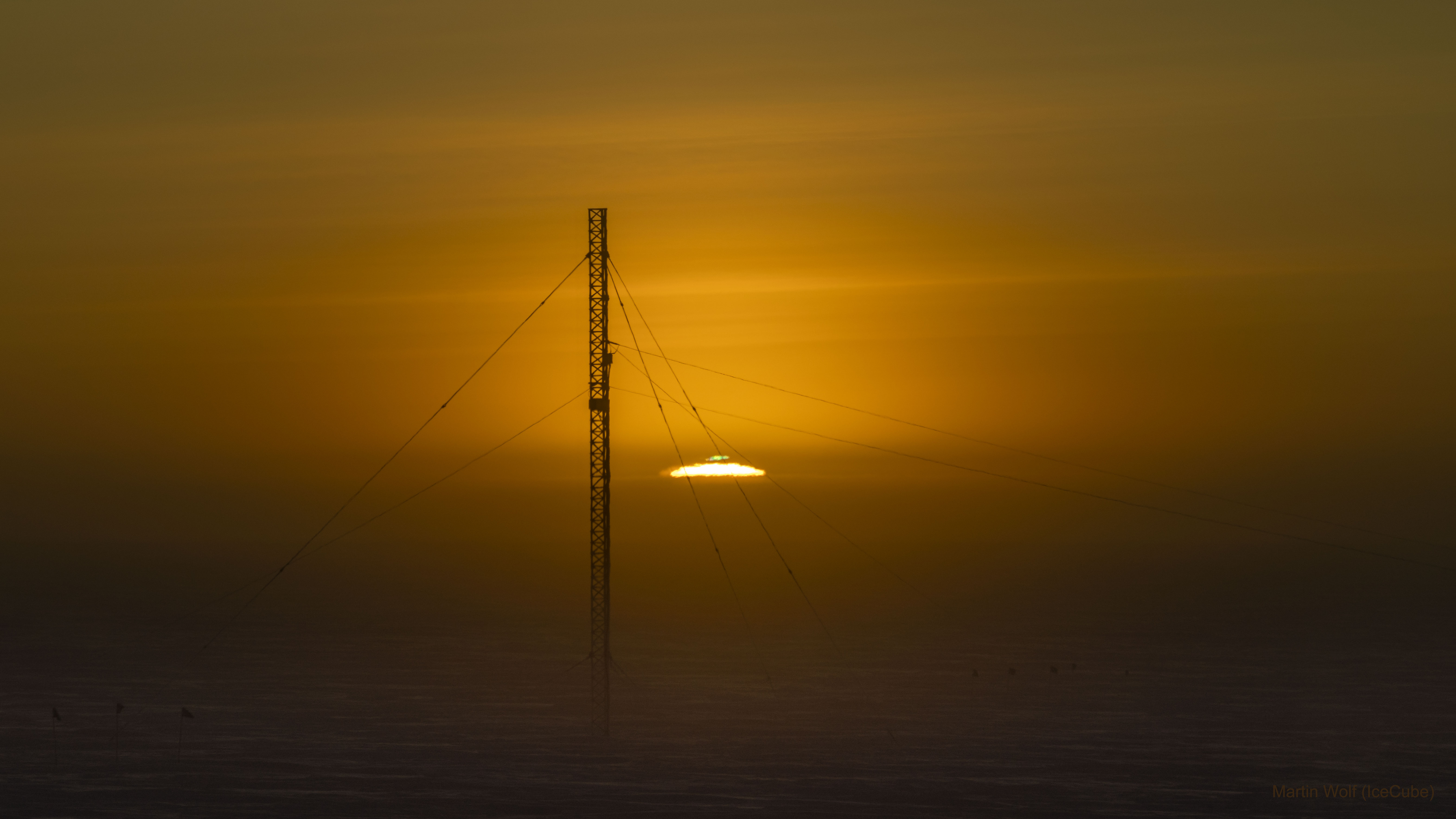
南極での日の出は独特です。通常は歓迎すべき光景で、何ヶ月もの暗闇の後に訪れ、何ヶ月もの太陽の光の始まりとなります。地球の極地では、太陽が昇るまでに数週間かかることがありますが、中緯度地域では数時間で昇ります。極地での日の出は、地球の自転ではなく、地球が太陽の周りを公転する際の傾きによって引き起こされます。極地では、大気のない地球であれば春分と秋分に初めて太陽が昇るはずですが、地球の大気のレンズ効果と太陽円盤の大きさにより、太陽の頂上が約2週間早く現れます。2週間前に撮影されたこの写真は、地球の南極にある広大な凍った風景の地平線から太陽が顔を覗かせている様子を捉えたものです。真の南極点は、通信塔の左数メートル先にあります。この極地での日の出の撮影は、太陽が緑色の閃光で覆われているように見えたため、特に写真映えしました。
原文(English)
Sunrise at the South Pole is different. Usually a welcome sight, it follows months of darkness -- and begins months of sunshine. At Earth's poles, it can take weeks for the Sun to rise, in contrast with hours at any mid-latitude location. Sunrise at a pole is caused by the tilt of the Earth as it orbits the Sun, not by the rotation of the Earth. Although at a pole, an airless Earth would first see first Sun at an equinox, the lensing effect of the Earth's atmosphere and the size of the solar disk causes the top of the Sun to appear about two-weeks early. Pictured two weeks ago, the Sun peeks above the horizon of a vast frozen landscape at Earth's South Pole. The true South Pole is just a few meters to the left of the communications tower. This polar sunrise capture was particularly photogenic as the Sun appeared capped by a green flash.
\ この感動を宇宙仲間にシェア /
宇宙をXでシェア
© Martin Wolf
(U. Wisconsin),
IceCube Neutrino Obs.,
NSF;
ht:
Alice Allen / APOD