
🚀 宇宙の記憶・カレンダー検索
🚀 象徴的な写真:
APOD第1回
🚀 創造の柱
🚀 スピリット火星着陸
🚀 ハッブル超深宇宙
🚀 地球へようこそ|ブルー・マーブル
🚀 エンケラドス
🚀 ベテルギウス
🚀 火星着陸
🚀 青い夕焼け
🚀 冥王星のハート
🚀 皆既日食
🚀 アースライズ再構築
🚀 ブラックホール
🚀 ウェッブ初画像
🚀 アポロ11着陸
APOD30周年(2025年6月16日)
M43:オリオン座の星々
M43: Streams of Orion
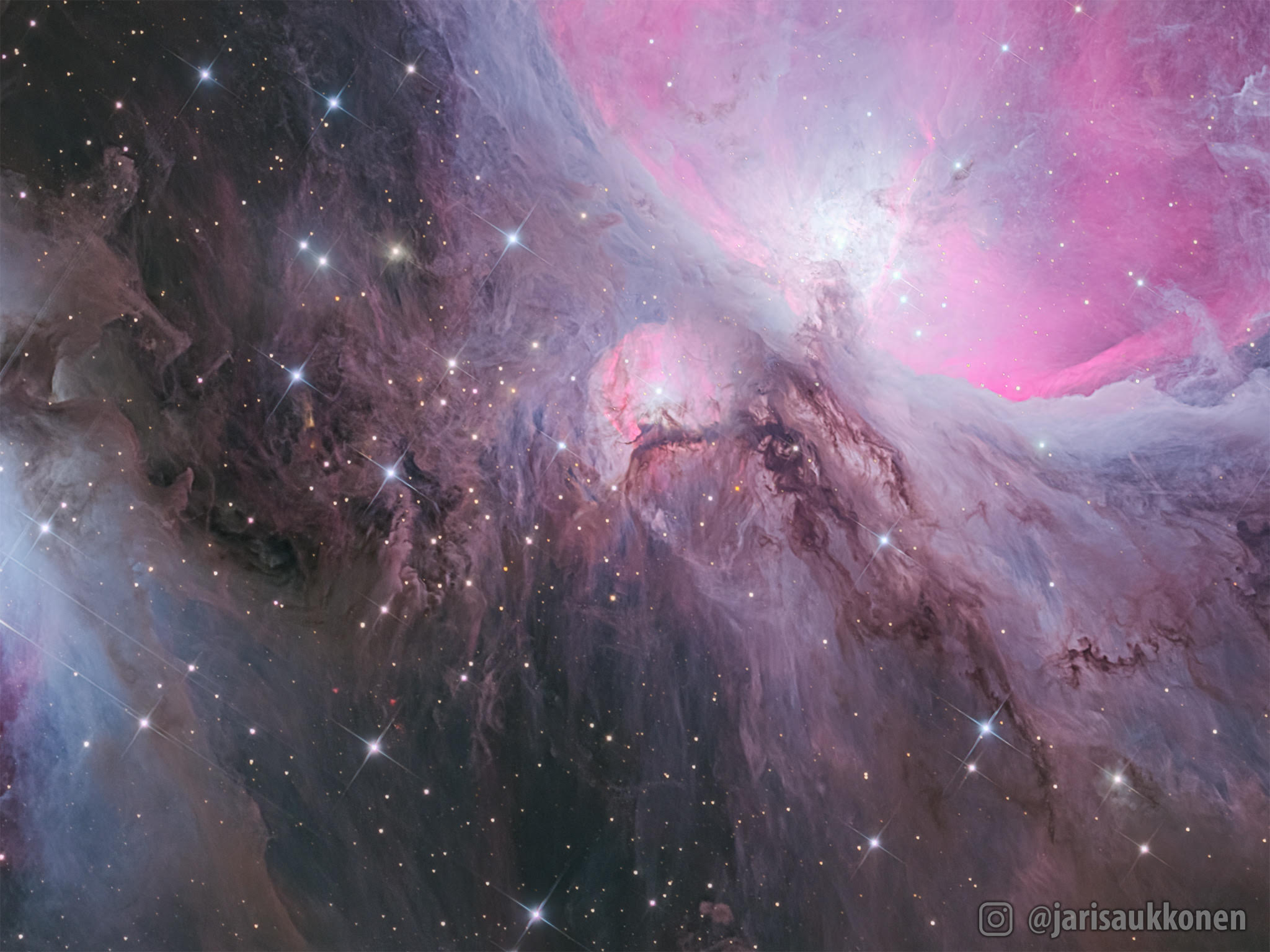
オリオン星雲の暗い塵の流れはどこから来るのでしょうか?オリオン分子雲複合体の一部であるM43は、より有名なM42の隣にあり、よく画像化されますが、あまり言及されることはありません。右上に一部が見えるM42には、トラペジウム星団の多くの明るい星が含まれています。M43自体は星形成領域であり、複雑に絡み合った暗い塵の流れを示していますが、実際には主に輝く水素ガスで構成されています。オリオン領域全体は、約1600光年離れた場所にあります。可視光に対して不透明なこの絵のように美しい暗い塵は、質量が大きく低温の星の外層大気で生成され、陽子と電子の強い外風によって放出されます。
原文(English)
Where do the dark streams of dust in the Orion Nebula originate? This part of the Orion Molecular Cloud Complex, M43, is the often imaged but rarely mentioned neighbor of the more famous M42. M42, seen in part to the upper right, includes many bright stars from the Trapezium star cluster. M43 is itself a star forming region that displays intricately-laced streams of dark dust -- although it is really composed mostly of glowing hydrogen gas. The entire Orion field is located about 1600 light years away. Opaque to visible light, the picturesque dark dust is created in the outer atmosphere of massive cool stars and expelled by strong outer winds of protons and electrons.
\ この感動を宇宙仲間にシェア /
宇宙をXでシェア
© Jari Saukkonen / APOD