
🚀 宇宙の記憶・カレンダー検索
🚀 象徴的な写真:
APOD第1回
🚀 創造の柱
🚀 スピリット火星着陸
🚀 ハッブル超深宇宙
🚀 地球へようこそ|ブルー・マーブル
🚀 エンケラドス
🚀 ベテルギウス
🚀 火星着陸
🚀 青い夕焼け
🚀 冥王星のハート
🚀 皆既日食
🚀 アースライズ再構築
🚀 ブラックホール
🚀 ウェッブ初画像
🚀 アポロ11着陸
APOD30周年(2025年6月16日)
シチリア島上空の地球照月
Earthshine Moon over Sicily
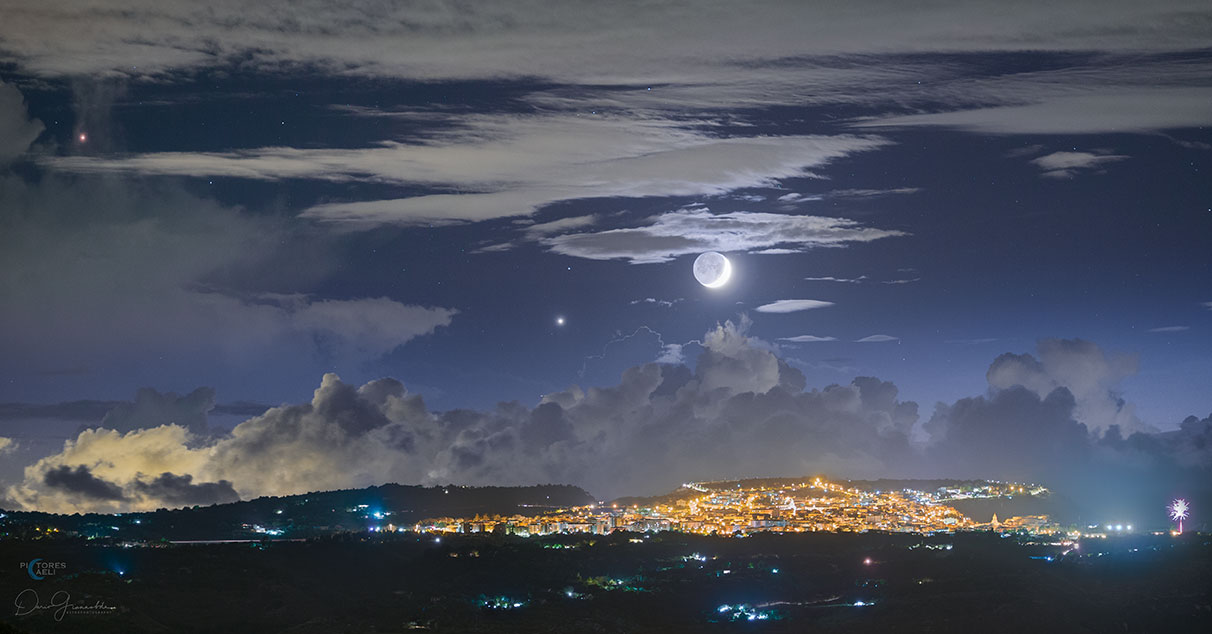
なぜこの月面全体が見えるのでしょうか?月が三日月形のときは、太陽が直接照らす部分は月のほんの一部だけです。その答えは、地球照、別名地球光、またはダ・ヴィンチ・グローと呼ばれる現象です。地球に面した月の残りの部分は、地球から反射された太陽光によってわずかに照らされているためです。地球は月面から見てほぼ満月に見えるため、つまり月が地球から見てわずかに三日月形に見えるとき、地球照は最も明るくなります。今月初めに撮影された連続撮影の合成HDR画像で紹介されているのは、地球照で昇る月が、画像の中心付近で最も明るい金星の近くをゆっくりと通過する様子を捉えたものです。金星のすぐ上には星Dschubba(デルタ・スコルピイとしてカタログ化されている)があり、左端の赤い星はアンタレスです。この天体ショーは、美しい雲を通して見ることができます。前景には、イタリアのシチリア島にある、古代の歴史を持つ都市、パラッツォーロ・アクレイデの明かりが見えます。
原文(English)
Why can we see the entire face of this Moon? When the Moon is in a crescent phase, only part of it appears directly illuminated by the Sun. The answer is earthshine, also known as earthlight and the da Vinci glow. The reason is that the rest of the Earth-facing Moon is slightly illuminated by sunlight first reflected from the Earth. Since the Earth appears near full phase from the Moon -- when the Moon appears as a slight crescent from the Earth -- earthshine is then near its brightest. Featured here in combined, consecutively-taken, HDR images taken earlier this month, a rising earthshine Moon was captured passing slowly near the planet Venus, the brightest spot near the image center. Just above Venus is the star Dschubba (catalogued as Delta Scorpii), while the red star on the far left is Antares. The celestial show is visible through scenic cloud decks. In the foreground are the lights from Palazzolo Acreide, a city with ancient historical roots in Sicily, Italy.
\ この感動を宇宙仲間にシェア /
宇宙をXでシェア
© Dario Giannobile / APOD