
🚀 宇宙の記憶・カレンダー検索
🚀 象徴的な写真:
APOD第1回
🚀 創造の柱
🚀 スピリット火星着陸
🚀 ハッブル超深宇宙
🚀 地球へようこそ|ブルー・マーブル
🚀 エンケラドス
🚀 ベテルギウス
🚀 火星着陸
🚀 青い夕焼け
🚀 冥王星のハート
🚀 皆既日食
🚀 アースライズ再構築
🚀 ブラックホール
🚀 ウェッブ初画像
🚀 アポロ11着陸
APOD30周年(2025年6月16日)
パックマン星雲の塵雲
Dust Clouds of the Pacman Nebula
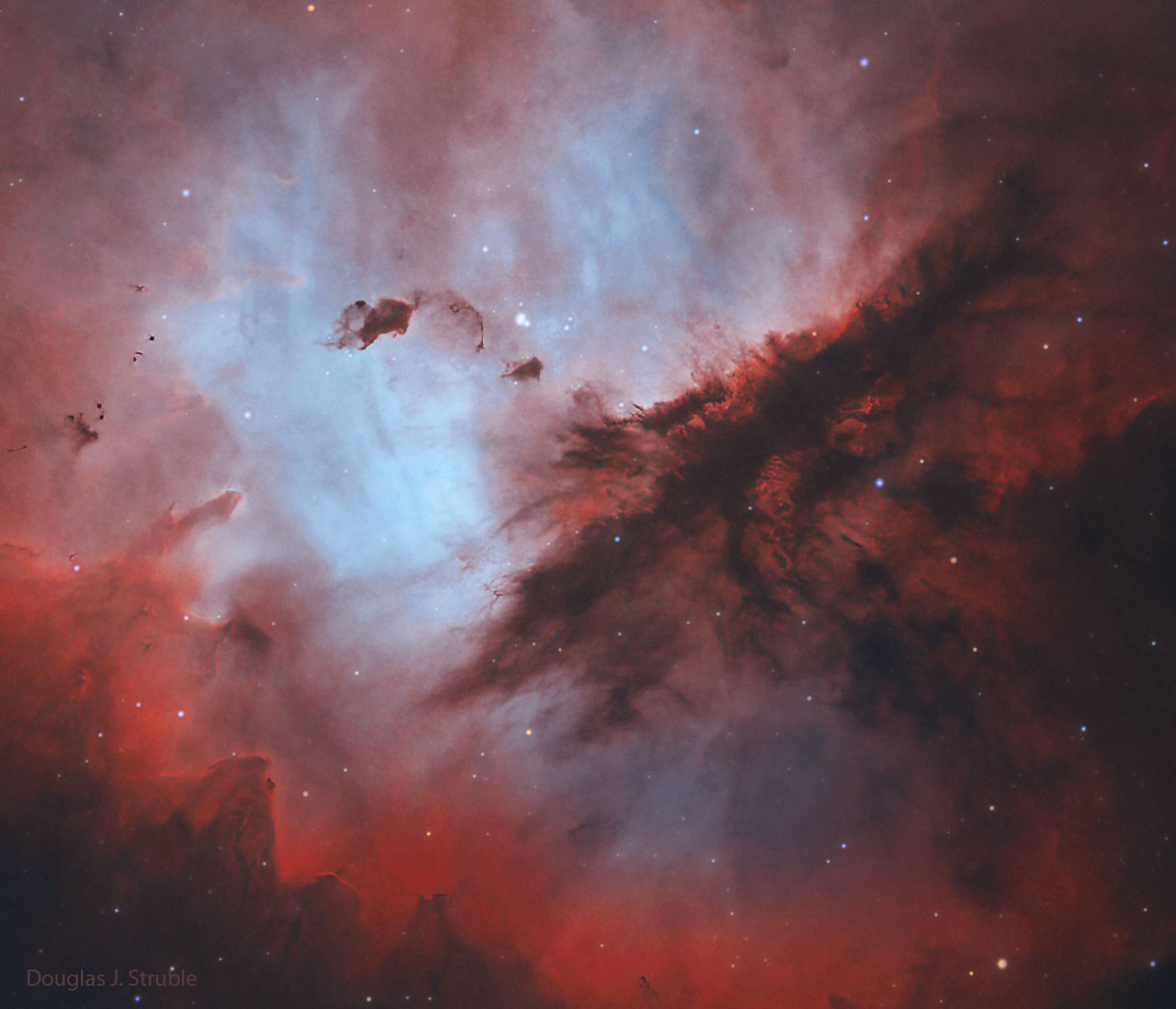
星は、誕生の源である濃密で暗い分子雲から、巨大で複雑な塵の彫刻を作り出すことができます。星が精緻な作品を彫り上げるために使う道具は、高エネルギーの光と高速の恒星風です。それらが生み出す熱は、暗い分子塵を蒸発させるだけでなく、周囲の水素ガスを拡散させて赤く輝かせます。ここに写っているのは、IC 1590 と名付けられた新しい散開星団で、全体的な形状からパックマン星雲と呼ばれる輝線星雲 NGC 281 の複雑な星間塵構造の周囲で完成に近づいています。左上の塵雲は、重力によって収縮して星(または複数の星)を形成する可能性があるため、ボック球状星雲に分類されます。パックマン星雲は、カシオペヤ座の方向に約 10,000 光年離れたところにあります。
原文(English)
Stars can create huge and intricate dust sculptures from the dense and dark molecular clouds from which they are born. The tools the stars use to carve their detailed works are high energy light and fast stellar winds. The heat they generate evaporates the dark molecular dust as well as causing ambient hydrogen gas to disperse and glow red. Pictured here, a new open cluster of stars designated IC 1590 is nearing completion around the intricate interstellar dust structures in the emission nebula NGC 281, dubbed the Pac-man Nebula because of its overall shape. The dust cloud on the upper left is classified as a Bok Globule as it may gravitationally collapse and form a star -- or stars. The Pacman Nebula lies about 10,000 light years away toward the constellation of Cassiopeia.
\ この感動を宇宙仲間にシェア /
宇宙をXでシェア
© Douglas J. Struble
(Future World Media) / APOD